




During meiosis- I, the bivalent chromosomes clearly appear as tetrads using
(a) Diakinesis
(b) Diplotene
(c) Pachytene
(d) Zygotene
Answer
 Verified
619.2k+ views
Hint: This process is associated with the synapse formation. This is the third stage of Prophase- I in the reductional division. This stage is characterized by the appearance of recombination nodules.
Complete step by step answer:
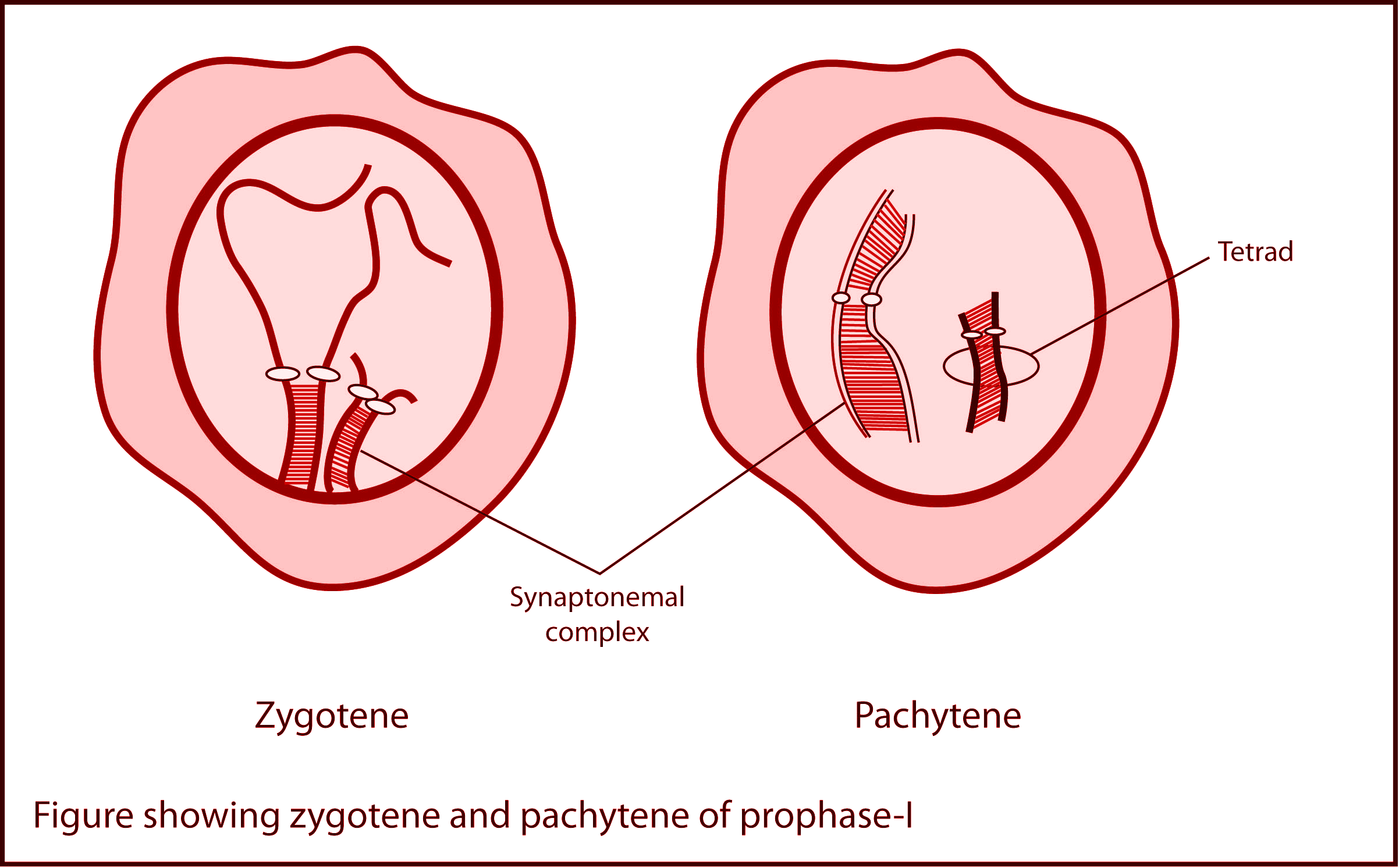
In pachytene, the bivalent chromosomes clearly appear as a tetrad.
While these chromosomes were formed in the zygotene stage of the prophase- I by the process of association of synaptonemal complexes called synapsis.
So, the correct answer is ‘Pachytene’.
Additional information:
- In the zygotene stage, the chromosomes start pairing in the association of the synaptonemal complex which is not clearly visible in this short stage.
- This bivalent chromosome is visible in the pachytene stage.
- Pachytene involves the formation of two chromatids of the same chromosome known as sister chromatids.
- The two chromatids of the two different homologous chromosomes are known as non- sister chromatids.
- Let’s learn some events that occur during the Pachytene:
- In this stage, the exchange of genetic material (DNA) between non- sister chromatids of the homologous chromosomes is called crossing- over.
- This process is an enzyme- mediated process and that enzyme is recombinase.
- Crossing over leads to the recombination of genetic material on the two chromosomes.
- By the end of the stage, the recombination between the homologous chromosomes is complete and the two chromatids leave the chromosomes linked at the site of crossing over.
- This pachytene enters into the Diplotene stage of prophase- I where the synaptonemal complex is dissolved and the bivalent gets separated from each other.
Note:
- Meiosis is called a reductional division.
- In these, the number of chromosomes is reduced to half.
- This brings out variations in human beings.
Complete step by step answer:
In pachytene, the bivalent chromosomes clearly appear as a tetrad.
While these chromosomes were formed in the zygotene stage of the prophase- I by the process of association of synaptonemal complexes called synapsis.
So, the correct answer is ‘Pachytene’.
Additional information:
- In the zygotene stage, the chromosomes start pairing in the association of the synaptonemal complex which is not clearly visible in this short stage.
- This bivalent chromosome is visible in the pachytene stage.
- Pachytene involves the formation of two chromatids of the same chromosome known as sister chromatids.
- The two chromatids of the two different homologous chromosomes are known as non- sister chromatids.
- Let’s learn some events that occur during the Pachytene:
- In this stage, the exchange of genetic material (DNA) between non- sister chromatids of the homologous chromosomes is called crossing- over.
- This process is an enzyme- mediated process and that enzyme is recombinase.
- Crossing over leads to the recombination of genetic material on the two chromosomes.
- By the end of the stage, the recombination between the homologous chromosomes is complete and the two chromatids leave the chromosomes linked at the site of crossing over.
- This pachytene enters into the Diplotene stage of prophase- I where the synaptonemal complex is dissolved and the bivalent gets separated from each other.
Note:
- Meiosis is called a reductional division.
- In these, the number of chromosomes is reduced to half.
- This brings out variations in human beings.
Recently Updated Pages
Master Class 11 English: Engaging Questions & Answers for Success

Master Class 11 Social Science: Engaging Questions & Answers for Success
Master Class 11 Maths: Engaging Questions & Answers for Success
Master Class 11 Biology: Engaging Questions & Answers for Success
Master Class 11 Physics: Engaging Questions & Answers for Success
Master Class 11 Chemistry: Engaging Questions & Answers for Success
Trending doubts
One Metric ton is equal to kg A 10000 B 1000 C 100 class 11 physics CBSE
Difference Between Prokaryotic Cells and Eukaryotic Cells
Find the value of the expression given below sin 30circ class 11 maths CBSE
Two of the body parts which do not appear in MRI are class 11 biology CBSE
Draw a diagram of a plant cell and label at least eight class 11 biology CBSE
10 examples of friction in our daily life