




Dryopteris differs from Funaria in having
(a) An independent gametophyte
(b) An independent sporophyte
(c) Swimming antherozoids
(d) Archegonia
Answer
 Verified
611.4k+ views
Hint: Haploid plant body produces haploid gametes that fuse to form a diploid plant body. It produces haploid spores to give rise to a haploid plant body. Dryopteris and Funaria differ in the dependency of these plant bodies on each other.
Complete answer:
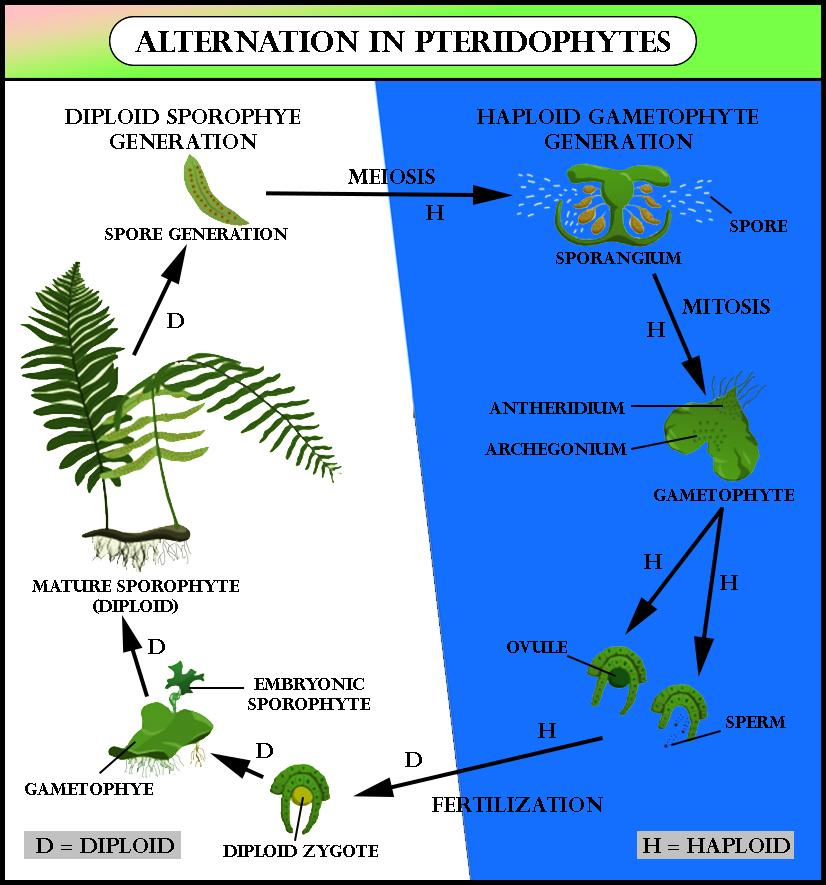
Dryopteris is a type of fern which is a member of Pteridophyta. The main plant body is a diploid sporophyte represented by a dominant, independent, photosynthetic vascular plant body. It alternates with multicellular and independent but short-lived haploid gametophyte.
Funaria is a moss which is a type of Bryophyte. The main plant body is a dominant, independent, photosynthetic, and haploid gametophyte. It alternates with a short-lived multicellular sporophyte which is totally or partially dependent on the gametophyte.
Additional Information: -The main plant body of Funaria is radially symmetrical with a branched axis, on which the leaves are radially arranged.
-The main axis bears antheridia representing male reproductive structures while the lateral branch bears female reproductive organs or archegonia.
-The antheridium bursts to release antherozoids. They swim in the water and are attracted to the chemotactic factors released by the archegonia.
-The zygote formed by the fusion of antherozoid and egg develops a thick wall around it. The diploid structure so formed is known as oospore that divides and develops into a sporophyte while still being on the gametophytic plant body.
-Dryopteris is a pteridophyte belonging to the class of Pteropsida with the diploid as the parent plant body.
-Their main characteristic feature though is the presence of sporophylls. These are the leaves bearing sporangia.
-The haploid spores are released from the sporangium and dispersed by wind currents to a new substratum.
-After falling on suitable soil, the germination of spores produces a green, thalloid, and free-living gametophyte known as prothallus. It represents the gametophyte stage in its life cycle.
So, the correct answer is ‘An independent sporophyte.’
Note: -In any sexually reproducing plant, there is an alternation of generation between the gametophytic and sporophytic stage.
-Based on which, three life cycles are observed in the plant kingdom- The haplontic life cycle exhibited by algae, the diplontic life cycle by gymnosperms, and angiosperms, haplo-diplontic life cycle in bryophytes and pteridophytes.
Complete answer:
Dryopteris is a type of fern which is a member of Pteridophyta. The main plant body is a diploid sporophyte represented by a dominant, independent, photosynthetic vascular plant body. It alternates with multicellular and independent but short-lived haploid gametophyte.
Funaria is a moss which is a type of Bryophyte. The main plant body is a dominant, independent, photosynthetic, and haploid gametophyte. It alternates with a short-lived multicellular sporophyte which is totally or partially dependent on the gametophyte.
Additional Information: -The main plant body of Funaria is radially symmetrical with a branched axis, on which the leaves are radially arranged.
-The main axis bears antheridia representing male reproductive structures while the lateral branch bears female reproductive organs or archegonia.
-The antheridium bursts to release antherozoids. They swim in the water and are attracted to the chemotactic factors released by the archegonia.
-The zygote formed by the fusion of antherozoid and egg develops a thick wall around it. The diploid structure so formed is known as oospore that divides and develops into a sporophyte while still being on the gametophytic plant body.
-Dryopteris is a pteridophyte belonging to the class of Pteropsida with the diploid as the parent plant body.
-Their main characteristic feature though is the presence of sporophylls. These are the leaves bearing sporangia.
-The haploid spores are released from the sporangium and dispersed by wind currents to a new substratum.
-After falling on suitable soil, the germination of spores produces a green, thalloid, and free-living gametophyte known as prothallus. It represents the gametophyte stage in its life cycle.
So, the correct answer is ‘An independent sporophyte.’
Note: -In any sexually reproducing plant, there is an alternation of generation between the gametophytic and sporophytic stage.
-Based on which, three life cycles are observed in the plant kingdom- The haplontic life cycle exhibited by algae, the diplontic life cycle by gymnosperms, and angiosperms, haplo-diplontic life cycle in bryophytes and pteridophytes.
Recently Updated Pages
Master Class 11 Social Science: Engaging Questions & Answers for Success

Master Class 11 English: Engaging Questions & Answers for Success
Master Class 11 Maths: Engaging Questions & Answers for Success
Master Class 11 Chemistry: Engaging Questions & Answers for Success
Master Class 11 Biology: Engaging Questions & Answers for Success
Master Class 11 Physics: Engaging Questions & Answers for Success
Trending doubts
One Metric ton is equal to kg A 10000 B 1000 C 100 class 11 physics CBSE
Difference Between Prokaryotic Cells and Eukaryotic Cells
Draw a diagram of a plant cell and label at least eight class 11 biology CBSE
Two of the body parts which do not appear in MRI are class 11 biology CBSE
Which gas is abundant in air class 11 chemistry CBSE
10 examples of friction in our daily life