




Draw one example of thallophyta, fungi and protozoa.
Answer
 Verified
549.9k+ views
Hint: These are kind of low level organisms that have a tendency to lead a parasitic life. Thallophytes and fungi are visible with naked eyes whereas protozoans are microscopic therefore are invisible to naked eyes.
Complete answer:
Thallophytes: Thallophytes are a kind of plant that are categorised on the basis of their plant body. In simple words, thallophytes are those organisms that exhibit plant life and have simple plant bodies. However, basic plant parts such as roots, stems and leaves are missing in these plants. They can be unicellular, or multicellular. They are referred to as simple plants or lower plants.
Example: Green algae - Spirogyra
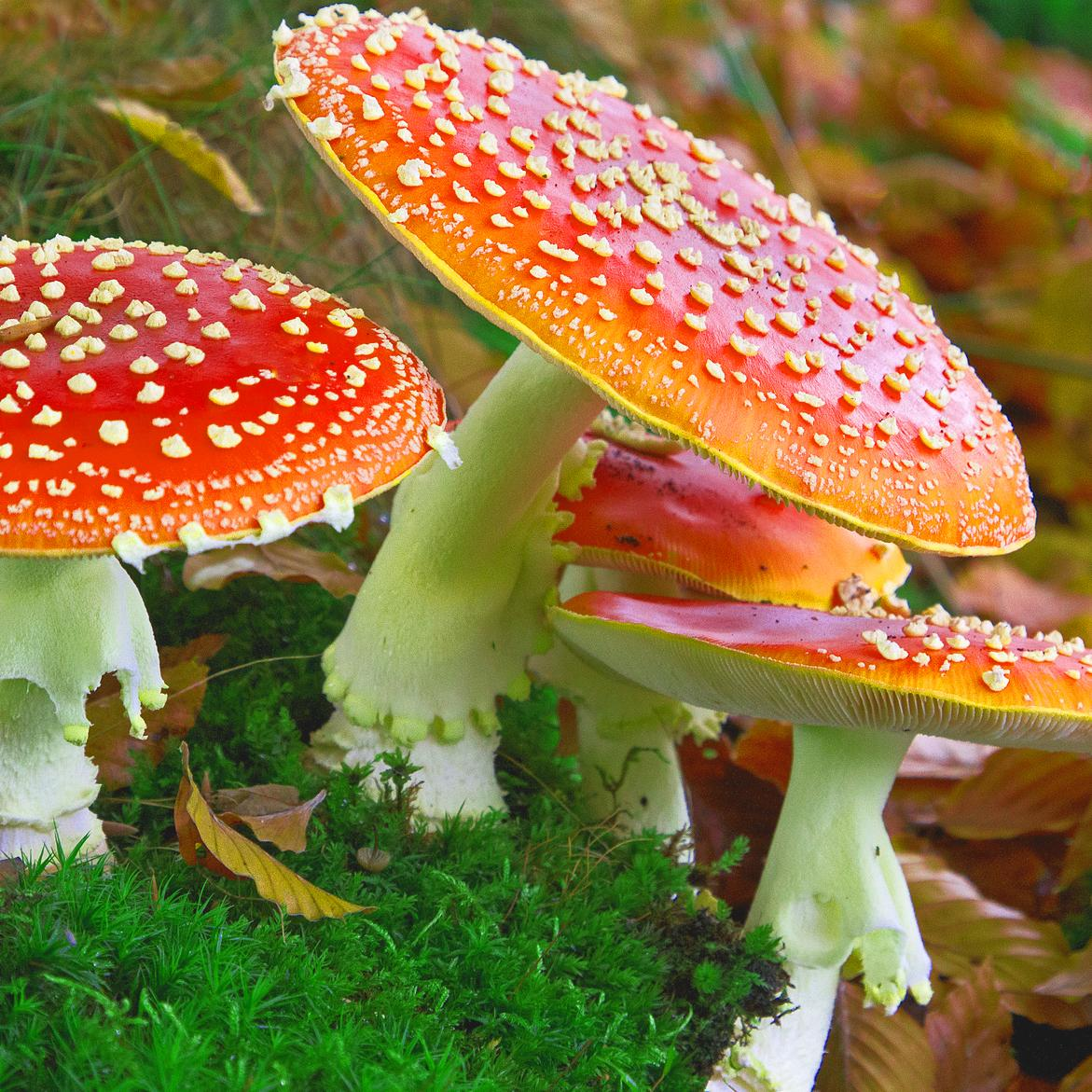
Fungi: These are eukaryotic organisms that means their nucleus is enveloped within the membrane. It is one of the kingdoms that includes many organisms. Its members are found to reflect a huge range of diversity in their habitat and method of living. They are both parasitic and symbiotic by origin. They have a perfect cell wall like plants and have chitin in their cell wall. They can live in collaboration with both plants and animals. However, they are extremely poisonous for humans. These organisms are also termed as heterotrophs ( that is those organisms that are incapable of making their own food thus dwell on other sources of food such as plants and animals) and omnipresent (that is found everywhere).
Example: Yeasts
Protozoa: These are eukaryotic single celled organisms. It is a phylla (a kind of category of organisms) that consists of microscopic individuals. They belong to the kingdom protista. They are generally found to live in association with animals. They are heterotrophic and mobile.
Example: Amoebae
Note:
It is very common for protozoans to have flagella (a thread-like structure present on the frontal region of the body) that undergoes wave-like movement to predict danger. They are parasitic and cause several diseases if entered in the body. Malaria is one of the most common protozoan diseases in humans.
Complete answer:
Thallophytes: Thallophytes are a kind of plant that are categorised on the basis of their plant body. In simple words, thallophytes are those organisms that exhibit plant life and have simple plant bodies. However, basic plant parts such as roots, stems and leaves are missing in these plants. They can be unicellular, or multicellular. They are referred to as simple plants or lower plants.
Example: Green algae - Spirogyra
Fungi: These are eukaryotic organisms that means their nucleus is enveloped within the membrane. It is one of the kingdoms that includes many organisms. Its members are found to reflect a huge range of diversity in their habitat and method of living. They are both parasitic and symbiotic by origin. They have a perfect cell wall like plants and have chitin in their cell wall. They can live in collaboration with both plants and animals. However, they are extremely poisonous for humans. These organisms are also termed as heterotrophs ( that is those organisms that are incapable of making their own food thus dwell on other sources of food such as plants and animals) and omnipresent (that is found everywhere).
Example: Yeasts
Protozoa: These are eukaryotic single celled organisms. It is a phylla (a kind of category of organisms) that consists of microscopic individuals. They belong to the kingdom protista. They are generally found to live in association with animals. They are heterotrophic and mobile.
Example: Amoebae
Note:
It is very common for protozoans to have flagella (a thread-like structure present on the frontal region of the body) that undergoes wave-like movement to predict danger. They are parasitic and cause several diseases if entered in the body. Malaria is one of the most common protozoan diseases in humans.
Recently Updated Pages
Master Class 11 Social Science: Engaging Questions & Answers for Success

Master Class 11 English: Engaging Questions & Answers for Success
Master Class 11 Maths: Engaging Questions & Answers for Success
Master Class 11 Chemistry: Engaging Questions & Answers for Success
Master Class 11 Biology: Engaging Questions & Answers for Success
Master Class 11 Physics: Engaging Questions & Answers for Success
Trending doubts
One Metric ton is equal to kg A 10000 B 1000 C 100 class 11 physics CBSE
Difference Between Prokaryotic Cells and Eukaryotic Cells
There are 720 permutations of the digits 1 2 3 4 5 class 11 maths CBSE
Draw a diagram of a plant cell and label at least eight class 11 biology CBSE
Two of the body parts which do not appear in MRI are class 11 biology CBSE
Which gas is abundant in air class 11 chemistry CBSE