




Draw a well-labelled diagram of a plant cell.
Answer
 Verified
609.3k+ views
Hint:-A plant cell consists of a thick cell wall, cytoplasm and many cell organelles. It is a eukaryotic cell with intensive compartmentalization of cytoplasm. The cell contains membrane-bound organelles like the nucleus, mitochondria, and chloroplast. The plant cell is different from an animal cell in having a cell wall, plastids, and a large vacuole which are absent in animal cells. Most plant cells lack centrioles that are present in animals.
Complete Answer:-
The cell contains a plasma membrane which provides protection and helps in the transport of particles across the cell membrane. It is also important for cell growth formation of intercellular junctions endocytosis cell division extra. The cell wall of a plant is a rigid non-living structure forming the outer covering for the plasma membrane. It gives shape to the cell and protection to the cell. Plasmodesmata are the connections between the cytoplasm and the neighbouring cells.
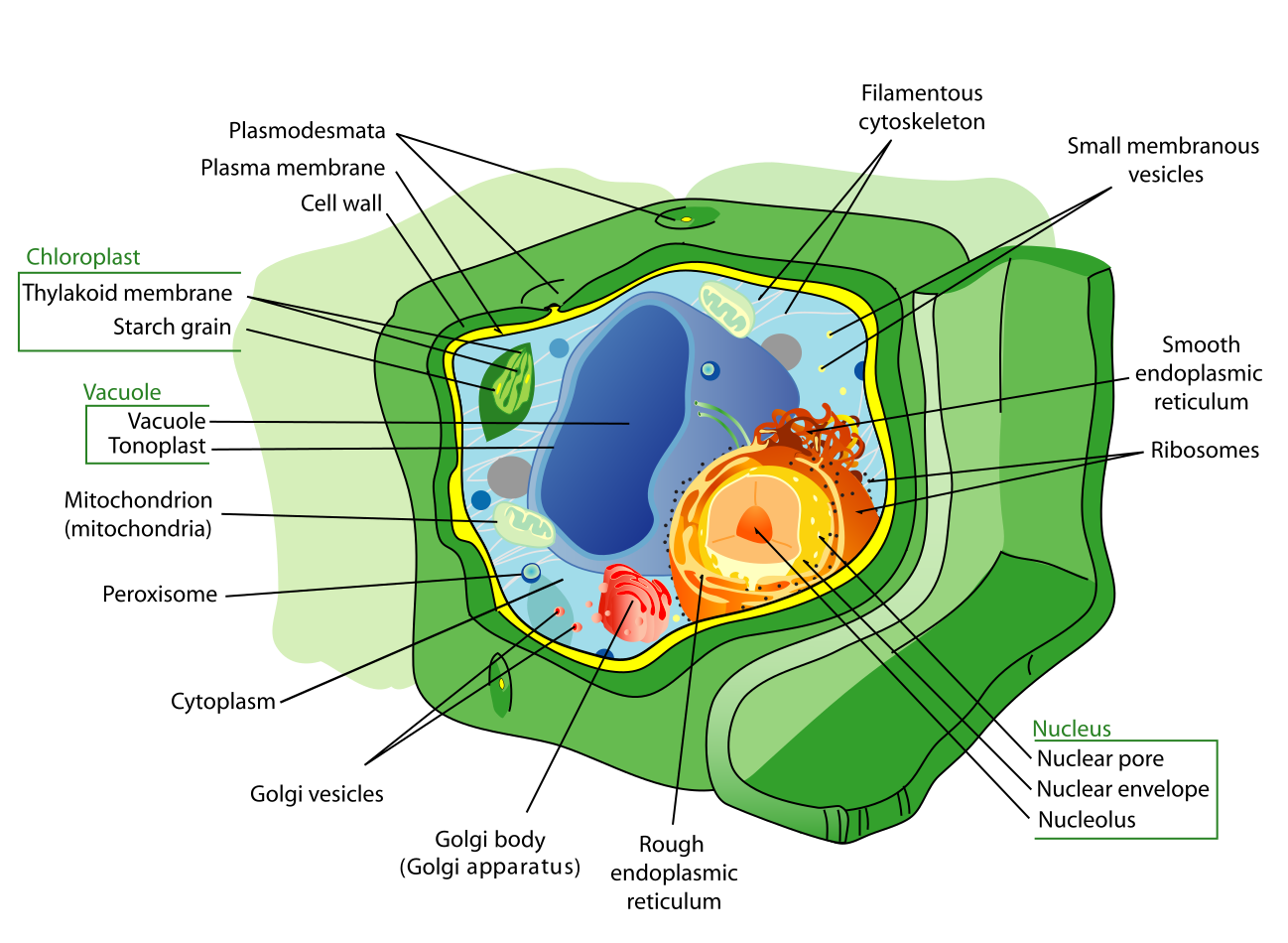
A group of organs which works co-ordinately forms the endomembrane system in the cell. The organelles which are the part of the endomembrane system are endoplasmic reticulum, Golgi complex, lysosomes, and vacuoles.
The endoplasmic reticulum bearing ribosomes on their surface are known as rough endoplasmic reticulum (RER). They help in separation and proteins in the cell. The endoplasmic reticulum without ribosomes is called the Smooth Endoplasmic Reticulum (SER) which is the site of synthesis of lipids.
Golgi apparatus helps in the packaging of materials. It is the site of glycoprotein synthesis and glycolipids synthesis.Lysosomes are membrane-bound structures which contain many digestive enzymes. The vacuole is a membrane-bound space found in the cytoplasm of plant cells. Tonoplast single membrane covering of vacuole. It helps in ion exchange.
Mitochondria are the site of aerobic respiration which generate cellular energy in the form of ATP. Plastids are found in all plant cells which are classified based on the pigments in it. Chloroplasts are the major plastids which contain chlorophyll where photosynthesis takes place. Ribosomes are granular structures which contain RNA and proteins.
The nucleus is the membrane-bound cell organelle which consists of nuclear membrane and nucleoplasm. Then the clear membrane contains many nuclear pores. The nucleoplasm contains nucleolus and chromatin fibres. A network of proteinaceous filamentous structures seen in the cytoplasm is called the cytoskeleton. It helps in motility, mechanical support and maintenance of the shape of the cell.
Note:- Robert Hooke was the person who discovered a cell and observed under the microscope in 1665. The cells he took were from a cork, which was dead plant cells. Robert Brown was the first to describe the nucleus in 1831. Cell theory was put forward by Schleiden and Schwann which was modified by Rudolf Virchow. Photosynthesis that occurs in plant cells has been observed since the 17th century.
Complete Answer:-
The cell contains a plasma membrane which provides protection and helps in the transport of particles across the cell membrane. It is also important for cell growth formation of intercellular junctions endocytosis cell division extra. The cell wall of a plant is a rigid non-living structure forming the outer covering for the plasma membrane. It gives shape to the cell and protection to the cell. Plasmodesmata are the connections between the cytoplasm and the neighbouring cells.
A group of organs which works co-ordinately forms the endomembrane system in the cell. The organelles which are the part of the endomembrane system are endoplasmic reticulum, Golgi complex, lysosomes, and vacuoles.
The endoplasmic reticulum bearing ribosomes on their surface are known as rough endoplasmic reticulum (RER). They help in separation and proteins in the cell. The endoplasmic reticulum without ribosomes is called the Smooth Endoplasmic Reticulum (SER) which is the site of synthesis of lipids.
Golgi apparatus helps in the packaging of materials. It is the site of glycoprotein synthesis and glycolipids synthesis.Lysosomes are membrane-bound structures which contain many digestive enzymes. The vacuole is a membrane-bound space found in the cytoplasm of plant cells. Tonoplast single membrane covering of vacuole. It helps in ion exchange.
Mitochondria are the site of aerobic respiration which generate cellular energy in the form of ATP. Plastids are found in all plant cells which are classified based on the pigments in it. Chloroplasts are the major plastids which contain chlorophyll where photosynthesis takes place. Ribosomes are granular structures which contain RNA and proteins.
The nucleus is the membrane-bound cell organelle which consists of nuclear membrane and nucleoplasm. Then the clear membrane contains many nuclear pores. The nucleoplasm contains nucleolus and chromatin fibres. A network of proteinaceous filamentous structures seen in the cytoplasm is called the cytoskeleton. It helps in motility, mechanical support and maintenance of the shape of the cell.
Note:- Robert Hooke was the person who discovered a cell and observed under the microscope in 1665. The cells he took were from a cork, which was dead plant cells. Robert Brown was the first to describe the nucleus in 1831. Cell theory was put forward by Schleiden and Schwann which was modified by Rudolf Virchow. Photosynthesis that occurs in plant cells has been observed since the 17th century.
Recently Updated Pages
Master Class 12 Business Studies: Engaging Questions & Answers for Success

Master Class 12 Chemistry: Engaging Questions & Answers for Success
Master Class 12 Biology: Engaging Questions & Answers for Success
Class 12 Question and Answer - Your Ultimate Solutions Guide
Master Class 11 English: Engaging Questions & Answers for Success
Master Class 11 Social Science: Engaging Questions & Answers for Success
Trending doubts
Which are the Top 10 Largest Countries of the World?
Draw a labelled sketch of the human eye class 12 physics CBSE
Differentiate between homogeneous and heterogeneous class 12 chemistry CBSE
Differentiate between Pyramid of energy and pyramid class 12 biology CBSE
Why is the cell called the structural and functional class 12 biology CBSE
Draw the diagram of the pyramid of energy Explain In class 12 biology CBSE