




How does fertilization take place?
(a)Egg released from the ovary reaches the oviduct.
(b)Sperm encounters egg in the oviduct and fertilization takes place.
(c)Sperm encounters egg in the vagina and fertilization takes place.
(d)Sperm enters through the vaginal passage.
Answer
 Verified
592.5k+ views
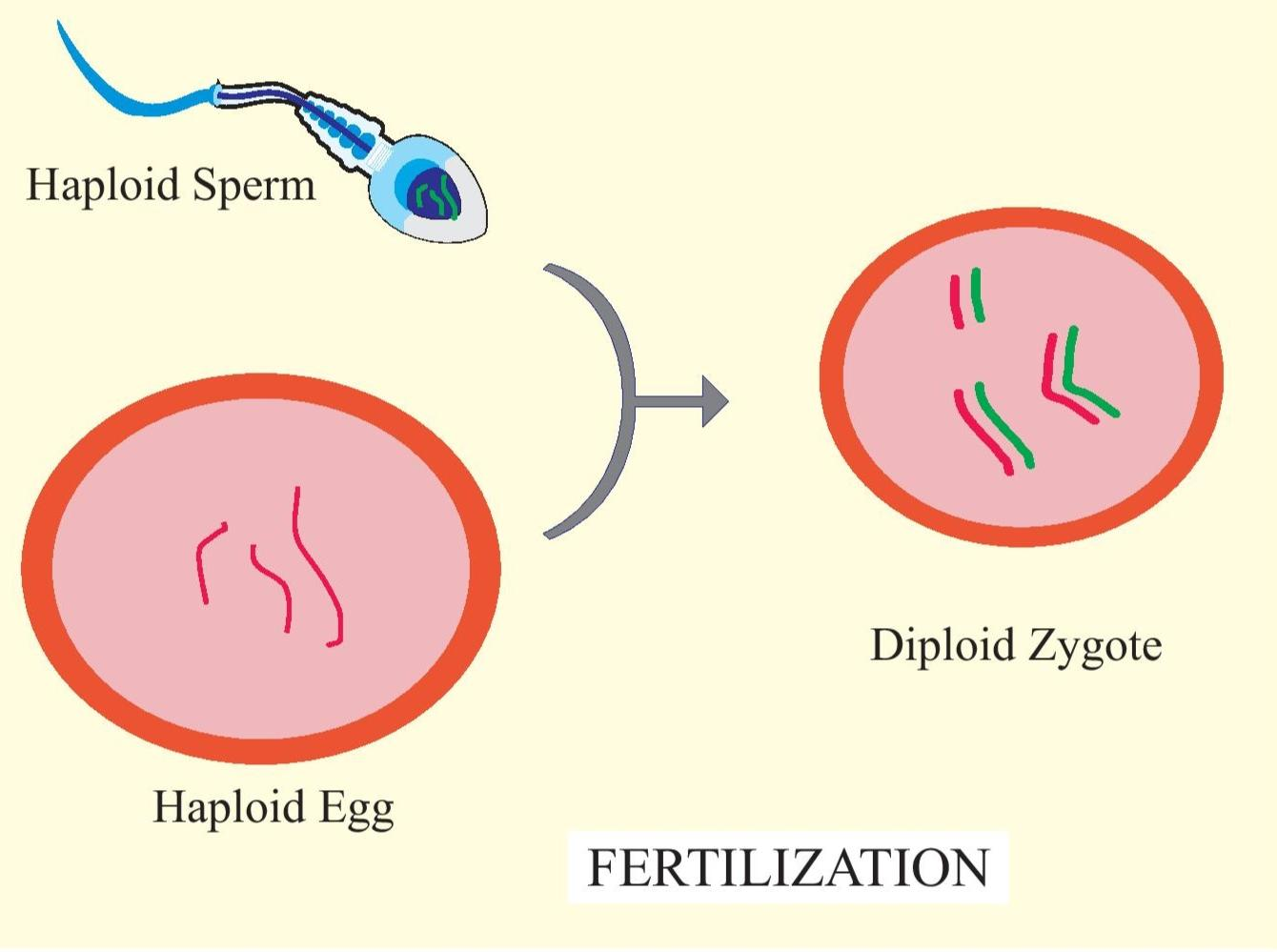
Hint: The process of fusion or combining of human eggs and sperm is called fertilization. The egg is present in the female which is nonmotile and sperm will be present in males which are motile and fuse with the egg or ovum.
Complete answer:
Fertilization takes place when sperm encounters eggs in the oviduct. The oviduct plays an important role in the process of capacitation and fusion. They are vital in the transport of ovum and sperm, ensuring the survivability of sperm cells. The reproductive tract is also important in the storage of sperm as they will die soon in the external environment.
Additional Information: -The sperm cells ejaculate my male into the vagina of females. Through the vagina and sperm cells enter and encounter ovum for mixing in the fallopian tube.
-In fertilization, acrosome reaction occurs among the zona pellucida membrane and acrosome which contains enzymes.
-The Uterus, commonly known as the womb, is a balloon-shaped muscular organ in the woman’s reproductive system, which provides nutrition to fertilized eggs till the fetus is ready.
So, the correct answer is Sperm encounters egg in the oviduct and fertilization take place.
Note: -The size of the ovum is bigger than that of the sperm cells. Ovum is one of the biggest cells in the body.
-Every cell nucleus of human beings contains 23 pairs of chromosomes, which makes a total of 46 chromosomes. Among them, the first 22 pairs are known as autosomes.
-The total time for fetus development is 280 days. Humans commonly depict the pregnancy time as nine months or 10 months which is usual and healthy for both mother and child.
Complete answer:
Fertilization takes place when sperm encounters eggs in the oviduct. The oviduct plays an important role in the process of capacitation and fusion. They are vital in the transport of ovum and sperm, ensuring the survivability of sperm cells. The reproductive tract is also important in the storage of sperm as they will die soon in the external environment.
Additional Information: -The sperm cells ejaculate my male into the vagina of females. Through the vagina and sperm cells enter and encounter ovum for mixing in the fallopian tube.
-In fertilization, acrosome reaction occurs among the zona pellucida membrane and acrosome which contains enzymes.
-The Uterus, commonly known as the womb, is a balloon-shaped muscular organ in the woman’s reproductive system, which provides nutrition to fertilized eggs till the fetus is ready.
So, the correct answer is Sperm encounters egg in the oviduct and fertilization take place.
Note: -The size of the ovum is bigger than that of the sperm cells. Ovum is one of the biggest cells in the body.
-Every cell nucleus of human beings contains 23 pairs of chromosomes, which makes a total of 46 chromosomes. Among them, the first 22 pairs are known as autosomes.
-The total time for fetus development is 280 days. Humans commonly depict the pregnancy time as nine months or 10 months which is usual and healthy for both mother and child.
Recently Updated Pages
Master Class 12 Social Science: Engaging Questions & Answers for Success

Master Class 12 Physics: Engaging Questions & Answers for Success
Master Class 12 Maths: Engaging Questions & Answers for Success
Master Class 12 Economics: Engaging Questions & Answers for Success
Master Class 12 Chemistry: Engaging Questions & Answers for Success
Master Class 12 Business Studies: Engaging Questions & Answers for Success
Trending doubts
Which are the Top 10 Largest Countries of the World?
Draw a labelled sketch of the human eye class 12 physics CBSE
Explain the structure of megasporangium class 12 biology CBSE
What are the major means of transport Explain each class 12 social science CBSE
How many chromosomes are found in human ovum a 46 b class 12 biology CBSE
The diagram of the section of a maize grain is given class 12 biology CBSE