




How does blood flow through the circulatory system?
Answer
 Verified
491.7k+ views
Hint: The circulatory system is responsible for the flow of blood, oxygen, nutrients, and other gases, and as well as hormones to and from cells. The heart is a major organ responsible for pumping blood to all parts of the body.
Complete answer:
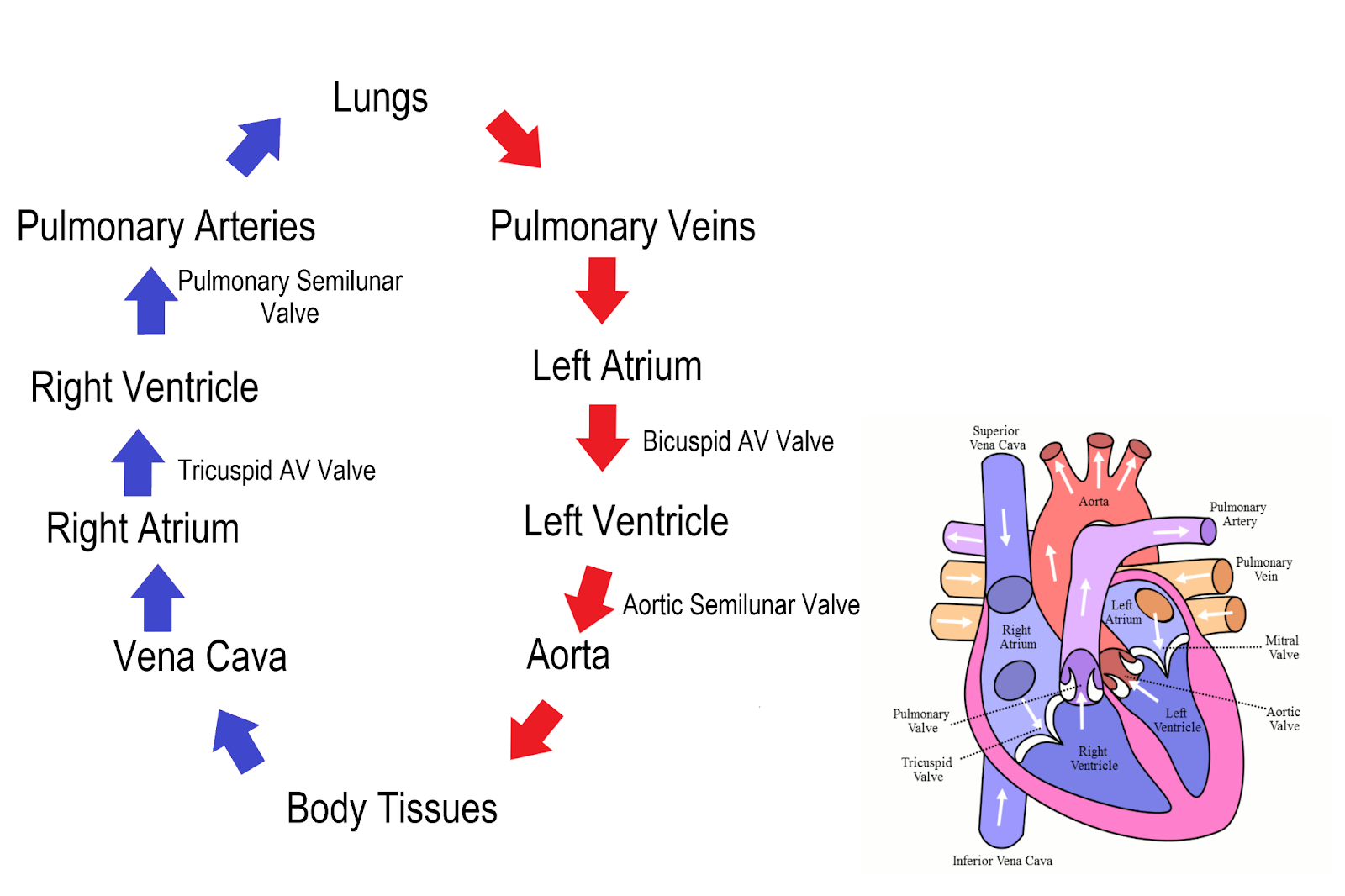
Firstly, blood reaches the heart from two large veins, the inferior and also the superior vena cava, flushing oxygen-poor blood from the body to the right atrium. The pulmonary vein expels oxygen-rich blood from the lungs to the left atrium.
Blood goes via the open tricuspid from the right atrium to the right ventricle. The heart valves shut whenever the ventricles are finished. This inhibits the backflow of blood into the atria as the ventricles contract (squeeze). Blood passes through the open valve from the left atrium to the left ventricle.
Whenever the ventricles are full, the mitral valve closes down. This prohibits the backflow of blood into the atria as the ventricles contract (squeeze). Oxygen and carbon dioxide molecules migrate into and out of tiny airbags in the lungs, through capillary walls, via the blood.
Blood exits the heart through the pulmonary valve. Blood exits the heart through an aortic valve, through the aorta, and then through the body. This sequence is repeated, which enables blood to be pumped continuously to the heart, lungs, and body.
Note:
When the heart is beating, it pumps the blood into the blood vessels system known as the circulatory system. Vessels are elastic lines that supply blood to any body part. In fact, if the heart stops, the brain cells die in about 4-6 minutes with no blood supply, and then after 10 minutes of no blood circulation, the brain cells will stop functioning and will also be deceased.
Complete answer:
Firstly, blood reaches the heart from two large veins, the inferior and also the superior vena cava, flushing oxygen-poor blood from the body to the right atrium. The pulmonary vein expels oxygen-rich blood from the lungs to the left atrium.
Blood goes via the open tricuspid from the right atrium to the right ventricle. The heart valves shut whenever the ventricles are finished. This inhibits the backflow of blood into the atria as the ventricles contract (squeeze). Blood passes through the open valve from the left atrium to the left ventricle.
Whenever the ventricles are full, the mitral valve closes down. This prohibits the backflow of blood into the atria as the ventricles contract (squeeze). Oxygen and carbon dioxide molecules migrate into and out of tiny airbags in the lungs, through capillary walls, via the blood.
Blood exits the heart through the pulmonary valve. Blood exits the heart through an aortic valve, through the aorta, and then through the body. This sequence is repeated, which enables blood to be pumped continuously to the heart, lungs, and body.
Note:
When the heart is beating, it pumps the blood into the blood vessels system known as the circulatory system. Vessels are elastic lines that supply blood to any body part. In fact, if the heart stops, the brain cells die in about 4-6 minutes with no blood supply, and then after 10 minutes of no blood circulation, the brain cells will stop functioning and will also be deceased.
Recently Updated Pages
Master Class 11 Computer Science: Engaging Questions & Answers for Success

Master Class 11 Business Studies: Engaging Questions & Answers for Success
Master Class 11 Economics: Engaging Questions & Answers for Success
Master Class 11 English: Engaging Questions & Answers for Success
Master Class 11 Maths: Engaging Questions & Answers for Success
Master Class 11 Biology: Engaging Questions & Answers for Success
Trending doubts
One Metric ton is equal to kg A 10000 B 1000 C 100 class 11 physics CBSE
There are 720 permutations of the digits 1 2 3 4 5 class 11 maths CBSE
Discuss the various forms of bacteria class 11 biology CBSE
Draw a diagram of a plant cell and label at least eight class 11 biology CBSE
State the laws of reflection of light
Explain zero factorial class 11 maths CBSE