




What does a toad carry on its back?
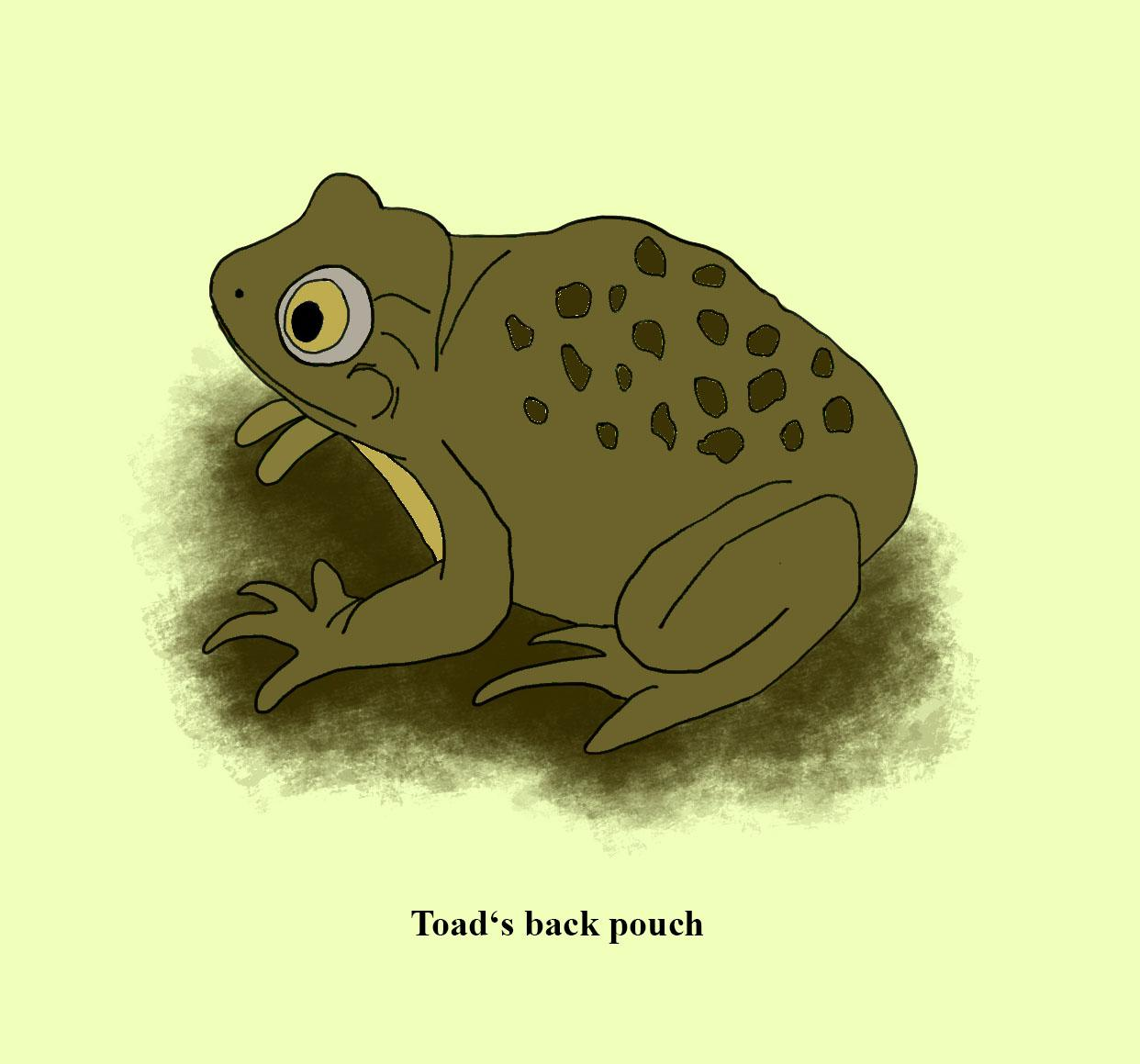
(a)This tongueless toad carries eggs embedded in the egg pouch on its back
(b)This toad carries froglets on its back
(c)Both (a) and (b)
(d)None of the above
Answer
 Verified
578.7k+ views
Hint: Within these pockets, the embryos develop through to the tadpole stage, ultimately emerging as fully developed toads from the pockets, though they are less than an inch long (25 mm). The toads begin a mostly solitary life once they have emerged from their bags.
Complete answer:
Females absorb their eggs into their own backs in a toad, Pipa pipa. Here, before erupting through the skin of their mother, the embedded young grow securely. There are frogs that hold their young tadpoles on their backs so that they can move them, such as the poison-arrow frog, to a body of water. When the babies develop into tadpoles, the mother collects the tadpoles on her back and brings them up trees and dumps them in pools of water that accumulate in bromeliads.
Additional Information: The female releases 3 to 10 eggs during each arc, which are embedded by the male's movements into the skin on her back. The eggs sink into the skin after implantation and form pockets over a period of several days, gradually taking on the appearance of an uneven honeycomb.
The mother slowly sheds the thin layer of skin that was used to give birth to the new toads, and can start the cycle again after giving birth to them.
So, the correct answer is ‘both (a) and (b)’.
Note: Toads, including frogs, are amphibians. As they have dry skin, warts, crests behind the eyes, and parotid glands, they are distinct from other frogs. A poisonous secretion is produced by the parotid glands that helps the toad protect itself from predators.
Complete answer:
Females absorb their eggs into their own backs in a toad, Pipa pipa. Here, before erupting through the skin of their mother, the embedded young grow securely. There are frogs that hold their young tadpoles on their backs so that they can move them, such as the poison-arrow frog, to a body of water. When the babies develop into tadpoles, the mother collects the tadpoles on her back and brings them up trees and dumps them in pools of water that accumulate in bromeliads.
Additional Information: The female releases 3 to 10 eggs during each arc, which are embedded by the male's movements into the skin on her back. The eggs sink into the skin after implantation and form pockets over a period of several days, gradually taking on the appearance of an uneven honeycomb.
The mother slowly sheds the thin layer of skin that was used to give birth to the new toads, and can start the cycle again after giving birth to them.
So, the correct answer is ‘both (a) and (b)’.
Note: Toads, including frogs, are amphibians. As they have dry skin, warts, crests behind the eyes, and parotid glands, they are distinct from other frogs. A poisonous secretion is produced by the parotid glands that helps the toad protect itself from predators.
Recently Updated Pages
Master Class 11 Computer Science: Engaging Questions & Answers for Success

Master Class 11 Business Studies: Engaging Questions & Answers for Success
Master Class 11 Economics: Engaging Questions & Answers for Success
Master Class 11 English: Engaging Questions & Answers for Success
Master Class 11 Maths: Engaging Questions & Answers for Success
Master Class 11 Biology: Engaging Questions & Answers for Success
Trending doubts
One Metric ton is equal to kg A 10000 B 1000 C 100 class 11 physics CBSE
There are 720 permutations of the digits 1 2 3 4 5 class 11 maths CBSE
Discuss the various forms of bacteria class 11 biology CBSE
Draw a diagram of a plant cell and label at least eight class 11 biology CBSE
State the laws of reflection of light
Explain zero factorial class 11 maths CBSE