



Do viruses have mitochondria?
Answer
 Verified
506.1k+ views
Hint: The endosymbiotic hypothesis proposes that mitochondria (and chloroplasts) are descended from specialised bacteria (most likely purple nonsulfur bacteria) that somehow survived endocytosis by another prokaryote or cell type and became absorbed into the cytoplasm.
Complete answer:
No, viruses are acellular, which means they don't have a cellular structure. As a result, they lack the majority of cell components such as organelles, ribosomes, plasma membrane and also mitochondria missing.
Viruses are frequently referred to as virions: a virion is a virus that is ‘completely' free of infection in the environment (not in a host). A virion has a nucleic acid core and an outer protein coating or capsid; some viruses also have an outer envelope consisting of protein and phospholipid membranes from the host cell. Additional proteins, such as enzymes, may be found in viruses. The most noticeable distinction between members of viral families is their morphology, which varies greatly.
The host's complexity does not correspond with the virion's complexity, which is an interesting characteristic of viral complexity. Bacteriophages, viruses that infect the simplest living species, bacteria, have some of the most complicated virion architectures.
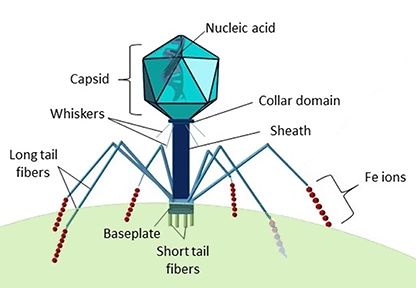
Nucleic Acid Types: Viruses, unlike nearly all other living things, can employ either DNA or RNA as their genetic material. The virus's genome, or whole genetic content, is contained in the virus core. Viral genomes are typically short, with just those genes encoding proteins that the virus cannot obtain from the host cell. It's possible that this genetic material is single-stranded or double-stranded. It can also be circular or linear.
Human diseases like chickenpox, hepatitis B, and various venereal diseases like herpes and genital warts are caused by DNA viruses. Hepatitis C, measles, and rabies are all diseases caused by RNA viruses.
Viruses occur in a variety of shapes and sizes, but each viral family has its own set of characteristics. A protective coating of proteins called a capsid surrounds the nucleic acid genome of all virions. Capsomeres are protein subunits that make up the capsid. Some viral capsids have basic polyhedral "spheres" in their structure, whereas others have more complicated structures.
Many viruses employ glycoproteins to adhere to their host cells via viral receptors, which are molecules on the cell surface.
The T4 bacteriophage, which infects the Escherichia coli bacteria, features a tail structure that the virus uses to connect to host cells and a head shape that holds its DNA, making it one of the most complicated virions known.
Overall, the virion's form and the existence or lack of an envelope reveal little about the disease the virus may cause or the species it may infect, but they are nevertheless important tools for identifying viruses.
Note: The endoplasmic reticulum (ER) and Golgi apparatus, which are transiently coupled to each other and the plasma membrane by transport vesicles, are the most prominent structures contained by membranes. The cisternae, which are encompassed by the nuclear envelopes that surround the nucleus, constitute a specific ER continuity.
Complete answer:
No, viruses are acellular, which means they don't have a cellular structure. As a result, they lack the majority of cell components such as organelles, ribosomes, plasma membrane and also mitochondria missing.
Viruses are frequently referred to as virions: a virion is a virus that is ‘completely' free of infection in the environment (not in a host). A virion has a nucleic acid core and an outer protein coating or capsid; some viruses also have an outer envelope consisting of protein and phospholipid membranes from the host cell. Additional proteins, such as enzymes, may be found in viruses. The most noticeable distinction between members of viral families is their morphology, which varies greatly.
The host's complexity does not correspond with the virion's complexity, which is an interesting characteristic of viral complexity. Bacteriophages, viruses that infect the simplest living species, bacteria, have some of the most complicated virion architectures.
Nucleic Acid Types: Viruses, unlike nearly all other living things, can employ either DNA or RNA as their genetic material. The virus's genome, or whole genetic content, is contained in the virus core. Viral genomes are typically short, with just those genes encoding proteins that the virus cannot obtain from the host cell. It's possible that this genetic material is single-stranded or double-stranded. It can also be circular or linear.
Human diseases like chickenpox, hepatitis B, and various venereal diseases like herpes and genital warts are caused by DNA viruses. Hepatitis C, measles, and rabies are all diseases caused by RNA viruses.
Viruses occur in a variety of shapes and sizes, but each viral family has its own set of characteristics. A protective coating of proteins called a capsid surrounds the nucleic acid genome of all virions. Capsomeres are protein subunits that make up the capsid. Some viral capsids have basic polyhedral "spheres" in their structure, whereas others have more complicated structures.
Many viruses employ glycoproteins to adhere to their host cells via viral receptors, which are molecules on the cell surface.
The T4 bacteriophage, which infects the Escherichia coli bacteria, features a tail structure that the virus uses to connect to host cells and a head shape that holds its DNA, making it one of the most complicated virions known.
Overall, the virion's form and the existence or lack of an envelope reveal little about the disease the virus may cause or the species it may infect, but they are nevertheless important tools for identifying viruses.
Note: The endoplasmic reticulum (ER) and Golgi apparatus, which are transiently coupled to each other and the plasma membrane by transport vesicles, are the most prominent structures contained by membranes. The cisternae, which are encompassed by the nuclear envelopes that surround the nucleus, constitute a specific ER continuity.
Recently Updated Pages
Master Class 12 Business Studies: Engaging Questions & Answers for Success

Master Class 12 Biology: Engaging Questions & Answers for Success
Master Class 12 Chemistry: Engaging Questions & Answers for Success
Class 12 Question and Answer - Your Ultimate Solutions Guide
Master Class 11 Social Science: Engaging Questions & Answers for Success
Master Class 11 English: Engaging Questions & Answers for Success
Trending doubts
What is BLO What is the full form of BLO class 8 social science CBSE
Citizens of India can vote at the age of A 18 years class 8 social science CBSE
Right to vote is a AFundamental Right BFundamental class 8 social science CBSE
Give me the opposite gender of Duck class 8 english CBSE
What are the 12 elements of nature class 8 chemistry CBSE
Full form of STD, ISD and PCO