



Do parallel lines intersect?
Answer
 Verified
524.1k+ views
Hint: In order to answer this type of question , firstly we must have in-depth knowledge of parallel lines. Parallel lines are equidistant lines (lines having equal distance from each other) that will never meet. When the graphs of two linear equations are parallel in coordinate geometry, the two equations do not share a solution. The slopes of two parallel lines are equal in coordinate geometry.
Complete step-by-step solution:
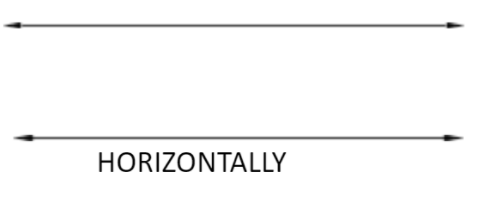
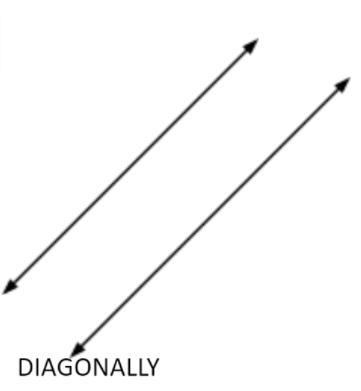
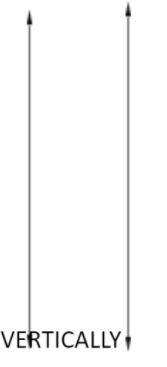
These are some examples of parallel lines in different directions: horizontally, diagonally, and vertically.
Transversal to two parallel lines is represented as:
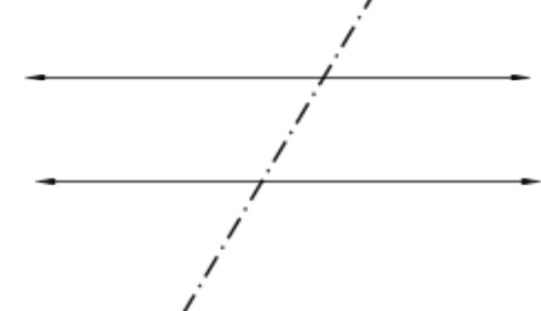
Here the dotted line represents the transversal.
Properties of parallel lines:
When a transversal line cuts a pair of parallel lines, different pairs of angles are formed. These different types of angles are used to prove whether two lines are parallel to each other.
When a transversal line cuts two lines, the properties below will help us determine whether the lines are parallel.
1. When the corresponding angles are equal, two lines cut by a transversal line are parallel.
2. When the alternate interior angles are equal, two lines cut by a transversal line are parallel.
3. When the alternate exterior angles are equal, two lines cut by a transversal line are parallel.
4. When the sum of the consecutive interior angles is \[{180^ \circ }\], two lines cut by a transversal line are parallel.
5. When the sum of the consecutive exterior angles is \[{180^ \circ }\], two lines cut by a transversal line are parallel.
Therefore Parallel lines never intersect.
Note: Firstly draw a transversal in order to check whether the given lines are parallel or not. Check the relation between various angles such as corresponding angles, alternate interior angles, alternate exterior angles, etc. if these angles satisfy the above properties then the lines are parallel and will never intersect.
Complete step-by-step solution:
These are some examples of parallel lines in different directions: horizontally, diagonally, and vertically.
Transversal to two parallel lines is represented as:
Here the dotted line represents the transversal.
Properties of parallel lines:
When a transversal line cuts a pair of parallel lines, different pairs of angles are formed. These different types of angles are used to prove whether two lines are parallel to each other.
When a transversal line cuts two lines, the properties below will help us determine whether the lines are parallel.
1. When the corresponding angles are equal, two lines cut by a transversal line are parallel.
2. When the alternate interior angles are equal, two lines cut by a transversal line are parallel.
3. When the alternate exterior angles are equal, two lines cut by a transversal line are parallel.
4. When the sum of the consecutive interior angles is \[{180^ \circ }\], two lines cut by a transversal line are parallel.
5. When the sum of the consecutive exterior angles is \[{180^ \circ }\], two lines cut by a transversal line are parallel.
Therefore Parallel lines never intersect.
Note: Firstly draw a transversal in order to check whether the given lines are parallel or not. Check the relation between various angles such as corresponding angles, alternate interior angles, alternate exterior angles, etc. if these angles satisfy the above properties then the lines are parallel and will never intersect.

Recently Updated Pages
Master Class 11 English: Engaging Questions & Answers for Success

Master Class 11 Maths: Engaging Questions & Answers for Success
Class 11 Question and Answer - Your Ultimate Solutions Guide
Master Class 11 Biology: Engaging Questions & Answers for Success
Master Class 11 Physics: Engaging Questions & Answers for Success
Master Class 11 Accountancy: Engaging Questions & Answers for Success
Trending doubts
Full Form of IASDMIPSIFSIRSPOLICE class 7 social science CBSE
List of coprime numbers from 1 to 100 class 7 maths CBSE
How many thousands make a crore class 7 maths CBSE
Differentiate between map and globe class 7 social science CBSE
The southernmost point of the Indian mainland is known class 7 social studies CBSE
AIM To prepare stained temporary mount of onion peel class 7 biology CBSE