




Define sexual reproduction.
Answer
 Verified
610.2k+ views
Hint: Sexual reproduction is a mode of continuation of species involving the fusion of gametes from two sexes parents. The sexes refer to the two genders in the population that are male and female. The reproduction involving physical contact between two individuals to produce their offspring is termed as amphimixis that is the opposite of asexual reproduction.
Complete step by step answer: Reproduction is a process of continuation of generations. To reproduce is to produce copies of self either sexually or asexually.
-The term sexual means something or some process involving physical contact between the two sexes of the population. The term reproduction means to produce another organism that is similar to itself.
-It is a process that involves the fusion of gametes from two sexes that is male gamete and female gamete. That results in the formation of a zygote which eventually grows to become an individual similar to its parents.
-Sexual reproduction is most commonly seen in humans, most animals, and some plants. It is a more complex and lengthy process as compared to asexual reproduction in which only one parent is involved.
Now, let us understand the various stages of sexual reproduction. The process involves three stages to be followed. These are:
1. Pre-fertilization events- This stage is the most important as it involves the formation of building blocks for sexual reproduction to take place. The male and female gametes are formed in this stage. The formation of gametes is termed gametogenesis. The male gamete is called sperm and the female gamete is called an egg. Both of these gametes are haploid and thus have only 23 chromosomes. To form a complete cell with 46 chromosomes these gametes need to be fused. The egg or ovum is non-motile thus cannot move. But the sperm is motile and thus moves towards the egg to fuse in it. In plants, this happens by pollination and in humans and animals, this happens by sexual intercourse or physical contact between males and females.
2. Fertilization event- This stage comes after the entrance of the male gamete in the surroundings of the female gamete. Both the haploid cells fuse to form a diploid cell called the zygote. As recombination of genes occurs in both gametes there are variations in the zygote that make it look different from its parents. This union of egg and sperm can happen inside the female body as well as outside of the female body. The former is called internal fertilization and the latter is called external fertilization.
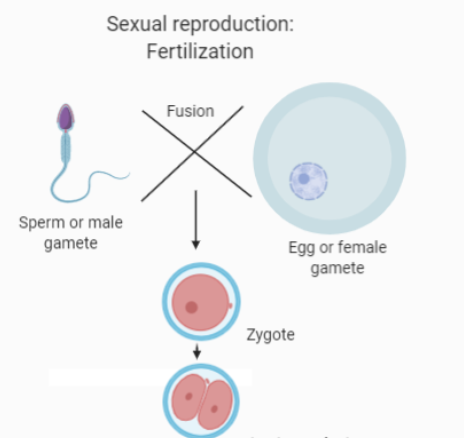
3. Post-fertilization events- This stage comprises all the changes that take place in the zygote after fertilization. The diploid zygote cell divides mitotically and differentiates to form the whole organism based on its type of characteristics and life cycle. Some organisms develop inside a protective egg and are called oviparous and some develop without any egg covering called viviparous.
Note: Sexual reproduction is a complex process. The nine months and seven days gestation period in humans is sufficient to understand the complexity and length of this process. The gestation period refers to the period for which the zygote developed into a full organism inside the mother's body. In plants, sexual reproduction results in the formation of fruits.
Complete step by step answer: Reproduction is a process of continuation of generations. To reproduce is to produce copies of self either sexually or asexually.
-The term sexual means something or some process involving physical contact between the two sexes of the population. The term reproduction means to produce another organism that is similar to itself.
-It is a process that involves the fusion of gametes from two sexes that is male gamete and female gamete. That results in the formation of a zygote which eventually grows to become an individual similar to its parents.
-Sexual reproduction is most commonly seen in humans, most animals, and some plants. It is a more complex and lengthy process as compared to asexual reproduction in which only one parent is involved.
Now, let us understand the various stages of sexual reproduction. The process involves three stages to be followed. These are:
1. Pre-fertilization events- This stage is the most important as it involves the formation of building blocks for sexual reproduction to take place. The male and female gametes are formed in this stage. The formation of gametes is termed gametogenesis. The male gamete is called sperm and the female gamete is called an egg. Both of these gametes are haploid and thus have only 23 chromosomes. To form a complete cell with 46 chromosomes these gametes need to be fused. The egg or ovum is non-motile thus cannot move. But the sperm is motile and thus moves towards the egg to fuse in it. In plants, this happens by pollination and in humans and animals, this happens by sexual intercourse or physical contact between males and females.
2. Fertilization event- This stage comes after the entrance of the male gamete in the surroundings of the female gamete. Both the haploid cells fuse to form a diploid cell called the zygote. As recombination of genes occurs in both gametes there are variations in the zygote that make it look different from its parents. This union of egg and sperm can happen inside the female body as well as outside of the female body. The former is called internal fertilization and the latter is called external fertilization.
3. Post-fertilization events- This stage comprises all the changes that take place in the zygote after fertilization. The diploid zygote cell divides mitotically and differentiates to form the whole organism based on its type of characteristics and life cycle. Some organisms develop inside a protective egg and are called oviparous and some develop without any egg covering called viviparous.
Note: Sexual reproduction is a complex process. The nine months and seven days gestation period in humans is sufficient to understand the complexity and length of this process. The gestation period refers to the period for which the zygote developed into a full organism inside the mother's body. In plants, sexual reproduction results in the formation of fruits.
Recently Updated Pages
Master Class 12 Economics: Engaging Questions & Answers for Success

Master Class 12 English: Engaging Questions & Answers for Success
Master Class 12 Social Science: Engaging Questions & Answers for Success
Master Class 12 Maths: Engaging Questions & Answers for Success
Master Class 12 Physics: Engaging Questions & Answers for Success
Master Class 9 General Knowledge: Engaging Questions & Answers for Success
Trending doubts
Explain the Treaty of Vienna of 1815 class 10 social science CBSE
Why is it 530 pm in india when it is 1200 afternoon class 10 social science CBSE
What is the full form of POSCO class 10 social science CBSE
Define Potential, Developed, Stock and Reserved resources
Which Country Has the Largest Border with India?
Complete the sentence with the most appropriate word class 10 english CBSE