




What cross-sections do you get when you give a vertical cut horizontal cut to the following solids/figure?
Solids/figure horizontal cut vertical cut A ball A duster A birthday cap A cylinder
| Solids/figure | horizontal cut | vertical cut |
| A ball | ||
| A duster | ||
| A birthday cap | ||
| A cylinder |
Answer
 Verified
511.5k+ views
Hint: To solve this question, we will have to analyze all the different given objects separately. Then we have to figure out the cross-sections by the horizontal and vertical cuts. Then we need to analyze the shape generated by the cross-sections. Once the figures are cut horizontally or vertically they will generate a \[2\] - dimensional cross-section surface.
Complete answer:
A ball:

A ball is spherical. If we cut it horizontally and vertically the cross-sections generated by them will be a two-dimensional figure. Both the cuts will generate a circular cross-section.
A duster:
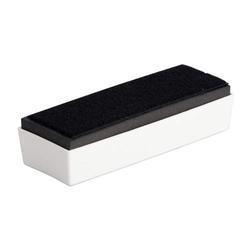
A duster is mostly like a cuboid. If we cut it horizontally and vertically the cross-sections generated by them will be a two-dimensional figure. Both the cuts will generate a rectangular cross-section.
A birthday cap:
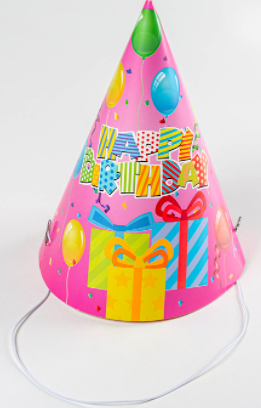
A birthday cup is like a cone. If we cut it horizontally and vertically the cross-sections generated by them will be a two-dimensional figure. The horizontal cut will generate a circular cross-section while the vertical cut will give a triangular cross-section.
A cylinder:
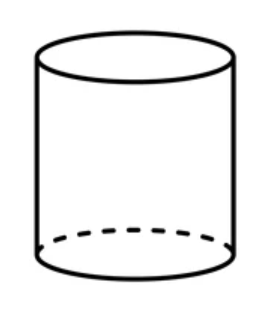
If we cut it horizontally and vertically the cross-sections generated by them will be a two-dimensional figure. The horizontal cut will generate a circular cross-section while the vertical cut will give a rectangular cross-section.
$\therefore $ The table will look like this:
Note:
We should be well equipped with the shapes of the solids. Based on the shape of the objects, the horizontal and vertical cuts will determine the cross-sections of different objects. We should also be well acquainted with two-dimensional figures. Many objects of different shapes may have the same cross-section surface.
Complete answer:
A ball:
A ball is spherical. If we cut it horizontally and vertically the cross-sections generated by them will be a two-dimensional figure. Both the cuts will generate a circular cross-section.
A duster:
A duster is mostly like a cuboid. If we cut it horizontally and vertically the cross-sections generated by them will be a two-dimensional figure. Both the cuts will generate a rectangular cross-section.
A birthday cap:
A birthday cup is like a cone. If we cut it horizontally and vertically the cross-sections generated by them will be a two-dimensional figure. The horizontal cut will generate a circular cross-section while the vertical cut will give a triangular cross-section.
A cylinder:
If we cut it horizontally and vertically the cross-sections generated by them will be a two-dimensional figure. The horizontal cut will generate a circular cross-section while the vertical cut will give a rectangular cross-section.
$\therefore $ The table will look like this:
| Solids/figure | horizontal cut | vertical cut |
| A ball | circle | circle |
| A duster | rectangle | rectangle |
| A birthday cap | circle | triangle |
| A cylinder | circle | rectangle |
Note:
We should be well equipped with the shapes of the solids. Based on the shape of the objects, the horizontal and vertical cuts will determine the cross-sections of different objects. We should also be well acquainted with two-dimensional figures. Many objects of different shapes may have the same cross-section surface.
Recently Updated Pages
Master Class 11 English: Engaging Questions & Answers for Success

Master Class 11 Social Science: Engaging Questions & Answers for Success
Master Class 11 Maths: Engaging Questions & Answers for Success
Master Class 11 Chemistry: Engaging Questions & Answers for Success
Master Class 11 Biology: Engaging Questions & Answers for Success
Master Class 11 Physics: Engaging Questions & Answers for Success
Trending doubts
Explain the Treaty of Vienna of 1815 class 10 social science CBSE
Why is it 530 pm in india when it is 1200 afternoon class 10 social science CBSE
What is the full form of CNG A Complete Natural Gas class 10 social science CBSE
In cricket, what is a "Yorker" designed to do?
What is the full form of POSCO class 10 social science CBSE
Define Potential, Developed, Stock and Reserved resources