




Cross-pollination through an insect agent is called as
(a) Anthropophily
(b) Malacophily
(c) Entomophily
(d)Ornithophily
Answer
 Verified
598.8k+ views
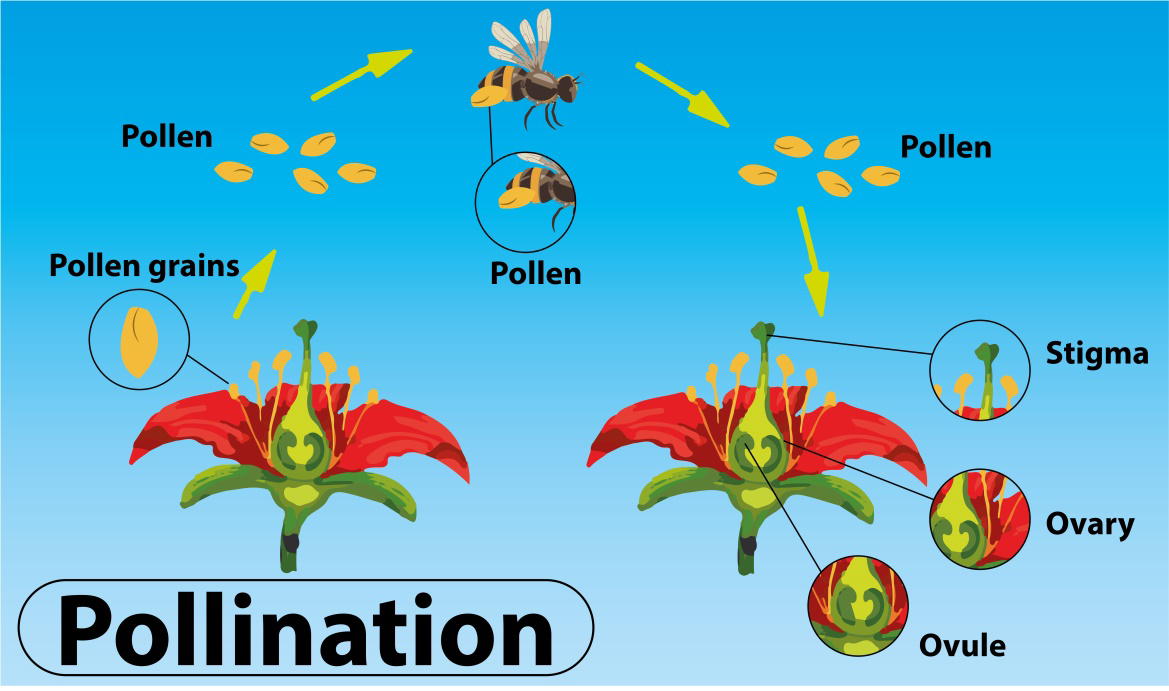
Hint: Pollination is the process of transfer of the pollen grains from the anther to the stigma of a flower. It is of two types based on whether the transfer is among the same or different plants. Cross-pollination through an insect agent is the most common type of pollination observed in the ecosystem.
Complete answer:
Cross-pollination is also known as allogamy. It is the transfer of pollen grains from an anther of a flower to the stigma of another flower, borne on separate plants of the same species. It results in the combination or mixing-up of characters, thus, improving the quality or vigor of the species. Various agencies are helpful in cross-pollinating flowers and they are broadly classified into two types i.e biotic agencies and abiotic agencies. When biotic agents are involved in cross-pollination, the process is collectively called as zoophily. They are further divided into various groups. The most common among them is entomophily. It is the cross-pollination through an insect agent
Additional Information: -Pollination by insects occurs in plants with conspicuous and brightly colored flowers that bear nectar to attract the insects. The most prevalent insect forms are bees and butterflies.
-The abiotic agencies include wind and water. Pollination with the help of air or wind is called anemophily while hydrophily is the pollination taking place with the help of water.
-Pollination through birds like hummingbirds is known as ornithophily. When snails are the biotic agents in dispersing the pollens, then such types of pollination are referred to as malacophily. Anthropophily is the cross-pollination via humans. This is a type of artificial pollination wherein the pollination is unable to occur naturally and requires procedures and techniques by humans.
So, the correct answer is ‘Entomophily.’
Note: In the flowering plants, the gynoecium is the female reproductive organ. It is composed of a sticky stigma which acts as a receptacle for the landing of pollens. The pollen upon germination gives rise to a pollen tube, which follows the path along the tube of style that ends into the swollen base i.e the ovary. It bears the ovule bearing the female gamete. The male gamete then fuses with the female gamete giving rise to a unicellular diploid zygote.
Complete answer:
Cross-pollination is also known as allogamy. It is the transfer of pollen grains from an anther of a flower to the stigma of another flower, borne on separate plants of the same species. It results in the combination or mixing-up of characters, thus, improving the quality or vigor of the species. Various agencies are helpful in cross-pollinating flowers and they are broadly classified into two types i.e biotic agencies and abiotic agencies. When biotic agents are involved in cross-pollination, the process is collectively called as zoophily. They are further divided into various groups. The most common among them is entomophily. It is the cross-pollination through an insect agent
Additional Information: -Pollination by insects occurs in plants with conspicuous and brightly colored flowers that bear nectar to attract the insects. The most prevalent insect forms are bees and butterflies.
-The abiotic agencies include wind and water. Pollination with the help of air or wind is called anemophily while hydrophily is the pollination taking place with the help of water.
-Pollination through birds like hummingbirds is known as ornithophily. When snails are the biotic agents in dispersing the pollens, then such types of pollination are referred to as malacophily. Anthropophily is the cross-pollination via humans. This is a type of artificial pollination wherein the pollination is unable to occur naturally and requires procedures and techniques by humans.
So, the correct answer is ‘Entomophily.’
Note: In the flowering plants, the gynoecium is the female reproductive organ. It is composed of a sticky stigma which acts as a receptacle for the landing of pollens. The pollen upon germination gives rise to a pollen tube, which follows the path along the tube of style that ends into the swollen base i.e the ovary. It bears the ovule bearing the female gamete. The male gamete then fuses with the female gamete giving rise to a unicellular diploid zygote.
Recently Updated Pages
Master Class 12 Social Science: Engaging Questions & Answers for Success

Master Class 12 Physics: Engaging Questions & Answers for Success
Master Class 12 Maths: Engaging Questions & Answers for Success
Master Class 12 Economics: Engaging Questions & Answers for Success
Master Class 12 Chemistry: Engaging Questions & Answers for Success
Master Class 12 Business Studies: Engaging Questions & Answers for Success
Trending doubts
Which are the Top 10 Largest Countries of the World?
Draw a labelled sketch of the human eye class 12 physics CBSE
Explain the structure of megasporangium class 12 biology CBSE
What are the major means of transport Explain each class 12 social science CBSE
How many chromosomes are found in human ovum a 46 b class 12 biology CBSE
The diagram of the section of a maize grain is given class 12 biology CBSE