




Construct a quadrilateral ABCD in which AB = 3.6 cm , BC = 3.3 cm , AD = 2.7 cm diagonal AC = 4.6 cm and BD = 4 cm
Answer
 Verified
609.6k+ views
Hint: Splitting the quadrilateral into two triangles , first we need to construct one triangle using the compass and scale that by drawing a line segment AB and drawing arcs of required measurement from A and B and that intersection point is marked as C. Now once again let's draw the arcs from and B to get the point D and joining C and D we get the required quadrilateral.
Complete step-by-step answer:
Now lets sketch the rough diagram of the quadrilateral ABCD.
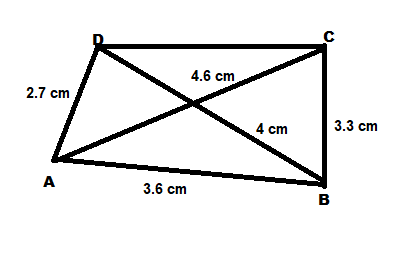
And we can see that the quadrilateral consists of two triangles ABC and ACD
First lets construct the triangle ABC has all the sides are given
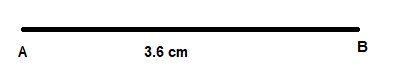
Let's draw a line segment AB of 3.6 cm
Now we are given AC = 4.6 cm
So place the compass at A and draw an arc with radius 4.6 cm
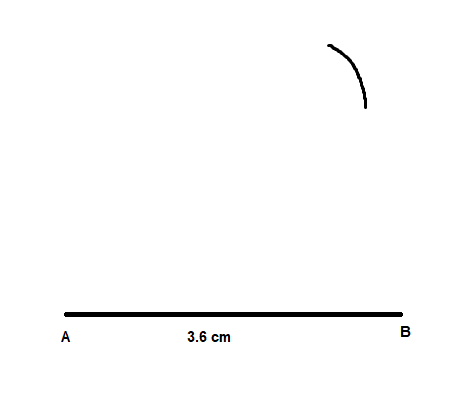
And since BC = 3.3 cm
Place the compass at B and draw an arc with radius 3.3 cm intersecting the arc drawn in the previous step and this intersection point is marked as C.
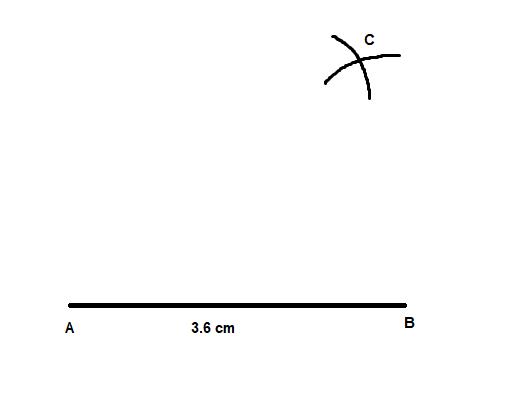
Draw the lines AC and BC
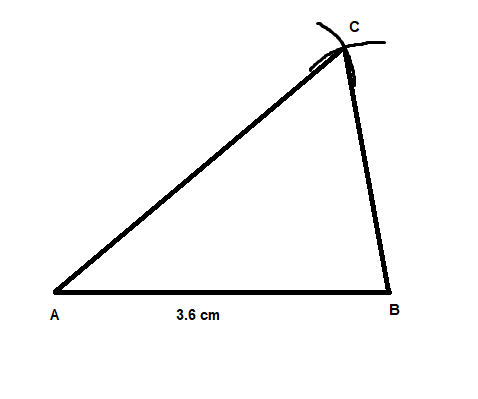
Now we are given AD = 2.7 cm
So place the compass at A and draw an arc with radius 2.7 cm just above A
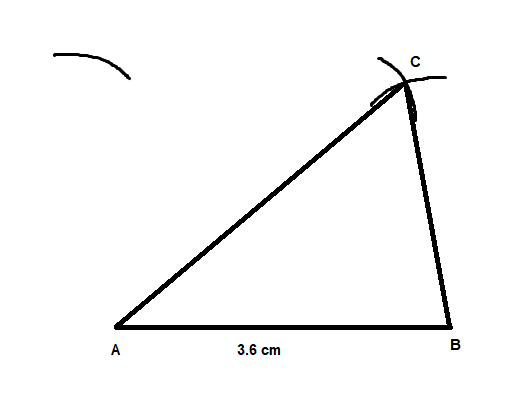
And since BD = 4 cm
Place the compass at B and draw an arc with radius 4 cm intersecting the arc drawn in the previous step and this intersection point is marked as D
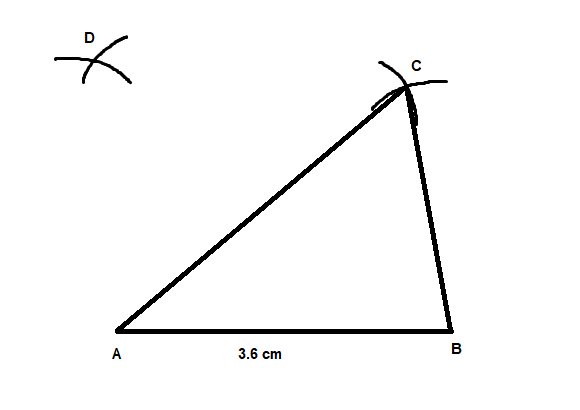
Draw the lines AD and BD
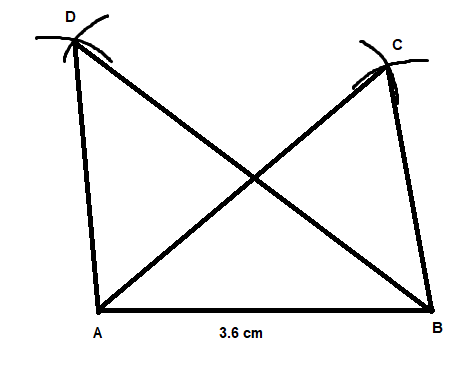
And joining CD we get the required quadrilateral.
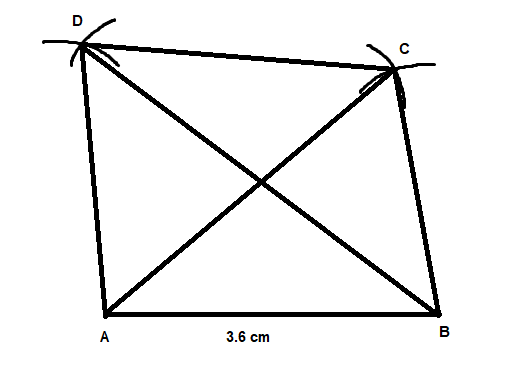
Note: A quadrilateral is a polygon which has 4 vertices and 4 sides enclosing 4 angles. The sum of its interior angles is 360 degrees. A quadrilateral, in general, has sides of different lengths and angles of different measures. However, squares, rectangles, etc. are special types of quadrilaterals with some of their sides and angles being equal.
Complete step-by-step answer:
Now lets sketch the rough diagram of the quadrilateral ABCD.
And we can see that the quadrilateral consists of two triangles ABC and ACD
First lets construct the triangle ABC has all the sides are given
Let's draw a line segment AB of 3.6 cm
Now we are given AC = 4.6 cm
So place the compass at A and draw an arc with radius 4.6 cm
And since BC = 3.3 cm
Place the compass at B and draw an arc with radius 3.3 cm intersecting the arc drawn in the previous step and this intersection point is marked as C.
Draw the lines AC and BC
Now we are given AD = 2.7 cm
So place the compass at A and draw an arc with radius 2.7 cm just above A
And since BD = 4 cm
Place the compass at B and draw an arc with radius 4 cm intersecting the arc drawn in the previous step and this intersection point is marked as D
Draw the lines AD and BD
And joining CD we get the required quadrilateral.
Note: A quadrilateral is a polygon which has 4 vertices and 4 sides enclosing 4 angles. The sum of its interior angles is 360 degrees. A quadrilateral, in general, has sides of different lengths and angles of different measures. However, squares, rectangles, etc. are special types of quadrilaterals with some of their sides and angles being equal.
Recently Updated Pages
Master Class 11 English: Engaging Questions & Answers for Success

Master Class 11 Maths: Engaging Questions & Answers for Success
Class 11 Question and Answer - Your Ultimate Solutions Guide
Master Class 11 Biology: Engaging Questions & Answers for Success
Master Class 11 Physics: Engaging Questions & Answers for Success
Master Class 11 Accountancy: Engaging Questions & Answers for Success
Trending doubts
What is BLO What is the full form of BLO class 8 social science CBSE
What are the 12 elements of nature class 8 chemistry CBSE
Citizens of India can vote at the age of A 18 years class 8 social science CBSE
Right to vote is a AFundamental Right BFundamental class 8 social science CBSE
Advantages and disadvantages of science
Full form of STD, ISD and PCO