



Compound (s) that on hydrogenation products optically inactive compounds (s) is (are):
(A)

(B)

(C)

(D)

Answer
 Verified
617.4k+ views
Hint:. To solve this question we should know what hydrogenation is and when a compound is said to be optically active or optically inactive. It is very important to be aware of hydrogenation of alkene.
Complete step by step answer: The process of addition of hydrogen molecule to any compound is known as hydrogenation. On hydrogenation of alkene the double is reduced and alkane is produced as the product.
A compound is said to be optically active, when a compound has a chiral carbon because the compounds with chiral carbon can rotate the plane polarised light. The optically inactive compounds are the compounds which do not have a chiral carbon in the first place, hence cannot rotate the plane polarised light.
Option A is
 .
.
On hydrogenation, ${H_2}$ reduces the double bond to single bond:

Drawing the product in Fischer projection:
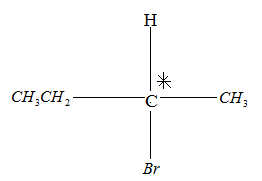
Since the compound has a chiral carbon this compound is optically active. Therefore, Option A is the wrong answer.
Option B is
 .
.
On hydrogenation, ${H_2}$ reduces the double bond to single bond:

Drawing the product in Fischer projection:
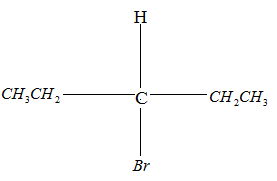
Since the compound has no chiral carbon this compound is optically inactive. Therefore, Option B is the correct answer.
Option C is
 .
.
On hydrogenation, ${H_2}$ reduces the double bond to single bond:

Drawing the product in Fischer projection:
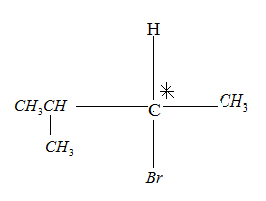
Since the compound has a chiral carbon this compound is optically active. Therefore, Option a c is the wrong answer.
Option D is
 .
.

Drawing the product in Fischer projection:
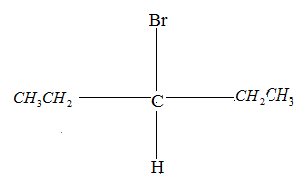
So, the correct answer is “Option B and D”.
Note: When four different groups are attached to a carbon atom, then the carbon atom is said to be chiral carbon. A compound can be optically active only when it has a chiral carbon. Always remember alkanes are formed on hydrogenation of alkenes. Drawing the product in Fischer projection will give better clarity on compounds.
Complete step by step answer: The process of addition of hydrogen molecule to any compound is known as hydrogenation. On hydrogenation of alkene the double is reduced and alkane is produced as the product.
A compound is said to be optically active, when a compound has a chiral carbon because the compounds with chiral carbon can rotate the plane polarised light. The optically inactive compounds are the compounds which do not have a chiral carbon in the first place, hence cannot rotate the plane polarised light.
Option A is
On hydrogenation, ${H_2}$ reduces the double bond to single bond:
Drawing the product in Fischer projection:
Since the compound has a chiral carbon this compound is optically active. Therefore, Option A is the wrong answer.
Option B is
On hydrogenation, ${H_2}$ reduces the double bond to single bond:
Drawing the product in Fischer projection:
Since the compound has no chiral carbon this compound is optically inactive. Therefore, Option B is the correct answer.
Option C is
On hydrogenation, ${H_2}$ reduces the double bond to single bond:
Drawing the product in Fischer projection:
Since the compound has a chiral carbon this compound is optically active. Therefore, Option a c is the wrong answer.
Option D is
Drawing the product in Fischer projection:
So, the correct answer is “Option B and D”.
Note: When four different groups are attached to a carbon atom, then the carbon atom is said to be chiral carbon. A compound can be optically active only when it has a chiral carbon. Always remember alkanes are formed on hydrogenation of alkenes. Drawing the product in Fischer projection will give better clarity on compounds.
Recently Updated Pages
Master Class 12 Business Studies: Engaging Questions & Answers for Success

Master Class 12 Chemistry: Engaging Questions & Answers for Success
Master Class 12 Biology: Engaging Questions & Answers for Success
Class 12 Question and Answer - Your Ultimate Solutions Guide
Master Class 11 English: Engaging Questions & Answers for Success
Master Class 11 Social Science: Engaging Questions & Answers for Success
Trending doubts
Which are the Top 10 Largest Countries of the World?
Draw a labelled sketch of the human eye class 12 physics CBSE
Differentiate between homogeneous and heterogeneous class 12 chemistry CBSE
Differentiate between Pyramid of energy and pyramid class 12 biology CBSE
Why is the cell called the structural and functional class 12 biology CBSE
Draw the diagram of the pyramid of energy Explain In class 12 biology CBSE