




What is comparative anatomy also gives differences in between different internal structures with regards to their function and origin.
Answer
 Verified
579k+ views
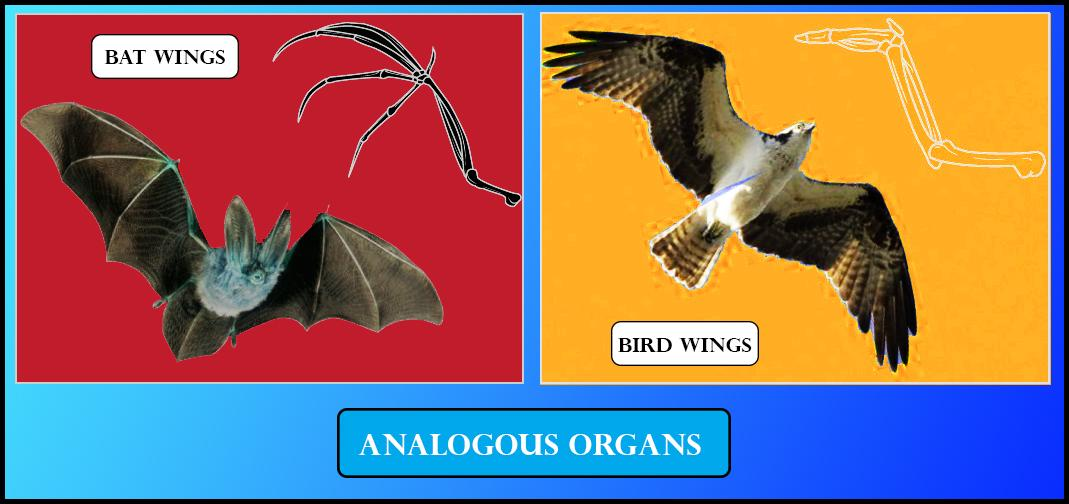
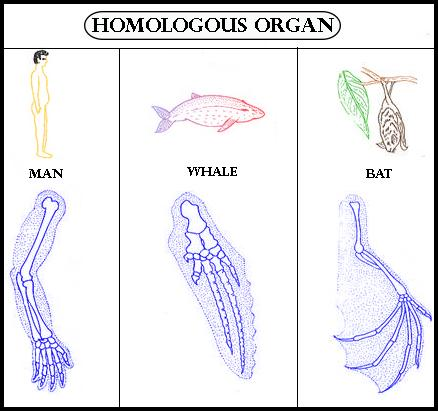
Hint The study and comparison of the structure of different organs is known as comparative anatomy. If two organisms are related then their organs have a similar internal structure, even if they are shaped differently.
Complete answer:
Note:
-Having a homologous structure doesn't always have a similar structure.
-Vestigial organs are those organs, found in some living things, that don't perform any functions. These organs are simply shown an evolutionary relationship with other living things.
An example of a vestigial organ is the tailbone, in humans.
-Divergent Evolution
The process by which an ancestral species gives rise to a variety of latest species that are adapted to different environmental conditions and are less alike.
-The theory of evolution is predicated on evidence from different fields, among which is anatomy.
Complete answer:
| Analogous organs | Homologous organs |
| Analogous structures are those structures in several species which perform an equivalent function, have similar appearance and structure but aren't evolved together; therefore don't share a standard ancestor. | A part with an equivalent structure between some groups of organisms thanks to inheritance from an equivalent ancestor Though not necessarily sharing an equivalent function |
| Analogous structures evolve thanks to convergent evolution when different organisms adapt to an equivalent environment. | These homologous structures also are linked to common DNA. |
| Analogous structures: superficial similarities that reflect an adaptation reflective of comparable environments, not descent from a standard ancestor | Homologous structures: are anatomical resemblances between organisms that represent variations on a structural theme that was present during a common ancestor. |
| Example: 1- Wings of an insect and wings of a bird. 2- Fins of a fish and a penguin. 3- Limbs of humans, horses and dolphins. | Example:Humans have tail bones Some snakes have limb bones Some salamanders have eyes (although they are blind) |
Note:
-Having a homologous structure doesn't always have a similar structure.
-Vestigial organs are those organs, found in some living things, that don't perform any functions. These organs are simply shown an evolutionary relationship with other living things.
An example of a vestigial organ is the tailbone, in humans.
-Divergent Evolution
The process by which an ancestral species gives rise to a variety of latest species that are adapted to different environmental conditions and are less alike.
-The theory of evolution is predicated on evidence from different fields, among which is anatomy.
Recently Updated Pages
Master Class 12 Business Studies: Engaging Questions & Answers for Success

Master Class 12 Chemistry: Engaging Questions & Answers for Success
Master Class 12 Biology: Engaging Questions & Answers for Success
Class 12 Question and Answer - Your Ultimate Solutions Guide
Master Class 11 English: Engaging Questions & Answers for Success
Master Class 11 Social Science: Engaging Questions & Answers for Success
Trending doubts
Which are the Top 10 Largest Countries of the World?
Draw a labelled sketch of the human eye class 12 physics CBSE
Differentiate between homogeneous and heterogeneous class 12 chemistry CBSE
Differentiate between Pyramid of energy and pyramid class 12 biology CBSE
Why is the cell called the structural and functional class 12 biology CBSE
Draw the diagram of the pyramid of energy Explain In class 12 biology CBSE