




Who coined the term enzyme?
A. Pasteur
B. Buchner
C. Kuhne
D. Sumner
Answer
 Verified
601.5k+ views
Hint:Enzymes are biological catalysts that trigger the various biochemical reactions of a living cell in a very basic and precise way. Enzyme testing is called enzymology.
Complete answer:
Enzymes are proteins that function as biological catalysts. Catalysts are accelerating chemical reactions. The molecules on which the enzymes can function are called substrates, and the enzyme transforms the substrates into different molecules known as products.
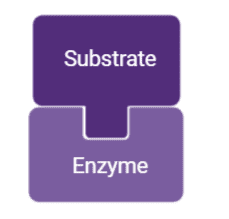
For binding and orientation of catalytic cofactors, the enzyme needs sites. Enzyme structures can include allosteric positions where the binding of a small molecule induces a conformational shift that increases or decreases activity.
Pasteur recognized that some microorganisms, such as leaves, have the ability to induce fermentation of wine.
Buchner discovered in 1897 that the extract of yeast, like living yeast cells, could contribute to the fermentation of grape juice. He also found that the extract had lost its catalytic activity during the boiling phase. He coined the term zymase for the active concept of fermentation.
The name of the enzyme was coined in 1878 by Kuhne. Wilhelm Kuhne, a physicist, invented the term enzyme in 1878. The term enzyme means leaven. Non-living substances such as pepsin, trypsin, etc. are known as the enzyme.
The crystalline shape of enzymes was discovered by American chemist James Batcheller Sumner. He was subsequently awarded the 1946 Nobel Prize in Chemistry for his research work.
So the correct option is option C - Kuhne.
Note: Scientists John Howard Northrop and Wendell Meredith Stanley were both jointly awarded the Nobel Prize. They were the firsts scientist to show that proteins are enzymes. The famous French biologist, microbiologist, and chemist were Louis Pasteur was renowned for his observations, such as the principles and methods of vaccination, the microbial fermentation process, and the pasteurization mechanism.
Complete answer:
Enzymes are proteins that function as biological catalysts. Catalysts are accelerating chemical reactions. The molecules on which the enzymes can function are called substrates, and the enzyme transforms the substrates into different molecules known as products.
For binding and orientation of catalytic cofactors, the enzyme needs sites. Enzyme structures can include allosteric positions where the binding of a small molecule induces a conformational shift that increases or decreases activity.
Pasteur recognized that some microorganisms, such as leaves, have the ability to induce fermentation of wine.
Buchner discovered in 1897 that the extract of yeast, like living yeast cells, could contribute to the fermentation of grape juice. He also found that the extract had lost its catalytic activity during the boiling phase. He coined the term zymase for the active concept of fermentation.
The name of the enzyme was coined in 1878 by Kuhne. Wilhelm Kuhne, a physicist, invented the term enzyme in 1878. The term enzyme means leaven. Non-living substances such as pepsin, trypsin, etc. are known as the enzyme.
The crystalline shape of enzymes was discovered by American chemist James Batcheller Sumner. He was subsequently awarded the 1946 Nobel Prize in Chemistry for his research work.
So the correct option is option C - Kuhne.
Note: Scientists John Howard Northrop and Wendell Meredith Stanley were both jointly awarded the Nobel Prize. They were the firsts scientist to show that proteins are enzymes. The famous French biologist, microbiologist, and chemist were Louis Pasteur was renowned for his observations, such as the principles and methods of vaccination, the microbial fermentation process, and the pasteurization mechanism.
Recently Updated Pages
Master Class 11 English: Engaging Questions & Answers for Success

Master Class 11 Social Science: Engaging Questions & Answers for Success
Master Class 11 Maths: Engaging Questions & Answers for Success
Master Class 11 Biology: Engaging Questions & Answers for Success
Master Class 11 Physics: Engaging Questions & Answers for Success
Master Class 11 Chemistry: Engaging Questions & Answers for Success
Trending doubts
One Metric ton is equal to kg A 10000 B 1000 C 100 class 11 physics CBSE
Difference Between Prokaryotic Cells and Eukaryotic Cells
Find the value of the expression given below sin 30circ class 11 maths CBSE
Difference between physical and chemical change class 11 chemistry CBSE
Two of the body parts which do not appear in MRI are class 11 biology CBSE
Draw a diagram of a plant cell and label at least eight class 11 biology CBSE