




Chordae tendineae are found in
(A)ventricles of heart
(B)joints of legs
(C)ventricles of brain
(D)atria of heart
Answer
 Verified
611.4k+ views
Hint: Chordae tendineae are found in that chamber of the heart that is present at the bottom of the heart and helps in the collection and expulsion of blood received from the above chambers.
Complete answer:
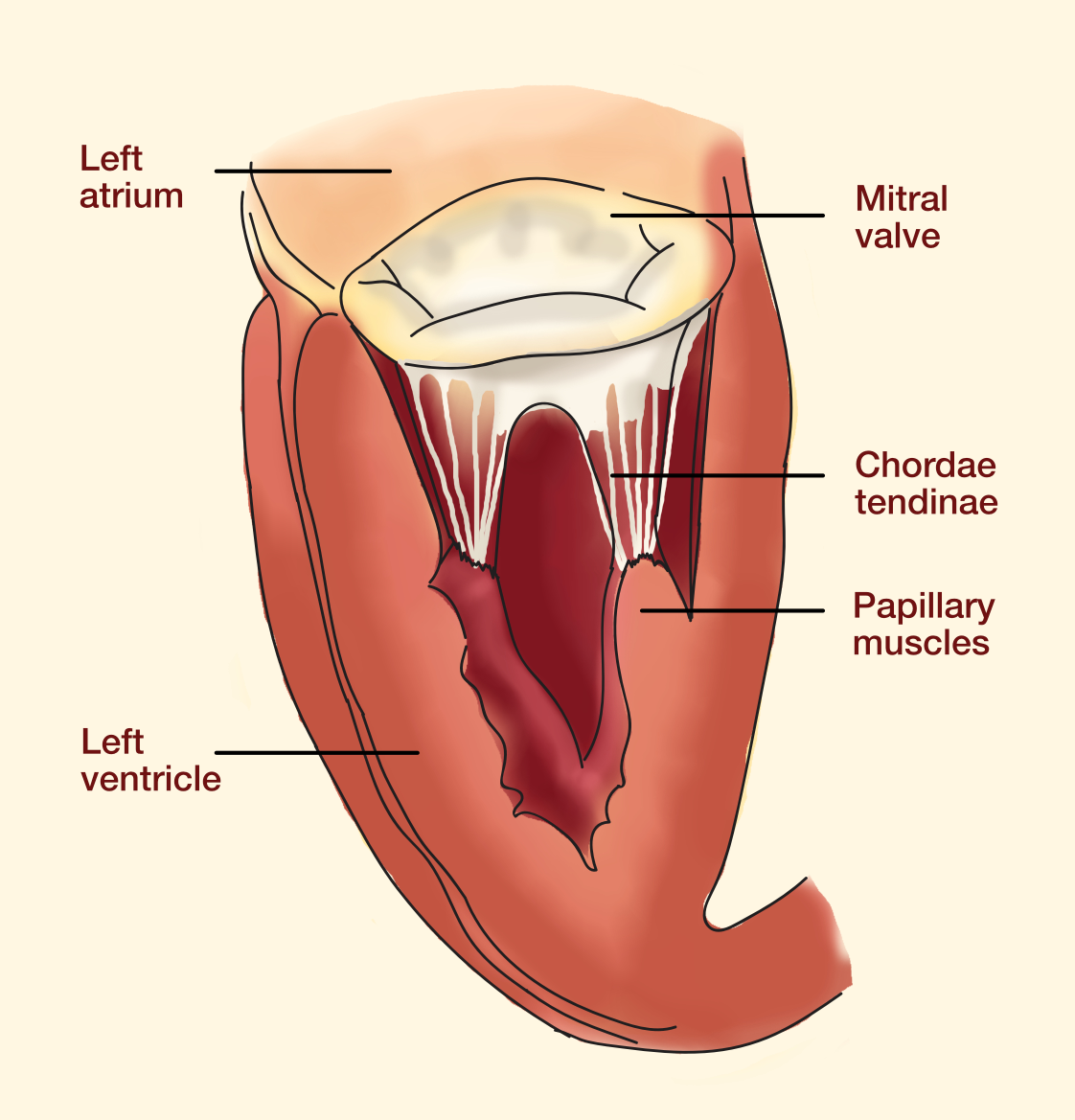
Chordae tendineae are found in the ventricles of the heart i.e lower two chambers of the heart. The common name of chordae tendineae is the heartstrings. They resemble tendon and fibrous cords of connective tissue that connect the two valves the tricuspid valve and the mitral valve to the papillary muscles in the heart
Additional Information: Chordae tendineae are made up of approximately 80% collagen, while the remaining 20% is made up of elastin and endothelial cells.
During atrial systole, the blood from the atria flows to the ventricles down the pressure gradient. At this time the chordae tendineae are relaxed because the atrioventricular valves are forced open.
During the ventricular systole, the ventricles of the heart contract, and then increases the blood pressures in both chambers of the heart that results in the pushing of the AV valves to close simultaneously, this helps in the blood to prevent its backflow into the atria. Since the blood pressure in atria is much lower than that in the ventricles, the flaps attempt to turn to the low-pressure regions. The chordae tendineae helps in preventing the eversion, prolapse, by becoming tense thus pulling the flaps, holding them in the closed position.
So, the correct answer is ‘ventricles of heart’.
Note: It is very interesting to note that the left ventricle of your heart is larger and thicker than the right ventricle. This is because the left ventricle has to pump the blood further around the body, and against higher pressure, compared with the right ventricle.
Complete answer:
Chordae tendineae are found in the ventricles of the heart i.e lower two chambers of the heart. The common name of chordae tendineae is the heartstrings. They resemble tendon and fibrous cords of connective tissue that connect the two valves the tricuspid valve and the mitral valve to the papillary muscles in the heart
Additional Information: Chordae tendineae are made up of approximately 80% collagen, while the remaining 20% is made up of elastin and endothelial cells.
During atrial systole, the blood from the atria flows to the ventricles down the pressure gradient. At this time the chordae tendineae are relaxed because the atrioventricular valves are forced open.
During the ventricular systole, the ventricles of the heart contract, and then increases the blood pressures in both chambers of the heart that results in the pushing of the AV valves to close simultaneously, this helps in the blood to prevent its backflow into the atria. Since the blood pressure in atria is much lower than that in the ventricles, the flaps attempt to turn to the low-pressure regions. The chordae tendineae helps in preventing the eversion, prolapse, by becoming tense thus pulling the flaps, holding them in the closed position.
So, the correct answer is ‘ventricles of heart’.
Note: It is very interesting to note that the left ventricle of your heart is larger and thicker than the right ventricle. This is because the left ventricle has to pump the blood further around the body, and against higher pressure, compared with the right ventricle.
Recently Updated Pages
Master Class 11 English: Engaging Questions & Answers for Success

Master Class 11 Social Science: Engaging Questions & Answers for Success
Master Class 11 Maths: Engaging Questions & Answers for Success
Master Class 11 Biology: Engaging Questions & Answers for Success
Master Class 11 Physics: Engaging Questions & Answers for Success
Master Class 11 Chemistry: Engaging Questions & Answers for Success
Trending doubts
One Metric ton is equal to kg A 10000 B 1000 C 100 class 11 physics CBSE
Difference Between Prokaryotic Cells and Eukaryotic Cells
Find the value of the expression given below sin 30circ class 11 maths CBSE
Difference between physical and chemical change class 11 chemistry CBSE
Two of the body parts which do not appear in MRI are class 11 biology CBSE
Draw a diagram of a plant cell and label at least eight class 11 biology CBSE