




Chlorosis is caused due to deficiency of
A. Mg
B. Ca
C. B
D. Mn
Answer
 Verified
616.8k+ views
Hint: The word chlorosis refers to botany. Chlorosis can be stated as a condition in which insufficient chlorophyll is produced by leaves. Chlorophyll is the main component responsible for the green color of leaves.
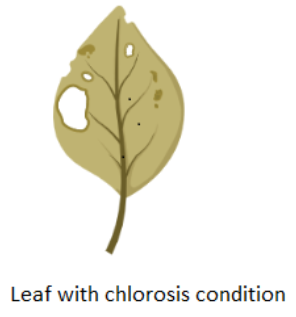
Complete step by step answer: A condition in which the leaves of the plant turn yellow in color due to insufficient amount of chlorophyll pigment produced by them is called chlorosis. The word chlorosis is derived from the Greek word khloros which means pale-green, greenish-yellow. The respiratory pigment chlorophyll is responsible for the green color leaves of the plant. Lack of this pigment produces leaves which are yellow, pale, or yellow-white color. Chlorosis occurs if the plant is grown in soil which lacks a deficiency of minerals like iron, magnesium, or zinc. The affected plants are not capable of undergoing the process of photosynthesis and hence cannot produce carbohydrates. When leaves of the plant do not have all the essential nutrients to synthesize chlorophyll, then chlorosis occurs in leaves. Other factors responsible for chlorosis are soil pH level, ozone injury to sensitive plants, and many more. As magnesium is the important element in chlorophyll, deficiency of magnesium causes chlorosis.
So, option A is the correct option.
Note: A plant disease called rust occurs in plants if the condition of chlorosis is not treated and provides sufficient chlorophyll. The yellowing of grape leaves caused by chlorosis is due to poor nutrition and loss of chlorophyll. This condition can be treated by providing sufficient nutrients to the soil.
Complete step by step answer: A condition in which the leaves of the plant turn yellow in color due to insufficient amount of chlorophyll pigment produced by them is called chlorosis. The word chlorosis is derived from the Greek word khloros which means pale-green, greenish-yellow. The respiratory pigment chlorophyll is responsible for the green color leaves of the plant. Lack of this pigment produces leaves which are yellow, pale, or yellow-white color. Chlorosis occurs if the plant is grown in soil which lacks a deficiency of minerals like iron, magnesium, or zinc. The affected plants are not capable of undergoing the process of photosynthesis and hence cannot produce carbohydrates. When leaves of the plant do not have all the essential nutrients to synthesize chlorophyll, then chlorosis occurs in leaves. Other factors responsible for chlorosis are soil pH level, ozone injury to sensitive plants, and many more. As magnesium is the important element in chlorophyll, deficiency of magnesium causes chlorosis.
So, option A is the correct option.
Note: A plant disease called rust occurs in plants if the condition of chlorosis is not treated and provides sufficient chlorophyll. The yellowing of grape leaves caused by chlorosis is due to poor nutrition and loss of chlorophyll. This condition can be treated by providing sufficient nutrients to the soil.
Recently Updated Pages
Master Class 11 English: Engaging Questions & Answers for Success

Master Class 11 Social Science: Engaging Questions & Answers for Success
Master Class 11 Maths: Engaging Questions & Answers for Success
Master Class 11 Biology: Engaging Questions & Answers for Success
Master Class 11 Physics: Engaging Questions & Answers for Success
Master Class 11 Chemistry: Engaging Questions & Answers for Success
Trending doubts
One Metric ton is equal to kg A 10000 B 1000 C 100 class 11 physics CBSE
Difference Between Prokaryotic Cells and Eukaryotic Cells
Find the value of the expression given below sin 30circ class 11 maths CBSE
Two of the body parts which do not appear in MRI are class 11 biology CBSE
Draw a diagram of a plant cell and label at least eight class 11 biology CBSE
10 examples of friction in our daily life