




What is chasmogamous and cleistogamous?
Answer
 Verified
581.1k+ views
Hint: Sexual reproduction necessitates the exchange of genetic material (DNA) between two parents. Gametes are male and female sex cells found in parent plants. To make babies, the genetic material from the male and female gametes is combined. Fertilization is the term for this procedure.
The process by which flowering plants reproduce sexually is called pollination. Male sex organs called stamens and female sex organs called pistils are found in the flowers. The pollen-bearing portion of the stamen is called the anther. When a plant's own pollen fertilises its own ovules, this is known as self-pollination.
Complete answer
Chasmogamous flowers-
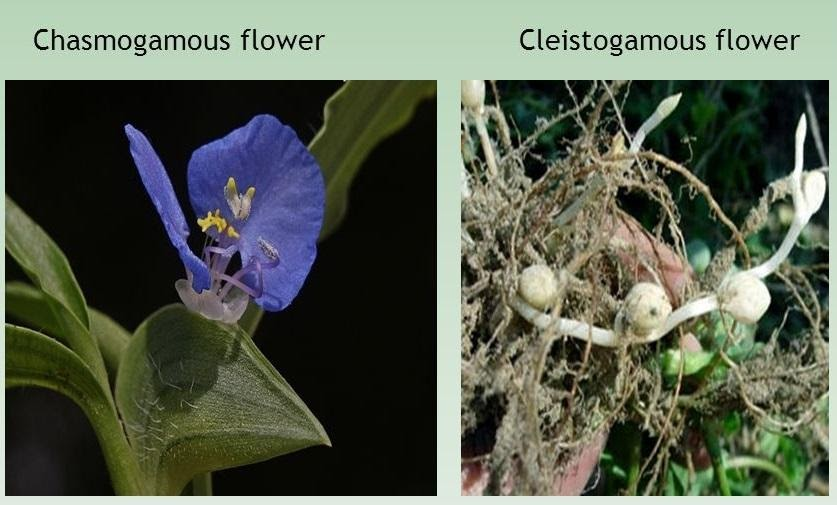
Pollination happens in chasmogamous flowers, which is a plant reproductive system. Open petals enclosing exposed reproductive organs are frequent in chasmogamous flowers. Chasmogamous is derived from the Greek word chasmogamous, which means "open marriage," and refers to the open arrangement of floral structures.
Chasmogamous flowers are the sort of bloom that will only open when it has experienced "self-pollination". The flowers that don't open are the ones that don't open at all. Oxalis, Viola, peas, beans, Hibiscus, Commelina flowers, and other Chasmogamous flowers are examples.
There are two types of cross-pollination: geitonogamy and xenogamy. As a result, chasmogamous flowers demonstrate both autogamy (self-pollination) and allogamy (cross-pollination). As a result, these blooms are always autogamous since cross-pollen cannot land on the stigma.
Cleistogamous flowers-
Cleistogamy is a phenomenon in which flowers never open and only self-pollination takes place within the bud (unopened flower). Cleistogamous flowers are bisexual flowers that do not open at all. Anthers and stigma are close together in such flowers. Pollen grains come into contact with the stigma when the anthers dehisce in the flower buds, and pollination occurs.
Cleistogamy is a sort of automatic self-pollination in which certain plants reproduce by means of non-opening, self-pollinating flowers. The flowers are sexually dimorphic. Self-pollination occurs because they remain closed. Viola, Oxalis, Commelina, and Cardamine are some examples.
Note:
Difference between chasmogamy and cleistogamy
The process by which flowering plants reproduce sexually is called pollination. Male sex organs called stamens and female sex organs called pistils are found in the flowers. The pollen-bearing portion of the stamen is called the anther. When a plant's own pollen fertilises its own ovules, this is known as self-pollination.
Complete answer
Chasmogamous flowers-
Pollination happens in chasmogamous flowers, which is a plant reproductive system. Open petals enclosing exposed reproductive organs are frequent in chasmogamous flowers. Chasmogamous is derived from the Greek word chasmogamous, which means "open marriage," and refers to the open arrangement of floral structures.
Chasmogamous flowers are the sort of bloom that will only open when it has experienced "self-pollination". The flowers that don't open are the ones that don't open at all. Oxalis, Viola, peas, beans, Hibiscus, Commelina flowers, and other Chasmogamous flowers are examples.
There are two types of cross-pollination: geitonogamy and xenogamy. As a result, chasmogamous flowers demonstrate both autogamy (self-pollination) and allogamy (cross-pollination). As a result, these blooms are always autogamous since cross-pollen cannot land on the stigma.
Cleistogamous flowers-
Cleistogamy is a phenomenon in which flowers never open and only self-pollination takes place within the bud (unopened flower). Cleistogamous flowers are bisexual flowers that do not open at all. Anthers and stigma are close together in such flowers. Pollen grains come into contact with the stigma when the anthers dehisce in the flower buds, and pollination occurs.
Cleistogamy is a sort of automatic self-pollination in which certain plants reproduce by means of non-opening, self-pollinating flowers. The flowers are sexually dimorphic. Self-pollination occurs because they remain closed. Viola, Oxalis, Commelina, and Cardamine are some examples.
Note:
Difference between chasmogamy and cleistogamy
| CHASMOGAMY | CLEISTOGAMY |
| The anther and stigma of chasmogamous flowers have been uncovered. | The anthers and stigma of cleistogamous flowers remain closed and close to one other. |
| They are frequently pollinated by other species. These blooms require pollinators since cross pollination occurs. | They are frequently pollinated by other species. These blooms require pollinators since cross pollination occurs. |
| These flowers frequently contain brightly coloured petals and nectar guides to attract and reward pollinators, in order to promote cross pollination. | Pollinators do not require attractive flower parts or nectaries to be rewarded. |
| The seeds produced by chasmogamous blooms are genetically different. | These flowers establish a reliable seed set in the absence of pollinators. |
Recently Updated Pages
Master Class 10 Computer Science: Engaging Questions & Answers for Success

Differentiate between voluntary action and reflex class 10 biology CBSE
The uses of bleaching powder are A It is used bleaching class 10 chemistry CBSE
Fill in the blanks with abstract nouns of the words class 10 english CBSE
How many threedigit numbers are there class 10 maths CBSE
What is a reflex arc class 10 biology CBSE
Trending doubts
Explain the Treaty of Vienna of 1815 class 10 social science CBSE
10 examples of evaporation in daily life with explanations
Which country is known as "The land of Fire and Ice"?
What is the full form of POSCO class 10 social science CBSE
Make a sketch of the human nerve cell What function class 10 biology CBSE
In which year voting age was reduced from 21 to 18?