




Central dogma of molecular biology was modified with the discovery of
(a)Ligase
(b)RNA polymerase
(c)DNA polymerase
(d)Reverse transcriptase
Answer
 Verified
607.5k+ views
Hint: It's a system for understanding the exchange of sequence data between data conveying biopolymers, inside the commonest or general case, in living creatures. There are 3 significant classes of such biopolymers: DNA and RNA (both nucleic acids), and protein. There are 3 × 3 = 9 conceivable direct transfers of data that will occur between these.
Complete answer:
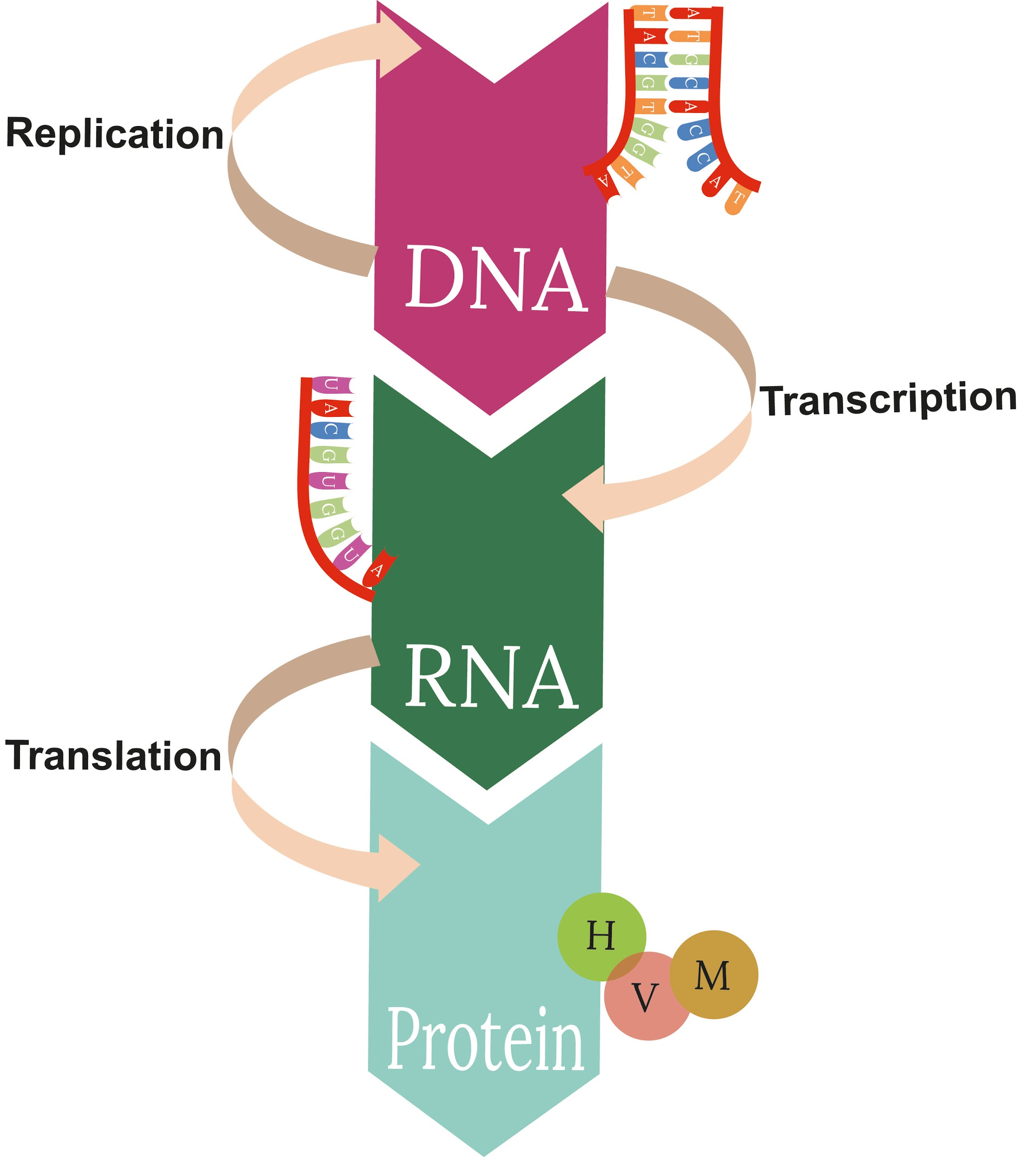
The molecular path of the flow of genetic information is explained by central dogma. Appropriately, the progression of hereditary data is unidirectional and includes four cycles.
Replication of DNA copies the genetic information present in it which is transcribed into RNA by an RNA polymerase enzyme.
The RNA sequence of ribonucleotides is translated into an amino alkanoic acid sequence of polypeptides by the method of translation. Consequently, the progression of hereditary data is unidirectional and follows the way: DNA-RNA-protein.
H. Temin and D. Baltimore demonstrated that the retroviruses, in particular, Rous sarcoma infection and the AIDS infection can make an RNA-subordinate DNA polymerase that combines a DNA duplicate (cDNA) of viral RNA.
The cDNA is made into a double-stranded molecule which is integrated into the host genome where it is replicated and transcribed with host DNA; the topsy curvy path of flow of genetic information, i.e., RNA-DNA-RNA-protein. The enzyme was termed reverse transcriptase.
DNA ligase combines two sections by phosphodiester linkage; DNA and RNA polymerases are compounds of DNA replication and RNA combination that are engaged with the unidirectional progression of hereditary material.
Additional Information: The dogma classes these into 3 gatherings of 3: three general exchanges (accepted to happen regularly in many cells), three exceptional exchanges (known to happen, yet just under explicit conditions if there should be an occurrence of some infections or during a lab), and three obscure exchanges (accepted never to happen). The overall exchanges portray the traditional flow of biological data: DNA is frequently duplicated to DNA (DNA replication), DNA data are regularly replicated into mRNA (transcription), and proteins can be combined utilizing the information in mRNA as a format (translation).
So the correct answer is ‘Reverse transcriptase’.
Note: The extraordinary exchanges depict: RNA being duplicated from (RNA replication), DNA being integrated utilizing an RNA format (reverse transcription), and proteins being synthesized straightforwardly from a DNA template without the use of mRNA. The obscure exchanges portray: a protein being duplicated from a protein, synthesis of RNA utilizing the primary structure of a protein as a layout, and DNA synthesis utilizing the primary structure of a protein as a template - these aren't thought to naturally occur.
Complete answer:
The molecular path of the flow of genetic information is explained by central dogma. Appropriately, the progression of hereditary data is unidirectional and includes four cycles.
Replication of DNA copies the genetic information present in it which is transcribed into RNA by an RNA polymerase enzyme.
The RNA sequence of ribonucleotides is translated into an amino alkanoic acid sequence of polypeptides by the method of translation. Consequently, the progression of hereditary data is unidirectional and follows the way: DNA-RNA-protein.
H. Temin and D. Baltimore demonstrated that the retroviruses, in particular, Rous sarcoma infection and the AIDS infection can make an RNA-subordinate DNA polymerase that combines a DNA duplicate (cDNA) of viral RNA.
The cDNA is made into a double-stranded molecule which is integrated into the host genome where it is replicated and transcribed with host DNA; the topsy curvy path of flow of genetic information, i.e., RNA-DNA-RNA-protein. The enzyme was termed reverse transcriptase.
DNA ligase combines two sections by phosphodiester linkage; DNA and RNA polymerases are compounds of DNA replication and RNA combination that are engaged with the unidirectional progression of hereditary material.
Additional Information: The dogma classes these into 3 gatherings of 3: three general exchanges (accepted to happen regularly in many cells), three exceptional exchanges (known to happen, yet just under explicit conditions if there should be an occurrence of some infections or during a lab), and three obscure exchanges (accepted never to happen). The overall exchanges portray the traditional flow of biological data: DNA is frequently duplicated to DNA (DNA replication), DNA data are regularly replicated into mRNA (transcription), and proteins can be combined utilizing the information in mRNA as a format (translation).
So the correct answer is ‘Reverse transcriptase’.
Note: The extraordinary exchanges depict: RNA being duplicated from (RNA replication), DNA being integrated utilizing an RNA format (reverse transcription), and proteins being synthesized straightforwardly from a DNA template without the use of mRNA. The obscure exchanges portray: a protein being duplicated from a protein, synthesis of RNA utilizing the primary structure of a protein as a layout, and DNA synthesis utilizing the primary structure of a protein as a template - these aren't thought to naturally occur.
Recently Updated Pages
Master Class 12 Business Studies: Engaging Questions & Answers for Success

Master Class 12 Chemistry: Engaging Questions & Answers for Success
Master Class 12 Biology: Engaging Questions & Answers for Success
Class 12 Question and Answer - Your Ultimate Solutions Guide
Master Class 11 English: Engaging Questions & Answers for Success
Master Class 11 Social Science: Engaging Questions & Answers for Success
Trending doubts
Which are the Top 10 Largest Countries of the World?
Draw a labelled sketch of the human eye class 12 physics CBSE
Differentiate between homogeneous and heterogeneous class 12 chemistry CBSE
Differentiate between Pyramid of energy and pyramid class 12 biology CBSE
Why is the cell called the structural and functional class 12 biology CBSE
Draw the diagram of the pyramid of energy Explain In class 12 biology CBSE