




Calculate the % of p character in the orbital occupied by the lone pairs in water molecule:
[Given: $\angle HOH\,\,is\,\,{{104.5}^{\,\circ }}$and $\cos (104.5)=\,-0.25$]
A.80%
B.20%
C.70%
D.75%
Answer
 Verified
547.8k+ views
Hint: Before solving this question, we should know about Bent’s rule. It is the rule in which a central atom is bonded to many groups that will hybridize and direct the orbitals that have more s character to the electropositive groups while the ones who have more p character will direct the orbitals to the electronegative groups.
Complete answer:
When we talk about the chemical structure of any molecule, it is associated with its properties and reactivity. VBT which is the valence bond theory says that the molecular structure forms because of the covalent bonding between the atoms and there is two overlapping and hybridized atomic orbitals in each bond.
Usually, the elements of p-block are hybridized as$s{{p}^{n}}$(n= 1,2 or 3). Also, The hybrid orbitals are taken to be the same (n+1$s{{p}^{n}}$orbitals contain the same p character). The result from this method is generally good but there is a chance of improvement with isovalent hybridization. In this method, the hybridized orbitals may not contain any integer or do not have an equal p character.
The assumption that all hybrid orbitals are equivalent can be removed, better understanding and outcomes and properties like molecular geometry and bond strength can be explained and obtained more accurately.
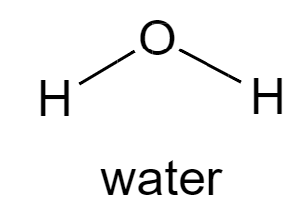
Let’s calculate the % of p orbital of a water molecule-
$\cos \theta =\dfrac{-1}{i}$
$\cos \theta ({{104.5}^{\circ }})=\dfrac{-1}{i}=\,-0.25$
Hence, i = 4
Also, $\sum{{{f}_{p}}=3}$
$\dfrac{2i}{i+1}+2{{f}^{'}}p=3$
$\dfrac{2\times 4}{5}+2{{f}^{'}}p=3$
Where ${{f}^{'}}p$represents the fraction of p character in lone pair
${{f}^{'}}p=\dfrac{7}{10}$
${{f}^{'}}p%=70%$
Thus, the % of p character in the orbital occupied by the lone pairs in water molecules is 70%.
So, Option (C) 70% is correct.
Note:
The hybridization of the water molecule is $s{{p}^{3}}$ and In this hybridized orbital, every orbital consist of 25% s-character and 75% p-character but in the case of ${{H}_{2}}O$, there are two lone pairs and two bond pairs so s character in this will be more.
Complete answer:
When we talk about the chemical structure of any molecule, it is associated with its properties and reactivity. VBT which is the valence bond theory says that the molecular structure forms because of the covalent bonding between the atoms and there is two overlapping and hybridized atomic orbitals in each bond.
Usually, the elements of p-block are hybridized as$s{{p}^{n}}$(n= 1,2 or 3). Also, The hybrid orbitals are taken to be the same (n+1$s{{p}^{n}}$orbitals contain the same p character). The result from this method is generally good but there is a chance of improvement with isovalent hybridization. In this method, the hybridized orbitals may not contain any integer or do not have an equal p character.
The assumption that all hybrid orbitals are equivalent can be removed, better understanding and outcomes and properties like molecular geometry and bond strength can be explained and obtained more accurately.
Let’s calculate the % of p orbital of a water molecule-
$\cos \theta =\dfrac{-1}{i}$
$\cos \theta ({{104.5}^{\circ }})=\dfrac{-1}{i}=\,-0.25$
Hence, i = 4
Also, $\sum{{{f}_{p}}=3}$
$\dfrac{2i}{i+1}+2{{f}^{'}}p=3$
$\dfrac{2\times 4}{5}+2{{f}^{'}}p=3$
Where ${{f}^{'}}p$represents the fraction of p character in lone pair
${{f}^{'}}p=\dfrac{7}{10}$
${{f}^{'}}p%=70%$
Thus, the % of p character in the orbital occupied by the lone pairs in water molecules is 70%.
So, Option (C) 70% is correct.
Note:
The hybridization of the water molecule is $s{{p}^{3}}$ and In this hybridized orbital, every orbital consist of 25% s-character and 75% p-character but in the case of ${{H}_{2}}O$, there are two lone pairs and two bond pairs so s character in this will be more.
Recently Updated Pages
Master Class 11 Social Science: Engaging Questions & Answers for Success

Master Class 11 Physics: Engaging Questions & Answers for Success
Master Class 11 Maths: Engaging Questions & Answers for Success
Master Class 11 Economics: Engaging Questions & Answers for Success
Master Class 11 Computer Science: Engaging Questions & Answers for Success
Master Class 11 Chemistry: Engaging Questions & Answers for Success
Trending doubts
One Metric ton is equal to kg A 10000 B 1000 C 100 class 11 physics CBSE
There are 720 permutations of the digits 1 2 3 4 5 class 11 maths CBSE
1 Quintal is equal to a 110 kg b 10 kg c 100kg d 1000 class 11 physics CBSE
State and prove Bernoullis theorem class 11 physics CBSE
Difference Between Prokaryotic Cells and Eukaryotic Cells
Which among the following are examples of coming together class 11 social science CBSE