




Calcareous shell is seen in:
a. Oyster
b. Snail
c. Slug
d. All of the above
Answer
 Verified
645.3k+ views
Hint: We all know that the small and tiny organisms present on the earth have no special organs to protect themselves from predators so they are having no protection. The calcareous shell can be defined to be the hard and external skeleton which affords shield to these tiny organisms.
Complete answer:
> An exoskeleton made by calcareous and helps in enclosing, supporting, and protecting the soft organs present in an animal in the location of phylum Mollusca is typically known as the mollusk (also known as mollusk) shell.
> This also consists of small and tiny organisms such as shells, clams, snails, tusks, and several other modules. However, on the other hand, not all shelled mollusks live in only the sea; many shelled mollusks live on the terrestrial land and in freshwater bodies.
> The characteristics of being a soft, unsegmented body along with a hard shell which is made up of calcareous can help in categorizing the animals into the class of Phylum mollusca.
> The small and mild organisms like an oyster, snail. Slug are examples of the creatures present in the class of Phylum mollusca. The Calcareous shell is the so-called hard exoskeleton which helps these animals to survive by offering protection to these organisms.
Hence, The correct answer is option (D).
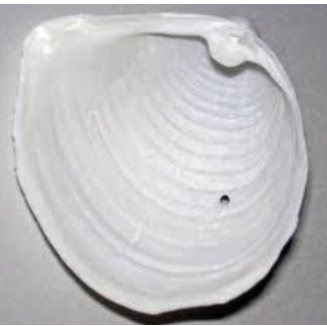
Figure-1: it shows the shell of Mollusca which is made up of Calcareous.
Note:
- Malacology is the scientific and systematic study of invertebrate zoology, which deals with the study of the Mollusca as living organisms, who are the second-largest phylum of invertebrate animals in terms of designated classes after the phylum of arthropods.
- Malacology, which is the study of the mollusks, has a subdivision dedicated to the education of shells, and this study is known as conchology.
Complete answer:
> An exoskeleton made by calcareous and helps in enclosing, supporting, and protecting the soft organs present in an animal in the location of phylum Mollusca is typically known as the mollusk (also known as mollusk) shell.
> This also consists of small and tiny organisms such as shells, clams, snails, tusks, and several other modules. However, on the other hand, not all shelled mollusks live in only the sea; many shelled mollusks live on the terrestrial land and in freshwater bodies.
> The characteristics of being a soft, unsegmented body along with a hard shell which is made up of calcareous can help in categorizing the animals into the class of Phylum mollusca.
> The small and mild organisms like an oyster, snail. Slug are examples of the creatures present in the class of Phylum mollusca. The Calcareous shell is the so-called hard exoskeleton which helps these animals to survive by offering protection to these organisms.
Hence, The correct answer is option (D).
Figure-1: it shows the shell of Mollusca which is made up of Calcareous.
Note:
- Malacology is the scientific and systematic study of invertebrate zoology, which deals with the study of the Mollusca as living organisms, who are the second-largest phylum of invertebrate animals in terms of designated classes after the phylum of arthropods.
- Malacology, which is the study of the mollusks, has a subdivision dedicated to the education of shells, and this study is known as conchology.
Recently Updated Pages
Master Class 11 English: Engaging Questions & Answers for Success

Master Class 11 Physics: Engaging Questions & Answers for Success
Master Class 11 Computer Science: Engaging Questions & Answers for Success
Master Class 11 Chemistry: Engaging Questions & Answers for Success
Master Class 11 Social Science: Engaging Questions & Answers for Success
Master Class 11 Accountancy: Engaging Questions & Answers for Success
Trending doubts
Difference Between Prokaryotic Cells and Eukaryotic Cells
Two of the body parts which do not appear in MRI are class 11 biology CBSE
One Metric ton is equal to kg A 10000 B 1000 C 100 class 11 physics CBSE
10 examples of friction in our daily life
Draw a diagram of nephron and explain its structur class 11 biology CBSE
Draw a diagram of a plant cell and label at least eight class 11 biology CBSE