




Besides paddy fields, Cyanobacteria are also found inside the vegetative part of
A. Pinus
B. Cycas
C. Equisetum
D. Psilotum
Answer
 Verified
600.6k+ views
Hint: Cyanobacteria are free-living or symbiotic bacteria. Some of these have the ability to fix atmospheric nitrogen. Also, these are photosynthetic bacteria. These are found in all habitats ranging from aquatic and terrestrial regions. These live in endosymbiosis with the chloroplasts and chloroplasts are present in plants and algae only.
Complete answer: Cyanobacteria are photosynthetic bacteria that live in endosymbiotic relationships with plants and some algae. The endosymbiotic relation refers to the relationship that involves one organism living inside the body of another organism. The chloroplasts are thought to be evolved from cyanobacteria species. But later it was confirmed that cyanobacteria are found to be living in associations with chloroplasts as both get mutually benefited.
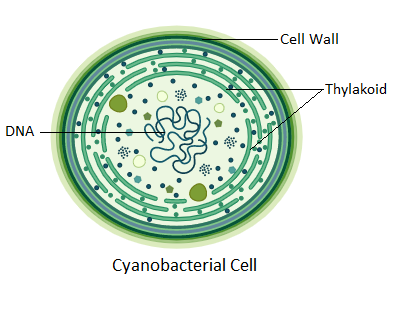
To answer, let us discuss each species in reference to Cyanobacteria.
-Pinus is a large evergreen plant. It has a sporophytic plant body that is divided into roots, stems, and needle-shaped leaves. The roots of Pinus have mycorrhizal symbiotic relationships.
-The Cycas are considered ancient plants. They are palm-like trees that are evergreen. The trunk of the plant is columnar and aerial in nature. The roots show negative geotropism. So, these are called coralloid roots that have nitrogen-fixing bacteria. Also, these roots are photosynthetic due to the presence of photosynthetic bacteria. This property is due to the presence of cyanobacteria.
-Equisetum is the genus of vascular plants that reproduce by means of seeds. The adventitious roots are present that arise at the nodes of stems.
-Psilotum are sporophytes that have rhizoids in place of roots. These have leafless upright branches. The rhizoids function to perform absorption and provide anchorage.
Thus, from the above discussion, we can conclude that the right answer is option B.
Note: The endosymbiotic relations of cyanobacteria with the coralloid roots results in the formation of various beneficial amino acids. Asparagines and citrulline are the two amino acids that boost plant growth. In the paddy fields, the cyanobacteria help in nitrogen-fixation. Also, they help in the maintenance of salinity and acidity of the soil.
Complete answer: Cyanobacteria are photosynthetic bacteria that live in endosymbiotic relationships with plants and some algae. The endosymbiotic relation refers to the relationship that involves one organism living inside the body of another organism. The chloroplasts are thought to be evolved from cyanobacteria species. But later it was confirmed that cyanobacteria are found to be living in associations with chloroplasts as both get mutually benefited.
To answer, let us discuss each species in reference to Cyanobacteria.
-Pinus is a large evergreen plant. It has a sporophytic plant body that is divided into roots, stems, and needle-shaped leaves. The roots of Pinus have mycorrhizal symbiotic relationships.
-The Cycas are considered ancient plants. They are palm-like trees that are evergreen. The trunk of the plant is columnar and aerial in nature. The roots show negative geotropism. So, these are called coralloid roots that have nitrogen-fixing bacteria. Also, these roots are photosynthetic due to the presence of photosynthetic bacteria. This property is due to the presence of cyanobacteria.
-Equisetum is the genus of vascular plants that reproduce by means of seeds. The adventitious roots are present that arise at the nodes of stems.
-Psilotum are sporophytes that have rhizoids in place of roots. These have leafless upright branches. The rhizoids function to perform absorption and provide anchorage.
Thus, from the above discussion, we can conclude that the right answer is option B.
Note: The endosymbiotic relations of cyanobacteria with the coralloid roots results in the formation of various beneficial amino acids. Asparagines and citrulline are the two amino acids that boost plant growth. In the paddy fields, the cyanobacteria help in nitrogen-fixation. Also, they help in the maintenance of salinity and acidity of the soil.
Recently Updated Pages
Master Class 11 Social Science: Engaging Questions & Answers for Success

Master Class 11 English: Engaging Questions & Answers for Success
Master Class 11 Maths: Engaging Questions & Answers for Success
Master Class 11 Chemistry: Engaging Questions & Answers for Success
Master Class 11 Biology: Engaging Questions & Answers for Success
Master Class 11 Physics: Engaging Questions & Answers for Success
Trending doubts
One Metric ton is equal to kg A 10000 B 1000 C 100 class 11 physics CBSE
Difference Between Prokaryotic Cells and Eukaryotic Cells
How many of the following diseases can be studied with class 11 biology CBSE
Which of the following enzymes is used for carboxylation class 11 biology CBSE
Two of the body parts which do not appear in MRI are class 11 biology CBSE
Draw a diagram of a plant cell and label at least eight class 11 biology CBSE