




ATP formation occurs through which of the following.
(a) Photophosphorylation
(b) Oxidative phosphorylation
(c) Substrate level phosphorylation
(d) All of these
Answer
 Verified
611.4k+ views
Hint: The processes that may be involved in the process of photosynthesis, transferring electrons through electron carriers in mitochondria, or converting the higher energy into the lower substrate energy to form ATP.
Complete answer:
The formation of ATP (Adenosine triphosphate) occurs in all three processes as photophosphorylation is the process that occurs during photosynthesis which converts light energy into ATP from ADP. The oxidative phosphorylation is the process of transferring electrons through electron carriers in the mitochondria resulting in the formation of the ATP. Lastly, the substrate- level phosphorylation is the process of conversion of higher energy to lower energy to form ATP.
- The ATP is formed by the help of the ATP synthase enzyme which is used during the process of photosynthesis.
- ATP is the energy currency of the cell which meets the need of the various metabolic reactions that occur during the life cycle of an organism.
- In the process of oxidative phosphorylation, the nutrients are oxidized to produce chemical energy which in turn produces the ATP.
- The oxidative phosphorylation occurs inside the mitochondria that have electron carriers in its inner membrane.
- The substrate level phosphorylation produces a smaller amount of ATP molecules in comparison to other processes, they do not involve mitochondria and electron carriers.
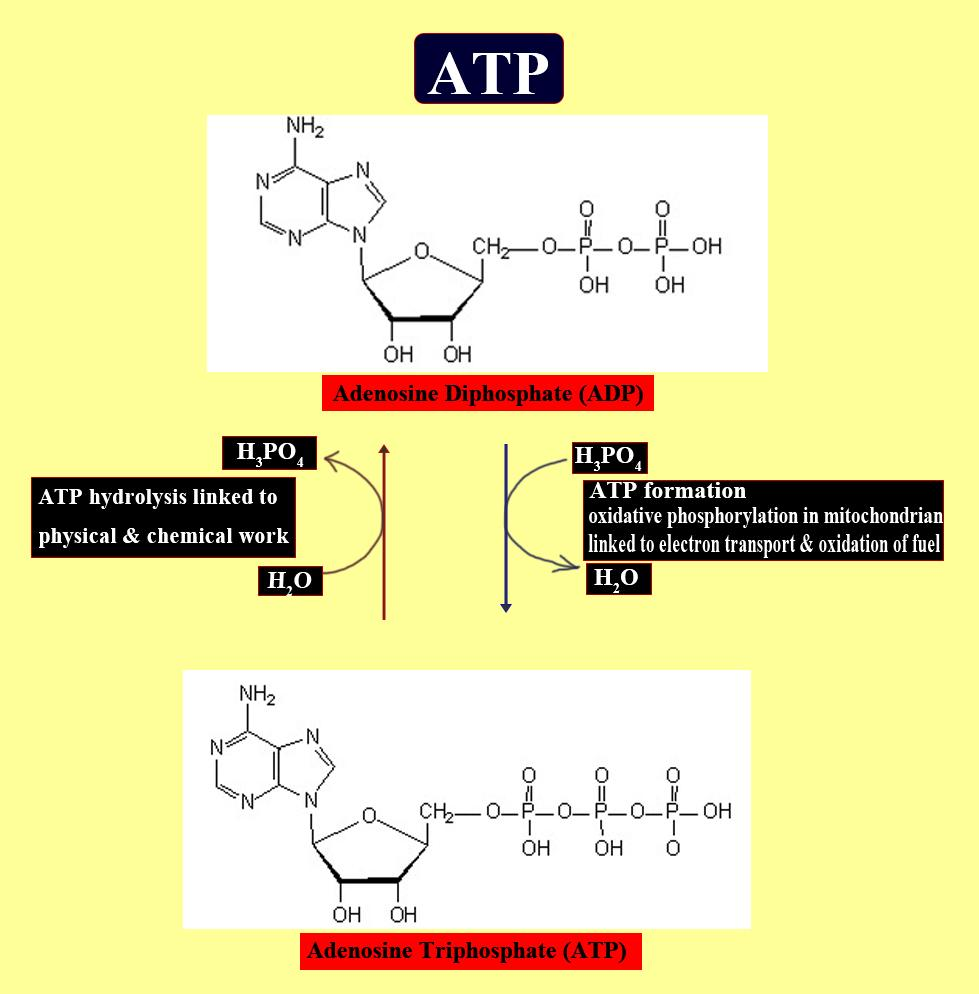
So, the correct answer is ‘All of these’.
Note: The ATP synthase is the enzyme that converts the ADP into ATP and is found mostly in the inner membranes of the cellular organelles like mitochondria and chloroplasts. The process of formation of ATP from ADP and phosphate is known as chemiosmosis. These ATP molecules are required to perform various activities of the cell.
Complete answer:
The formation of ATP (Adenosine triphosphate) occurs in all three processes as photophosphorylation is the process that occurs during photosynthesis which converts light energy into ATP from ADP. The oxidative phosphorylation is the process of transferring electrons through electron carriers in the mitochondria resulting in the formation of the ATP. Lastly, the substrate- level phosphorylation is the process of conversion of higher energy to lower energy to form ATP.
- The ATP is formed by the help of the ATP synthase enzyme which is used during the process of photosynthesis.
- ATP is the energy currency of the cell which meets the need of the various metabolic reactions that occur during the life cycle of an organism.
- In the process of oxidative phosphorylation, the nutrients are oxidized to produce chemical energy which in turn produces the ATP.
- The oxidative phosphorylation occurs inside the mitochondria that have electron carriers in its inner membrane.
- The substrate level phosphorylation produces a smaller amount of ATP molecules in comparison to other processes, they do not involve mitochondria and electron carriers.
So, the correct answer is ‘All of these’.
Note: The ATP synthase is the enzyme that converts the ADP into ATP and is found mostly in the inner membranes of the cellular organelles like mitochondria and chloroplasts. The process of formation of ATP from ADP and phosphate is known as chemiosmosis. These ATP molecules are required to perform various activities of the cell.
Recently Updated Pages
Master Class 11 Economics: Engaging Questions & Answers for Success

Master Class 11 English: Engaging Questions & Answers for Success
Master Class 11 Maths: Engaging Questions & Answers for Success
Class 11 Question and Answer - Your Ultimate Solutions Guide
Master Class 11 Social Science: Engaging Questions & Answers for Success
Master Class 11 Business Studies: Engaging Questions & Answers for Success
Trending doubts
One Metric ton is equal to kg A 10000 B 1000 C 100 class 11 physics CBSE
There are 720 permutations of the digits 1 2 3 4 5 class 11 maths CBSE
Differentiate between an exothermic and an endothermic class 11 chemistry CBSE
In what year Guru Nanak Dev ji was born A15 April 1469 class 11 social science CBSE
Difference Between Prokaryotic Cells and Eukaryotic Cells
State and prove Bernoullis theorem class 11 physics CBSE