




What are two types of scientific models?
Answer
 Verified
563.7k+ views
Hint: A scientific model is the representation of the theories or the hypothesis that the scientists worked on. It gives a diagrammatic or a schematic presentation of any subject or the topic that needs to be studied or researched on. A scientific model can represent a concept or the theoretical assumption made by the researchers.
Complete answer:
A scientific model explains any concept, theory, observation, idea, phenomena, etc. through a representation that tells us a rough idea about the working or the process of that particular model. These models can be in the form of diagrams, flowcharts, graphs, etc.
Scientific models are used to study the patterns and the behavior of any scientific phenomena that may be related to physics, chemistry, biology, ecology, etc. These models are an assumption of the structures, objects, life processes, theories, and many more topics. Thus they can be changed with time if not an exact assumption.
Two types of scientific models are:
-Physical model: This is the type of model that represents the physical description of any substance or species. This can tell us the approximate structure of the chemical species. For example Bohr’s model of an atom was the 1st proposed model for the structure of an atom. It is shown as,
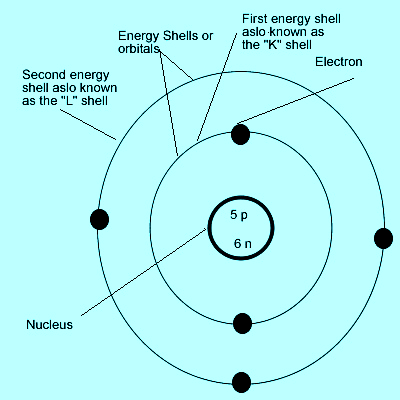
This was an approximate model, which was rejected. But used to get a tentative idea about the atomic structure.
-Conceptual models: These models are used to study the concepts of any area of study. These concepts are generally patterns and theoretical. For example, a food web is a conceptual model, which is,
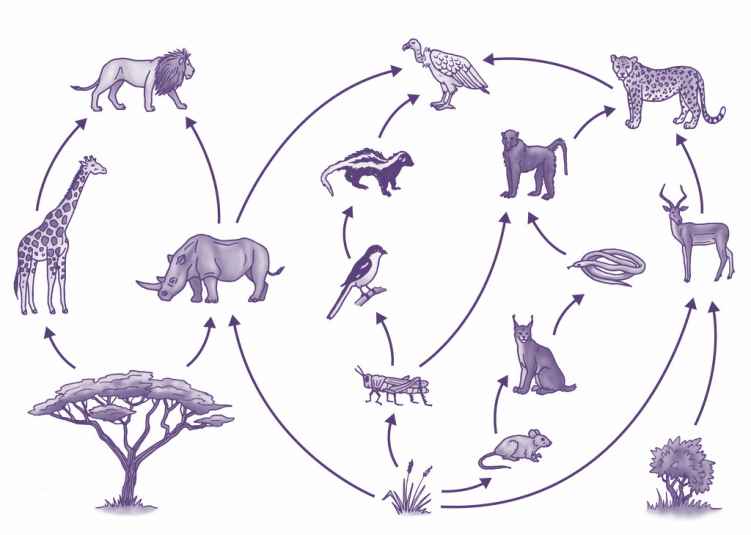
This model shows the relationship between the food patterns of various animals that helps us to study the environmental food web and the ecological balance through it.
Hence, two types of scientific models are physical model and conceptual model.
Note:
A third type of scientific model also exists that is called a mathematical model. This model explains any trend or pattern in the form of graphical representation or mathematical figures. For example a graph that shows the trend of the growing climate change per year, or a graph that shows the extinction of various animals by the decades.
Complete answer:
A scientific model explains any concept, theory, observation, idea, phenomena, etc. through a representation that tells us a rough idea about the working or the process of that particular model. These models can be in the form of diagrams, flowcharts, graphs, etc.
Scientific models are used to study the patterns and the behavior of any scientific phenomena that may be related to physics, chemistry, biology, ecology, etc. These models are an assumption of the structures, objects, life processes, theories, and many more topics. Thus they can be changed with time if not an exact assumption.
Two types of scientific models are:
-Physical model: This is the type of model that represents the physical description of any substance or species. This can tell us the approximate structure of the chemical species. For example Bohr’s model of an atom was the 1st proposed model for the structure of an atom. It is shown as,
This was an approximate model, which was rejected. But used to get a tentative idea about the atomic structure.
-Conceptual models: These models are used to study the concepts of any area of study. These concepts are generally patterns and theoretical. For example, a food web is a conceptual model, which is,
This model shows the relationship between the food patterns of various animals that helps us to study the environmental food web and the ecological balance through it.
Hence, two types of scientific models are physical model and conceptual model.
Note:
A third type of scientific model also exists that is called a mathematical model. This model explains any trend or pattern in the form of graphical representation or mathematical figures. For example a graph that shows the trend of the growing climate change per year, or a graph that shows the extinction of various animals by the decades.
Recently Updated Pages
Master Class 11 English: Engaging Questions & Answers for Success

Master Class 11 Social Science: Engaging Questions & Answers for Success
Master Class 11 Maths: Engaging Questions & Answers for Success
Master Class 11 Biology: Engaging Questions & Answers for Success
Master Class 11 Physics: Engaging Questions & Answers for Success
Master Class 11 Chemistry: Engaging Questions & Answers for Success
Trending doubts
Explain the Treaty of Vienna of 1815 class 10 social science CBSE
First Cotton Mill of India
In which year voting age was reduced from 21 to 18?
What planets have no moons Which one has only one moon class 10 physics CBSE
What is the full form of POSCO class 10 social science CBSE
10 examples of evaporation in daily life with explanations