




How are the small bulbs, which are used for decoration purposes, connected?
A. in parallel
B. in series
C. in mixed order
D. all of the above
Answer
 Verified
557.1k+ views
Hint: There are mainly two basic types of circuit connections that are used in electrical circuits to connect different circuit components to connect. Learn about them and learn the basic differences, advantages and disadvantages to answer the question.
Complete answer:
We know that there are basically two types of connections
(i) Series connection
(ii) parallel connection
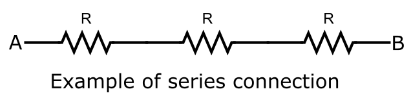
Now, the basic differences between these two types of connections are as follows: In series connections the resistances are joined end to end so the current through all the resistance are the same but the voltage or potential drop across each of the resistance is different and is lower than the source used. This type of connection is useful when the components are needed to operate at a lower voltage or the current through the component need to be maximum.
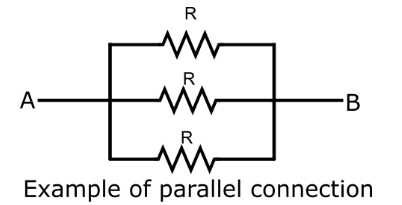
On the other hand, in parallel connections the resistances or the component are joined in between the same two ends. Due to this the voltage across all the elements are the same but the current is different in each component and is lower than the main current in the circuit. This type connections is useful when the components need to operate at the same voltage.
Now, in small bulbs for decoration we need the bulbs to operate in a lower voltage as the power rating of the bulbs are too low and also it is needed to glow all the bulbs at same intensity meaning same current through the bulbs. Now, as we can see from the above differences the can be used in series connection to fulfill the requirement of it.
Hence, the bulbs used for decoration are always connected in series.
Note: In series connection if one of the components is faulty the whole connection breaks out but in parallel connection if one component is faulty all the other component remains fully functional. So, if one bulb becomes faulty all the other bulbs cannot glow hence the whole circuit becomes nonfunctional. So, these days the LED decoration bulbs use parallel connection to overcome this problem but it uses a step-down transformer to reduce the voltage drop across each bulb.
Complete answer:
We know that there are basically two types of connections
(i) Series connection
(ii) parallel connection
Now, the basic differences between these two types of connections are as follows: In series connections the resistances are joined end to end so the current through all the resistance are the same but the voltage or potential drop across each of the resistance is different and is lower than the source used. This type of connection is useful when the components are needed to operate at a lower voltage or the current through the component need to be maximum.
On the other hand, in parallel connections the resistances or the component are joined in between the same two ends. Due to this the voltage across all the elements are the same but the current is different in each component and is lower than the main current in the circuit. This type connections is useful when the components need to operate at the same voltage.
Now, in small bulbs for decoration we need the bulbs to operate in a lower voltage as the power rating of the bulbs are too low and also it is needed to glow all the bulbs at same intensity meaning same current through the bulbs. Now, as we can see from the above differences the can be used in series connection to fulfill the requirement of it.
Hence, the bulbs used for decoration are always connected in series.
Note: In series connection if one of the components is faulty the whole connection breaks out but in parallel connection if one component is faulty all the other component remains fully functional. So, if one bulb becomes faulty all the other bulbs cannot glow hence the whole circuit becomes nonfunctional. So, these days the LED decoration bulbs use parallel connection to overcome this problem but it uses a step-down transformer to reduce the voltage drop across each bulb.
Recently Updated Pages
Master Class 11 English: Engaging Questions & Answers for Success

Master Class 11 Social Science: Engaging Questions & Answers for Success
Master Class 11 Maths: Engaging Questions & Answers for Success
Master Class 11 Biology: Engaging Questions & Answers for Success
Master Class 11 Physics: Engaging Questions & Answers for Success
Master Class 11 Chemistry: Engaging Questions & Answers for Success
Trending doubts
Explain the Treaty of Vienna of 1815 class 10 social science CBSE
What is the Total Duration of Football Match?
First Cotton Mill of India
In which year voting age was reduced from 21 to 18?
10 examples of evaporation in daily life with explanations
What planets have no moons Which one has only one moon class 10 physics CBSE