




What are the layers of the gastrointestinal tract? What are their functions?
Answer
 Verified
570.6k+ views
Hint: The gastrointestinal tract is the part that includes the esophagus along with the stomach, intestine, and other vital organs that are involved in the process of digestion of the food. Here the process of digestion and absorption of food occurs.
Complete answer
The region that comes in between the esophagus and the large intestine is the part of the gastrointestinal (GI) tract. It consists of mainly four types of layers that include the mucosa, submucosa, muscularis, and serosa.
-Serosa - The outermost layer is the serosa layer and is coated with mucus. It is made up of loose connective tissue and prevents the intestine from getting damage due to the presence of friction between them. It is made up of squamous epithelium and consists of a layer called the mesothelium and is found in the tissues of the abdominal cavity.
-Muscularis - It is the second layer after the serosa and is made up of smooth muscles. They are generally present in the bowman’s capsule and thus this layer helps in the bowel movements. This also helps in the contraction and relaxation process that involves the engulfing and ejecting of food materials in and out of the body.
-Submucosa - It is the second last layer of the gastrointestinal tract and consists of various blood vessels, connective tissues, nerves, elastic fibers, etc. They are attached to the outermost layer and help in the nutrition supply to the various parts of the body.
-Mucosa - It is the outermost layer of the gastrointestinal tract that is made up of simple columnar epithelium. It is present in the esophageal region and helps in the process of absorption and secretion.
These layers help the food to combine with various acids and saliva resulting in the breakdown of the complex food particles into the smaller ones and thus results in the competition in the process of digestion.
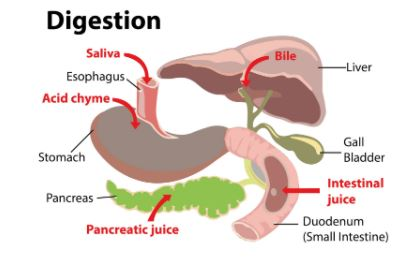
Note:
The digestive system was discovered in the seventeenth century by Flemish physician Jan Baptiste Van Helmont. The process of digestion initiates from the esophagus where the food is formed into chyme and then carried to various parts of the gastrointestinal tract that includes the stomach, the small intestine, then the large intestine, and lastly, through the anus the waste products are excreted out of the body.
Complete answer
The region that comes in between the esophagus and the large intestine is the part of the gastrointestinal (GI) tract. It consists of mainly four types of layers that include the mucosa, submucosa, muscularis, and serosa.
-Serosa - The outermost layer is the serosa layer and is coated with mucus. It is made up of loose connective tissue and prevents the intestine from getting damage due to the presence of friction between them. It is made up of squamous epithelium and consists of a layer called the mesothelium and is found in the tissues of the abdominal cavity.
-Muscularis - It is the second layer after the serosa and is made up of smooth muscles. They are generally present in the bowman’s capsule and thus this layer helps in the bowel movements. This also helps in the contraction and relaxation process that involves the engulfing and ejecting of food materials in and out of the body.
-Submucosa - It is the second last layer of the gastrointestinal tract and consists of various blood vessels, connective tissues, nerves, elastic fibers, etc. They are attached to the outermost layer and help in the nutrition supply to the various parts of the body.
-Mucosa - It is the outermost layer of the gastrointestinal tract that is made up of simple columnar epithelium. It is present in the esophageal region and helps in the process of absorption and secretion.
These layers help the food to combine with various acids and saliva resulting in the breakdown of the complex food particles into the smaller ones and thus results in the competition in the process of digestion.
Note:
The digestive system was discovered in the seventeenth century by Flemish physician Jan Baptiste Van Helmont. The process of digestion initiates from the esophagus where the food is formed into chyme and then carried to various parts of the gastrointestinal tract that includes the stomach, the small intestine, then the large intestine, and lastly, through the anus the waste products are excreted out of the body.
Recently Updated Pages
Master Class 11 English: Engaging Questions & Answers for Success

Master Class 11 Social Science: Engaging Questions & Answers for Success
Master Class 11 Maths: Engaging Questions & Answers for Success
Master Class 11 Biology: Engaging Questions & Answers for Success
Master Class 11 Physics: Engaging Questions & Answers for Success
Master Class 11 Chemistry: Engaging Questions & Answers for Success
Trending doubts
One Metric ton is equal to kg A 10000 B 1000 C 100 class 11 physics CBSE
Difference Between Prokaryotic Cells and Eukaryotic Cells
Find the value of the expression given below sin 30circ class 11 maths CBSE
Two of the body parts which do not appear in MRI are class 11 biology CBSE
Draw a diagram of a plant cell and label at least eight class 11 biology CBSE
10 examples of friction in our daily life