




What are the five major organ systems in the human body?
Answer
 Verified
562.2k+ views
Hint: Living organisms are instilled with several functions systems that perform various tasks at individual level. These systems are independent of each other and play a crucial role in survival of the organism along with keeping it in touch with reality.
Complete answer:
There are many organ systems in the human body amongst which five are major. Those are:
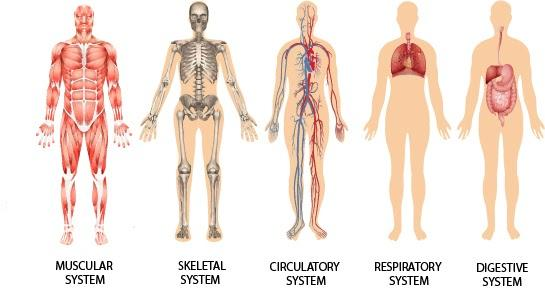
1. Circulatory system is a system that is concerned with circulation of blood carrying oxygen or carbon dioxide throughout the body. This circulation is conducted by heart. It involves several arteries and veins that work as movement channels.
2. Nervous system is a system that involves the brain and the spinal cord. It is concerned with processing and managing all the bodily activities. It helps the organism to maintain touch with reality. All environmental stimuluses are received and responded by this system only.
3. Digestive system is a system that involves muscles of stomach, intestines (large and small), liver, pancreas, gallbladder. This system is concerned with breaking down and consequent absorption of nutrients from food products. Thus, it is concerned with the energy producing process as well.
4. Reproductive system is a system that involves reproductive organs such a uterus, ovaries, reproductive tracts in females whereas involves penis, testicles and reproductive tracts in males. They are concerned with production of reproductive gametes, its safe storage and effective movement at the time of coitus to bring fusion of make and female gametes in action.
5. Excretory system is a system that involves parts of the large intestine, urethra, urinary tracts, urinary bladder, etc. It is concerned with safe disposal of waste products (including both solid and liquid) out of the body. This system is very crucial as its functioning majorly affects the disease count of the body.
Note:
There are several other organ systems in the human body apart from these. Immune system, muscular system, skeletal system, respiratory system, etc. They are comparatively smaller in terms of number of organs and level of work therefore are considered minor systems. However, it is worthy to note that every system has its own importance.
Complete answer:
There are many organ systems in the human body amongst which five are major. Those are:
1. Circulatory system is a system that is concerned with circulation of blood carrying oxygen or carbon dioxide throughout the body. This circulation is conducted by heart. It involves several arteries and veins that work as movement channels.
2. Nervous system is a system that involves the brain and the spinal cord. It is concerned with processing and managing all the bodily activities. It helps the organism to maintain touch with reality. All environmental stimuluses are received and responded by this system only.
3. Digestive system is a system that involves muscles of stomach, intestines (large and small), liver, pancreas, gallbladder. This system is concerned with breaking down and consequent absorption of nutrients from food products. Thus, it is concerned with the energy producing process as well.
4. Reproductive system is a system that involves reproductive organs such a uterus, ovaries, reproductive tracts in females whereas involves penis, testicles and reproductive tracts in males. They are concerned with production of reproductive gametes, its safe storage and effective movement at the time of coitus to bring fusion of make and female gametes in action.
5. Excretory system is a system that involves parts of the large intestine, urethra, urinary tracts, urinary bladder, etc. It is concerned with safe disposal of waste products (including both solid and liquid) out of the body. This system is very crucial as its functioning majorly affects the disease count of the body.
Note:
There are several other organ systems in the human body apart from these. Immune system, muscular system, skeletal system, respiratory system, etc. They are comparatively smaller in terms of number of organs and level of work therefore are considered minor systems. However, it is worthy to note that every system has its own importance.
Recently Updated Pages
Master Class 11 English: Engaging Questions & Answers for Success

Master Class 11 Social Science: Engaging Questions & Answers for Success
Master Class 11 Maths: Engaging Questions & Answers for Success
Master Class 11 Biology: Engaging Questions & Answers for Success
Master Class 11 Physics: Engaging Questions & Answers for Success
Master Class 11 Chemistry: Engaging Questions & Answers for Success
Trending doubts
One Metric ton is equal to kg A 10000 B 1000 C 100 class 11 physics CBSE
Difference Between Prokaryotic Cells and Eukaryotic Cells
Find the value of the expression given below sin 30circ class 11 maths CBSE
Difference between physical and chemical change class 11 chemistry CBSE
Two of the body parts which do not appear in MRI are class 11 biology CBSE
Draw a diagram of a plant cell and label at least eight class 11 biology CBSE