




........ are good sources of oxygen for those organisms that live in water.
A.Moss
B.Mushroom
C.Sea urchin
D.Algae
Answer
 Verified
640.8k+ views
Hint:Algae are photosynthetic organisms which can produce oxygen as a bi-product. When considering an aquatic ecosystem, the algae occupy the first trophic level as either sea algae which float on the surface or present on corals, rocks, etc, or as phytoplankton within the water. As they can produce oxygen during photosynthesis, they provide a good source for oxygen for other organisms within the aquatic ecosystem.
Complete step by step answer:
Aquatic ecosystems are just as complex and energy-demanding when compared to other ecosystems and biomes. But the major difference is that the aquatic ecosystems are underwater and the process of absorbing energy from sunlight is tricky.
Even in aquatic ecosystems, several plants grow such as seaweeds, or other species of the bryophytes. But the major source of oxygen and food in such ecosystems are provided by the phytoplankton. Phytoplankton is a group of photosynthetic organisms mainly algae which absorb the sunlight and produce their food with oxygen as their bi-product.
Such phytoplankton is the base of all aquatic ecosystems, for without them the ecosystem would fail. Such vital importance to such algae is due to the production of oxygen as even underwaters creatures require oxygen to survive.
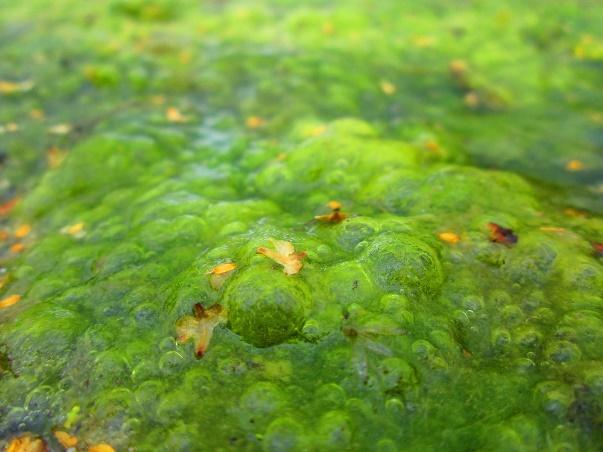
Phytoplankton can be present as algal deposits on corals, rocks, or can also be present as free-floating clumps in the water. Sometimes excessive growth of these algae can cause algal bloom which may drastically affect the marine ecosystem. Even low amounts of these organisms could cause phytoplankton die-off which will result in oxygen depletion in the water and ultimately kill the marine ecosystem.
Therefore, the correct option is D.
Note:
Mosses are a species of bryophytes that are found on damp surfaces and require water for reproduction. Even though these are aquatic plants, the oxygen produced by these plants is not dissolved in water as they grow on water surfaces, and any oxygen produced is released into the air and not the water. But other bryophytes do contribute to most of the oxygen production underwater. Mushrooms are a type of fungi that do not grow underwater nor do they produce oxygen. Sea urchins are small spiny animals found deep underwater which does not produce oxygen
Complete step by step answer:
Aquatic ecosystems are just as complex and energy-demanding when compared to other ecosystems and biomes. But the major difference is that the aquatic ecosystems are underwater and the process of absorbing energy from sunlight is tricky.
Even in aquatic ecosystems, several plants grow such as seaweeds, or other species of the bryophytes. But the major source of oxygen and food in such ecosystems are provided by the phytoplankton. Phytoplankton is a group of photosynthetic organisms mainly algae which absorb the sunlight and produce their food with oxygen as their bi-product.
Such phytoplankton is the base of all aquatic ecosystems, for without them the ecosystem would fail. Such vital importance to such algae is due to the production of oxygen as even underwaters creatures require oxygen to survive.
Phytoplankton can be present as algal deposits on corals, rocks, or can also be present as free-floating clumps in the water. Sometimes excessive growth of these algae can cause algal bloom which may drastically affect the marine ecosystem. Even low amounts of these organisms could cause phytoplankton die-off which will result in oxygen depletion in the water and ultimately kill the marine ecosystem.
Therefore, the correct option is D.
Note:
Mosses are a species of bryophytes that are found on damp surfaces and require water for reproduction. Even though these are aquatic plants, the oxygen produced by these plants is not dissolved in water as they grow on water surfaces, and any oxygen produced is released into the air and not the water. But other bryophytes do contribute to most of the oxygen production underwater. Mushrooms are a type of fungi that do not grow underwater nor do they produce oxygen. Sea urchins are small spiny animals found deep underwater which does not produce oxygen
Recently Updated Pages
Which will be the least stable resonating structure class 11 chemistry CBSE

How many 5 digit telephone numbers can be construc-class-11-maths-CBSE
How do you find the angle of the resultant vector class 11 physics CBSE
Draw labelled diagram of the following i Gram seed class 11 biology CBSE
1 Quintal is equal to a 110 kg b 10 kg c 100kg d 1000 class 11 physics CBSE
What is the need and importance of classification class 11 biology CBSE
Trending doubts
Find the value of the expression given below sin 30circ class 11 maths CBSE
One Metric ton is equal to kg A 10000 B 1000 C 100 class 11 physics CBSE
10 examples of friction in our daily life
Draw a diagram of a plant cell and label at least eight class 11 biology CBSE
Difference between physical and chemical change class 11 chemistry CBSE
Proton was discovered by A Thomson B Rutherford C Chadwick class 11 chemistry CBSE