




What are biodegradable pollutants?
Answer
 Verified
545.1k+ views
Hint: The pollutants are the unwanted substances that cause harm to the environment. They contaminate the air, water and land. The pollutants are categorized into two types on the basis of their decomposition by bacteria- biodegradable and non-biodegradable pollutants.
Complete answer:
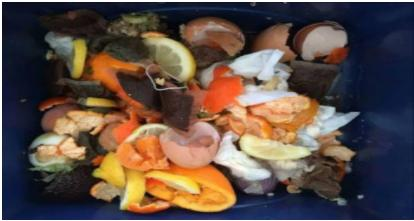
The biodegradable pollutants are the substances that can be degraded into simple natural components after some time. The microorganisms are involved in the degradation of these substances. These substances can be decomposed by some methods such as composting method, anaerobic digestion and aerobic digestion. They are not much harmful for the environment. Hence, they are ecofriendly.
Most of the biodegradable pollutants are organic but some can be inorganic such as gypsum. The biodegradable substances include-
- Domestic wastes such as kitchen wastes, paper, cloth, human excreta etc.
- Sewage contains organic matter that can be degraded by bacteria.
- Agricultural wastes
- Animal wastes such as cow dung
- Plant products such as flowers, dried leaves, wood etc.
- Green waste
- Slaughter house waste
- Some plastics that are made from floral substances are also biodegradable.
The biodegradable substances usually do not cause pollution. But sometimes, they become harmful if do not disposed properly. The methane is released from the landfill sites due to anaerobic fermentation that contributes to climate change.
The biodegradable pollutants can be used for many purposes. They can be used for biogas production which acts as a source of fuel and electricity. They can be used for composting. They act as a natural fertilizer that improves the fertility of soil by adding nutrients to it.
Note: The substances that cannot be broken down into simpler substances even after a long time of their disposal are called non-biodegradable substances. Pesticides, lead and mercury are some examples. As they remain in environment for a long time, they are very harmful and cause pollution.
Complete answer:
The biodegradable pollutants are the substances that can be degraded into simple natural components after some time. The microorganisms are involved in the degradation of these substances. These substances can be decomposed by some methods such as composting method, anaerobic digestion and aerobic digestion. They are not much harmful for the environment. Hence, they are ecofriendly.
Most of the biodegradable pollutants are organic but some can be inorganic such as gypsum. The biodegradable substances include-
- Domestic wastes such as kitchen wastes, paper, cloth, human excreta etc.
- Sewage contains organic matter that can be degraded by bacteria.
- Agricultural wastes
- Animal wastes such as cow dung
- Plant products such as flowers, dried leaves, wood etc.
- Green waste
- Slaughter house waste
- Some plastics that are made from floral substances are also biodegradable.
The biodegradable substances usually do not cause pollution. But sometimes, they become harmful if do not disposed properly. The methane is released from the landfill sites due to anaerobic fermentation that contributes to climate change.
The biodegradable pollutants can be used for many purposes. They can be used for biogas production which acts as a source of fuel and electricity. They can be used for composting. They act as a natural fertilizer that improves the fertility of soil by adding nutrients to it.
Note: The substances that cannot be broken down into simpler substances even after a long time of their disposal are called non-biodegradable substances. Pesticides, lead and mercury are some examples. As they remain in environment for a long time, they are very harmful and cause pollution.
Recently Updated Pages
Master Class 11 English: Engaging Questions & Answers for Success

Master Class 11 Social Science: Engaging Questions & Answers for Success
Master Class 11 Maths: Engaging Questions & Answers for Success
Master Class 11 Biology: Engaging Questions & Answers for Success
Master Class 11 Physics: Engaging Questions & Answers for Success
Master Class 11 Chemistry: Engaging Questions & Answers for Success
Trending doubts
One Metric ton is equal to kg A 10000 B 1000 C 100 class 11 physics CBSE
Difference Between Prokaryotic Cells and Eukaryotic Cells
Find the value of the expression given below sin 30circ class 11 maths CBSE
Difference between physical and chemical change class 11 chemistry CBSE
Two of the body parts which do not appear in MRI are class 11 biology CBSE
Draw a diagram of a plant cell and label at least eight class 11 biology CBSE