




Why are arthropod eyes called "compound"?
Answer
 Verified
517.2k+ views
Hint: With nearly nine lakh species, Arthropoda is the largest phylum. They can be aquatic, terrestrial, or parasitic in nature. They have chitinous exoskeletons and jointed appendages. This phylum contains several large classes, including Insects, which represents a significant portion of the world's animal species. They can thrive in any environment.
Complete answer:
• The majority of arthropods have one of two types of eyes: lateral compound eyes or smaller median ocelli, which are simple. The two eye types are used in tandem when both are present because each has its advantage.
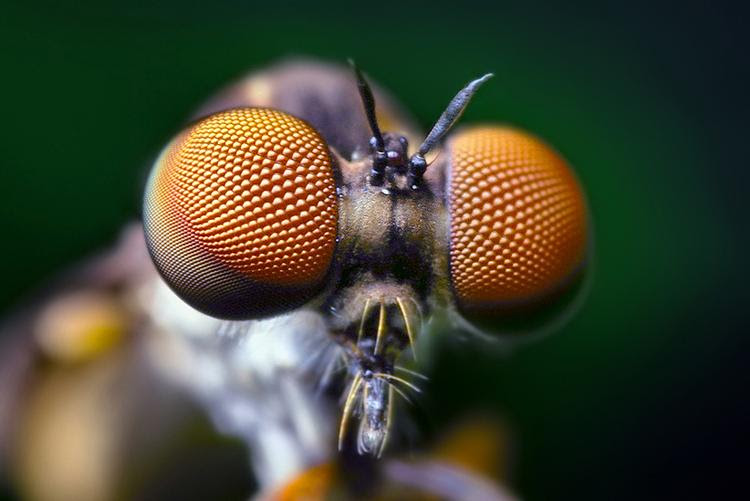
• Compound eyes refer to arthropod eyes that are made up of repeating units called ommatidium, each of which functions as a separate visual receptor.
• Cockroach compound eyes- are large, black kidney-shaped structures on the head's dorsolateral side. The eye is made up of about 2000 hexagonal units called ommatidium.
Each ommatidium is made up of the following components:
1. A lens with a single facet that is the front surface.
2. A crystalline cone that is transparent.
3. light-sensitive visual cells arranged in a radial pattern, similar to an orange's sections.
4. Pigment cells distinguish the ommatidium from its surroundings.
• Light enters the ommatidium parallel to its long axis, triggering nerve impulses in the visual cells. As a result, each ommatidium only contributes information about a small portion of the field of view.
• The mosaic image created by combining all of their responses looks like a pattern of light and dark dots. The compound eye is particularly good at detecting movement.
• Because arthropod eyes are made up of repeating units (shown in the below image) called ommatidium, each of which functions as a separate visual receptor, they are referred to as compound eyes.
Note:
The compound eye is particularly good at detecting movement. Ommatidia are gradually turned on and off as an object moves across the visual field. Insects respond to moving objects far better than stationary ones because of the "flicker effect".
Complete answer:
• The majority of arthropods have one of two types of eyes: lateral compound eyes or smaller median ocelli, which are simple. The two eye types are used in tandem when both are present because each has its advantage.
• Compound eyes refer to arthropod eyes that are made up of repeating units called ommatidium, each of which functions as a separate visual receptor.
• Cockroach compound eyes- are large, black kidney-shaped structures on the head's dorsolateral side. The eye is made up of about 2000 hexagonal units called ommatidium.
Each ommatidium is made up of the following components:
1. A lens with a single facet that is the front surface.
2. A crystalline cone that is transparent.
3. light-sensitive visual cells arranged in a radial pattern, similar to an orange's sections.
4. Pigment cells distinguish the ommatidium from its surroundings.
• Light enters the ommatidium parallel to its long axis, triggering nerve impulses in the visual cells. As a result, each ommatidium only contributes information about a small portion of the field of view.
• The mosaic image created by combining all of their responses looks like a pattern of light and dark dots. The compound eye is particularly good at detecting movement.
• Because arthropod eyes are made up of repeating units (shown in the below image) called ommatidium, each of which functions as a separate visual receptor, they are referred to as compound eyes.
Note:
The compound eye is particularly good at detecting movement. Ommatidia are gradually turned on and off as an object moves across the visual field. Insects respond to moving objects far better than stationary ones because of the "flicker effect".
Recently Updated Pages
Master Class 11 English: Engaging Questions & Answers for Success

Master Class 11 Social Science: Engaging Questions & Answers for Success
Master Class 11 Maths: Engaging Questions & Answers for Success
Master Class 11 Biology: Engaging Questions & Answers for Success
Master Class 11 Physics: Engaging Questions & Answers for Success
Master Class 11 Chemistry: Engaging Questions & Answers for Success
Trending doubts
One Metric ton is equal to kg A 10000 B 1000 C 100 class 11 physics CBSE
Difference Between Prokaryotic Cells and Eukaryotic Cells
Two of the body parts which do not appear in MRI are class 11 biology CBSE
Find the value of the expression given below sin 30circ class 11 maths CBSE
Draw a diagram of a plant cell and label at least eight class 11 biology CBSE
10 examples of friction in our daily life