




Are animal cells blue?
Answer
 Verified
577.2k+ views
Hint: Cells are the functional and structural unit of living things which are building blocks of the human body as humans composed of trillions of cells that provide structure to their body. Some parts of cells consist of organelles to perform a specific task within the cell.
Complete answer:
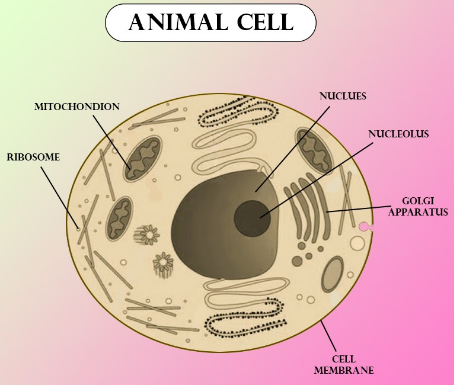
An animal cell is typically irregular and round in shape due to the absence of the cell wall in them. They are of various colors depending upon the presence of the pigment in them along with the stains used for the staining of the animal cells. The animal cells are found to be blue in color when they are stained with methylene blue. Furthermore, animals are not autotrophic in nature as they lack plastids. The nucleus in the animal cell is located centrally and is surrounded by the cell membrane. The animal cell also constitutes various cell organelles that include the nucleus, Golgi apparatus, endoplasmic reticulum, peroxisomes, mitochondria, and lysosomes.
Additional information:
The cell is the basic structure as well as a functional unit of life. Based on various structures and functions the cells vary in shapes, structures, and sizes. The animal is the advanced cell as it is a eukaryotic cell. The animal cells are found to be more active and less sedentary in nature. They lack chloroplast thus they do not prepare their own food and are dependent on others for food and nutrition.
Note:
Plant cells are eukaryotic cells that vary in various fundamental aspects from other eukaryotic organisms. Nuclei and cell organelles are both similar in the case of both the plant and animal cells. One of the characteristic aspects of a plant cell is the presence of a cell wall outside the cell membrane. Animal cells are home in size from a couple of microscopic microns to a few millimeters. The largest well-known animal cell is the ostrich egg, which may stretch over 5.1 inches and weighs about 1.4 kilograms.
Complete answer:
An animal cell is typically irregular and round in shape due to the absence of the cell wall in them. They are of various colors depending upon the presence of the pigment in them along with the stains used for the staining of the animal cells. The animal cells are found to be blue in color when they are stained with methylene blue. Furthermore, animals are not autotrophic in nature as they lack plastids. The nucleus in the animal cell is located centrally and is surrounded by the cell membrane. The animal cell also constitutes various cell organelles that include the nucleus, Golgi apparatus, endoplasmic reticulum, peroxisomes, mitochondria, and lysosomes.
Additional information:
The cell is the basic structure as well as a functional unit of life. Based on various structures and functions the cells vary in shapes, structures, and sizes. The animal is the advanced cell as it is a eukaryotic cell. The animal cells are found to be more active and less sedentary in nature. They lack chloroplast thus they do not prepare their own food and are dependent on others for food and nutrition.
Note:
Plant cells are eukaryotic cells that vary in various fundamental aspects from other eukaryotic organisms. Nuclei and cell organelles are both similar in the case of both the plant and animal cells. One of the characteristic aspects of a plant cell is the presence of a cell wall outside the cell membrane. Animal cells are home in size from a couple of microscopic microns to a few millimeters. The largest well-known animal cell is the ostrich egg, which may stretch over 5.1 inches and weighs about 1.4 kilograms.
Recently Updated Pages
Master Class 11 English: Engaging Questions & Answers for Success

Master Class 11 Social Science: Engaging Questions & Answers for Success
Master Class 11 Maths: Engaging Questions & Answers for Success
Master Class 11 Biology: Engaging Questions & Answers for Success
Master Class 11 Physics: Engaging Questions & Answers for Success
Master Class 11 Chemistry: Engaging Questions & Answers for Success
Trending doubts
One Metric ton is equal to kg A 10000 B 1000 C 100 class 11 physics CBSE
Difference Between Prokaryotic Cells and Eukaryotic Cells
Find the value of the expression given below sin 30circ class 11 maths CBSE
Difference between physical and chemical change class 11 chemistry CBSE
Two of the body parts which do not appear in MRI are class 11 biology CBSE
Draw a diagram of a plant cell and label at least eight class 11 biology CBSE