




Are all prokaryotes harmful?
Answer
 Verified
534k+ views
Hint: The prokaryotes are very important and useful to us. With the absence of prokaryotes, many natural cycles helpful in maintaining and sustaining life would be disrupted on planet Earth. Some prokaryotes aid in digestion and nourish us with vitamins.
Complete answer:
No, not all prokaryotes are harmful. On the contrary, some of them are highly beneficial.
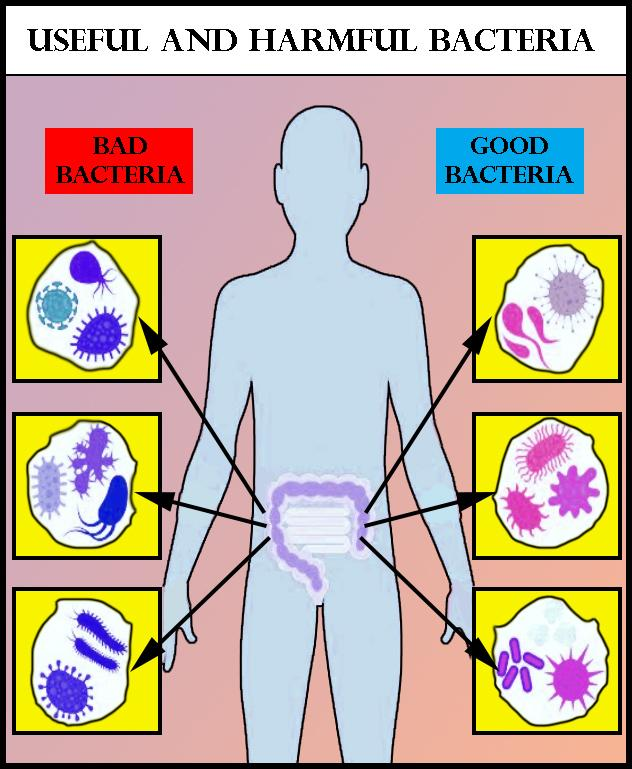
Prokaryotes live on the human body as well as in the environment around them. Some of these organisms can cause harm and can make people sick, while others help in protecting us and have even found numerous uses by medical science. Thus this can be understood that a huge number of prokaryotes live in mutually beneficial relationships with the human body. Some of the benefits provided by prokaryotes are:
-they protect our bodies against disease-causing microbes by competing for space and nutrients on and inside the body.
-bacteria are used to make antibiotics and insulin for diabetes.
-bacteria cause food to ferment due to which we can enjoy yogurt, wine, beer, and cheese. -prokaryotes break down waste and also recycle nutrients back to the environment.
-prokaryotes recover metals in mining operations.
-bacteria that live in our mouths prevent harmful fungi from growing inside.
-thanks to prokaryotes, we have oxygen in our atmosphere.
-Pathogenic prokaryotes cause sickness by producing poisons in two ways: Exotoxins and Endotoxins.
Note:
-In many parts of our body the prokaryotes which are useful to us are found, these parts include the skin, mouth, cavity, ears, vagina, stomach, and intestines.
-Proteins secreted by prokaryotes are called Exotoxins. This protein is toxic to humans and produces symptoms albeit the prokaryote isn't present. For example, the diarrheal disease cholera.
-A toxin component within the outer membrane of certain gram-negative bacteria is named Endotoxins. They have released only the bacteria and their cell walls break down. For example, salmonella.
Complete answer:
No, not all prokaryotes are harmful. On the contrary, some of them are highly beneficial.
Prokaryotes live on the human body as well as in the environment around them. Some of these organisms can cause harm and can make people sick, while others help in protecting us and have even found numerous uses by medical science. Thus this can be understood that a huge number of prokaryotes live in mutually beneficial relationships with the human body. Some of the benefits provided by prokaryotes are:
-they protect our bodies against disease-causing microbes by competing for space and nutrients on and inside the body.
-bacteria are used to make antibiotics and insulin for diabetes.
-bacteria cause food to ferment due to which we can enjoy yogurt, wine, beer, and cheese. -prokaryotes break down waste and also recycle nutrients back to the environment.
-prokaryotes recover metals in mining operations.
-bacteria that live in our mouths prevent harmful fungi from growing inside.
-thanks to prokaryotes, we have oxygen in our atmosphere.
-Pathogenic prokaryotes cause sickness by producing poisons in two ways: Exotoxins and Endotoxins.
Note:
-In many parts of our body the prokaryotes which are useful to us are found, these parts include the skin, mouth, cavity, ears, vagina, stomach, and intestines.
-Proteins secreted by prokaryotes are called Exotoxins. This protein is toxic to humans and produces symptoms albeit the prokaryote isn't present. For example, the diarrheal disease cholera.
-A toxin component within the outer membrane of certain gram-negative bacteria is named Endotoxins. They have released only the bacteria and their cell walls break down. For example, salmonella.
Recently Updated Pages
Master Class 11 Computer Science: Engaging Questions & Answers for Success

Master Class 11 Business Studies: Engaging Questions & Answers for Success
Master Class 11 Economics: Engaging Questions & Answers for Success
Master Class 11 English: Engaging Questions & Answers for Success
Master Class 11 Maths: Engaging Questions & Answers for Success
Master Class 11 Biology: Engaging Questions & Answers for Success
Trending doubts
One Metric ton is equal to kg A 10000 B 1000 C 100 class 11 physics CBSE
There are 720 permutations of the digits 1 2 3 4 5 class 11 maths CBSE
Discuss the various forms of bacteria class 11 biology CBSE
Draw a diagram of a plant cell and label at least eight class 11 biology CBSE
State the laws of reflection of light
Explain zero factorial class 11 maths CBSE