




Archegoniate plants belong to
(a)Bryophyta, Pteridophyta, gymnosperms, angiosperms
(b)Thallophyta, Bryophyta, Pteridophyta
(c)Bryophyta, Pteridophyta, angiosperms
(d)Bryophyta, Pteridophyta, gymnosperms
Answer
 Verified
587.5k+ views
Hint: During the process of evolution in plants, there is a steady reduction in the growth of gametophyte with the elaboration of the sporophyte. The presence of Archegonium is an ancient feature.
Complete answer:
Archegoniate plants belong to the bryophytes, pteridophytes, and gymnosperms. The gymnosperms have the least developed archegonium while bryophytes possess a well-developed archegonium.
-Archegoniate plants are the plants bearing an Archegonium. Archegonium is the female sex organ.
-They are multicellular flask-shaped cells with neck canal cells that produce a single egg (oosphere) at a time. The base is usually swollen and is known as ‘venter'. The neck canal cells degenerate upon maturation. The top of the archegonium is covered by four cover cells which disappear upon the gelatinization of neck cells.
-In gymnosperms such as cycads and conifers, there are two or more archegonia or the female sex organs born from the gametophyte. The female gametophyte is multicellular and is formed by a megaspore enclosed within the megasporangium or nucellus.
-They can either be present at the surface of thallus or remain embedded as in hornworts.
So, the correct answer is ‘Bryophyta, Pteridophyta, gymnosperms.
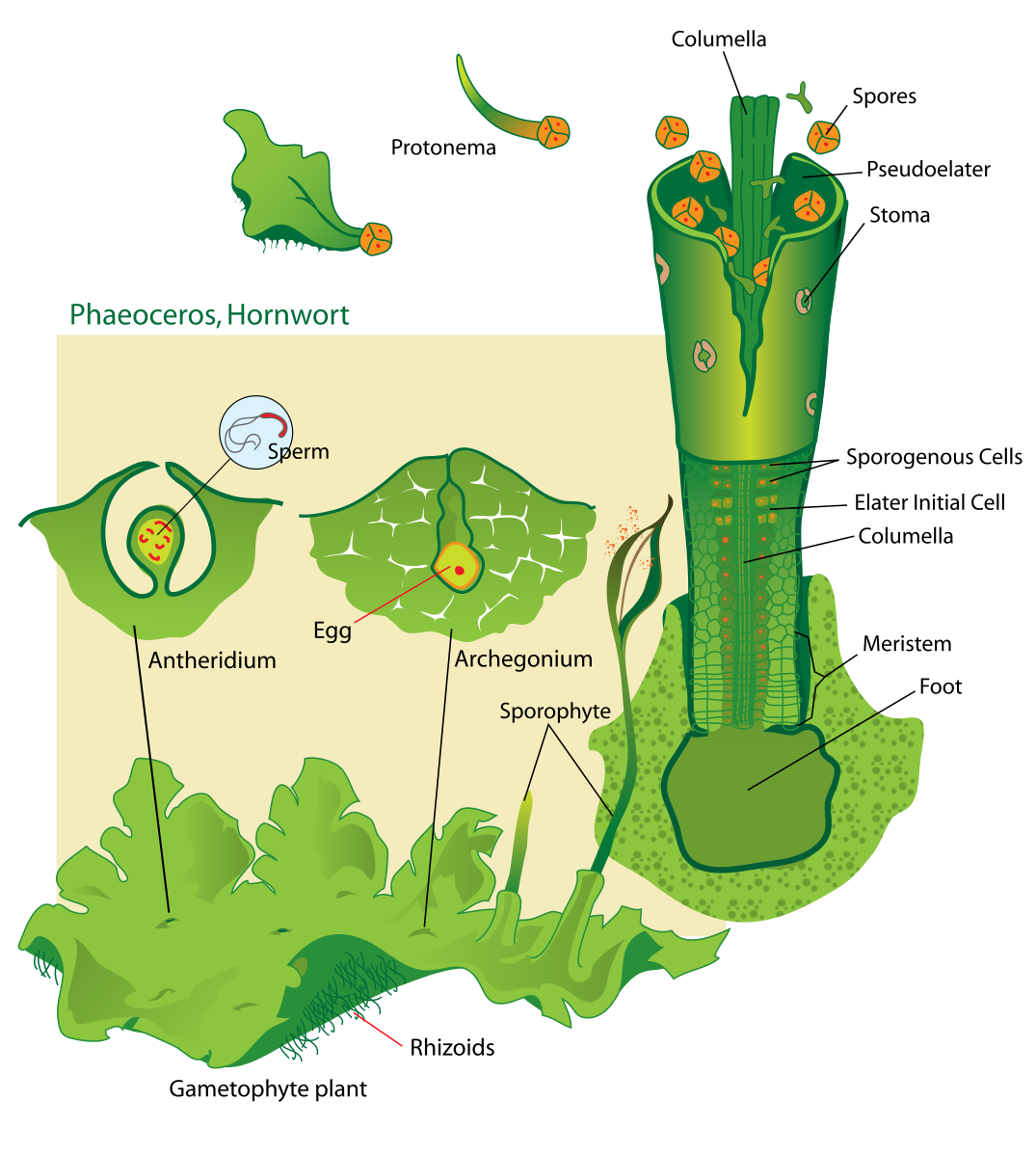
Note: -Gnetum and Welwitschia group of gymnosperms are devoid of archegonia. Instead, they have a well-developed sporophyte.
-The male sex organ complimentary to archegonium is the Antheridium.
-The archegonium is dependent on the female gametophyte for its nutrition so it remains attached to it.
Complete answer:
Archegoniate plants belong to the bryophytes, pteridophytes, and gymnosperms. The gymnosperms have the least developed archegonium while bryophytes possess a well-developed archegonium.
-Archegoniate plants are the plants bearing an Archegonium. Archegonium is the female sex organ.
-They are multicellular flask-shaped cells with neck canal cells that produce a single egg (oosphere) at a time. The base is usually swollen and is known as ‘venter'. The neck canal cells degenerate upon maturation. The top of the archegonium is covered by four cover cells which disappear upon the gelatinization of neck cells.
-In gymnosperms such as cycads and conifers, there are two or more archegonia or the female sex organs born from the gametophyte. The female gametophyte is multicellular and is formed by a megaspore enclosed within the megasporangium or nucellus.
-They can either be present at the surface of thallus or remain embedded as in hornworts.
So, the correct answer is ‘Bryophyta, Pteridophyta, gymnosperms.
Note: -Gnetum and Welwitschia group of gymnosperms are devoid of archegonia. Instead, they have a well-developed sporophyte.
-The male sex organ complimentary to archegonium is the Antheridium.
-The archegonium is dependent on the female gametophyte for its nutrition so it remains attached to it.
Recently Updated Pages
If x a + bt + ct2 where x is in meters and t is in class 11 physics CBSE

A car covers the first half distance between two places class 11 physics CBSE
The resultant of two vectors overrightarrow P and overrightarrow class 11 physics CBSE
Find the value of cos 135 class 11 maths CBSE
A mass M is held in place by an applied force F and class 11 physics CBSE
A solution of glucose in water is labelled as 10 dfracwv class 11 chemistry CBSE
Trending doubts
One Metric ton is equal to kg A 10000 B 1000 C 100 class 11 physics CBSE
Find the value of the expression given below sin 30circ class 11 maths CBSE
Draw a diagram of nephron and explain its structur class 11 biology CBSE
10 examples of friction in our daily life
Proton was discovered by A Thomson B Rutherford C Chadwick class 11 chemistry CBSE
Bond order ofO2 O2+ O2 and O22 is in order A O2 langle class 11 chemistry CBSE