




Anther is typically
(a) Tetrasporangiate
(b) Bisporangiate
(c) Trisporangiate
(d) Monosporangiate
Answer
 Verified
660.9k+ views
Hint: The anther is four- sided, that is, it has 4 locules consisting of four microsporangia located in each locule which develops further and becomes the pollen sacs. Thus, another has four microsporangia.
Complete Step by Step Answer:
The male sex organ of plants is Stamen which has two parts: the long and slender stalk called the filament and a terminal generally a bilobed structure known as the anther. The anther is four- sided i.e. it has four locules consisting of 4 microsporangia located in each locule which develops further and becomes the pollen sacs. Thus, the anther is tetrasporangiate because it’s four microsporangia.
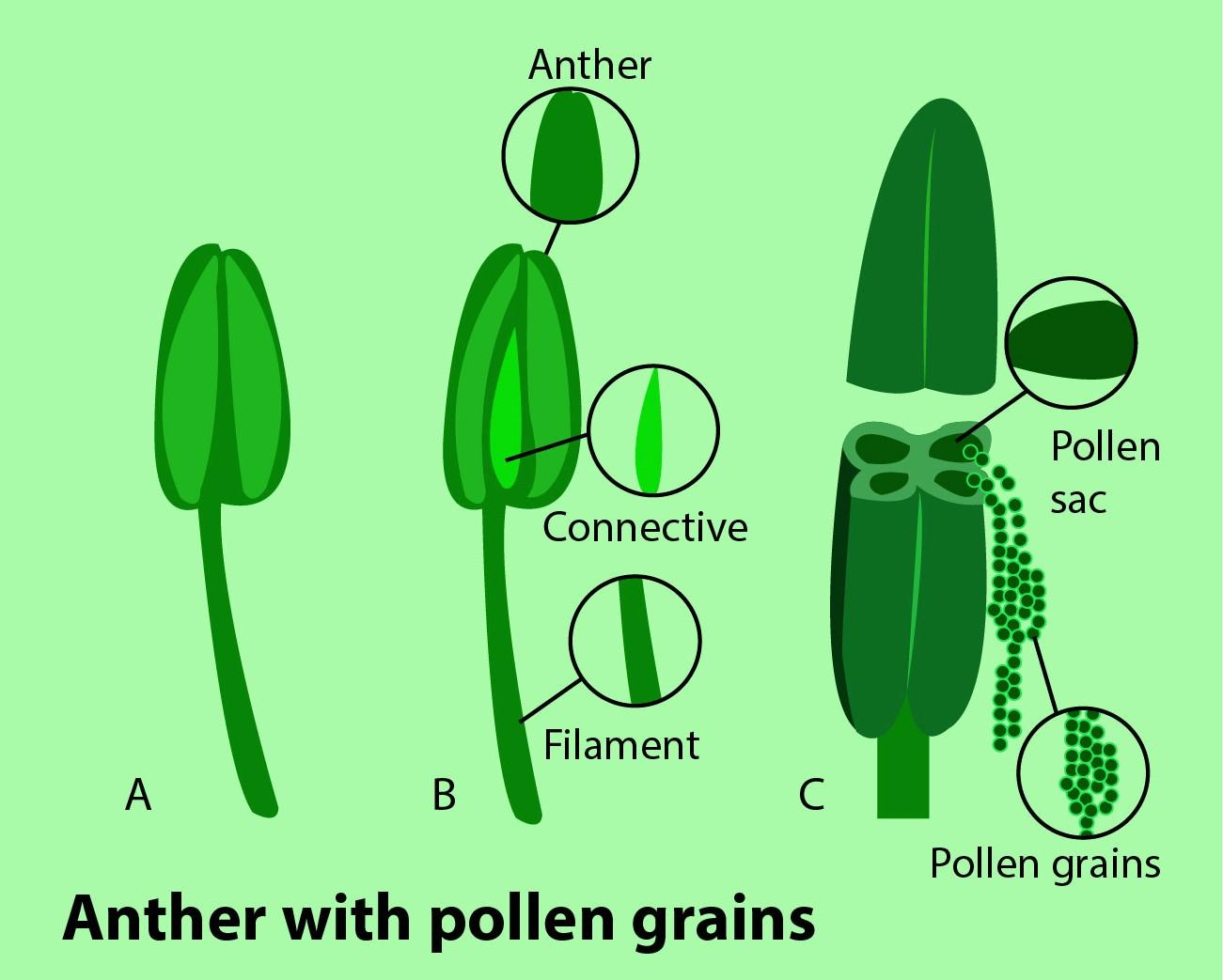
An anther contains pollen grains, which enters the ovary of gynoecium and helps in sexual reproduction in plants. In the flowering plants, the pollen grains represent a reduced haploid male gametophyte generation that consists of just two or three cells when it gets released from the anthers.
- Each stamen is composed of a slender stalk- like filament that supports the anther. The anther is a knob- like structure with two lobes and the lobes are connected with the help of connective.
- When only one kidney- shaped anther is present then such anther is known as monoecious but if the anther contains two lobes then such anther is known as bithecous.
- When stamens are free from each other, such a condition is called polyandrous but when these are united with the stigma of the carpel, such a condition is called gynandrous.
- Sometimes, filaments of petals remain stuck with the petals, such a condition is called epipetalous while in the epiphyllous condition, stamens are attached to petals.
- When stamens are shorter than the corolla, such a condition is called inserted and when they come out of the corolla tube, such a condition is called exerted.
- In some flowers, the filament of the stamen is fixed with the base of the anther, such condition is called basifixed.
So, the correct answer is, ’(a) Tetrasporangiate.’
Note: Sometimes, the stamens become sterile and do not form pollen grains called staminodes. When the connectives of anther become enlarged and the two anther lobes are separated apart called divaricated or divergent anther lobe.
Complete Step by Step Answer:
The male sex organ of plants is Stamen which has two parts: the long and slender stalk called the filament and a terminal generally a bilobed structure known as the anther. The anther is four- sided i.e. it has four locules consisting of 4 microsporangia located in each locule which develops further and becomes the pollen sacs. Thus, the anther is tetrasporangiate because it’s four microsporangia.
An anther contains pollen grains, which enters the ovary of gynoecium and helps in sexual reproduction in plants. In the flowering plants, the pollen grains represent a reduced haploid male gametophyte generation that consists of just two or three cells when it gets released from the anthers.
- Each stamen is composed of a slender stalk- like filament that supports the anther. The anther is a knob- like structure with two lobes and the lobes are connected with the help of connective.
- When only one kidney- shaped anther is present then such anther is known as monoecious but if the anther contains two lobes then such anther is known as bithecous.
- When stamens are free from each other, such a condition is called polyandrous but when these are united with the stigma of the carpel, such a condition is called gynandrous.
- Sometimes, filaments of petals remain stuck with the petals, such a condition is called epipetalous while in the epiphyllous condition, stamens are attached to petals.
- When stamens are shorter than the corolla, such a condition is called inserted and when they come out of the corolla tube, such a condition is called exerted.
- In some flowers, the filament of the stamen is fixed with the base of the anther, such condition is called basifixed.
So, the correct answer is, ’(a) Tetrasporangiate.’
Note: Sometimes, the stamens become sterile and do not form pollen grains called staminodes. When the connectives of anther become enlarged and the two anther lobes are separated apart called divaricated or divergent anther lobe.
Recently Updated Pages
Master Class 12 Physics: Engaging Questions & Answers for Success

Master Class 12 Social Science: Engaging Questions & Answers for Success
Master Class 12 English: Engaging Questions & Answers for Success
Master Class 12 Maths: Engaging Questions & Answers for Success
Master Class 12 Business Studies: Engaging Questions & Answers for Success
Master Class 12 Chemistry: Engaging Questions & Answers for Success
Trending doubts
Draw a labelled sketch of the human eye class 12 physics CBSE
Which are the Top 10 Largest Countries of the World?
Draw ray diagrams each showing i myopic eye and ii class 12 physics CBSE
Which is the correct genotypic ratio of mendel dihybrid class 12 biology CBSE
Differentiate between homogeneous and heterogeneous class 12 chemistry CBSE
Draw a well labelled diagram of the human brain class 12 biology CBSE