




An inverted image can be seen in a convex mirror:
A. Under no circumstances
B. When the object is very far from the mirror
C. When the object is at a distance equal to the radius of curvature of the mirror
D. When the distance of the object from the mirror is equal to the focal length of the mirror
Answer
 Verified
654.9k+ views
Hint: Convex mirror always produces an upright image. In the case of a real object, the image formed is upright, virtual, and smaller in size. In the case of the virtual object the image is enlarged, real, and upright. You should also draw diagrams for both the cases.
Complete answer:
A convex mirror is shown in the diagram below –
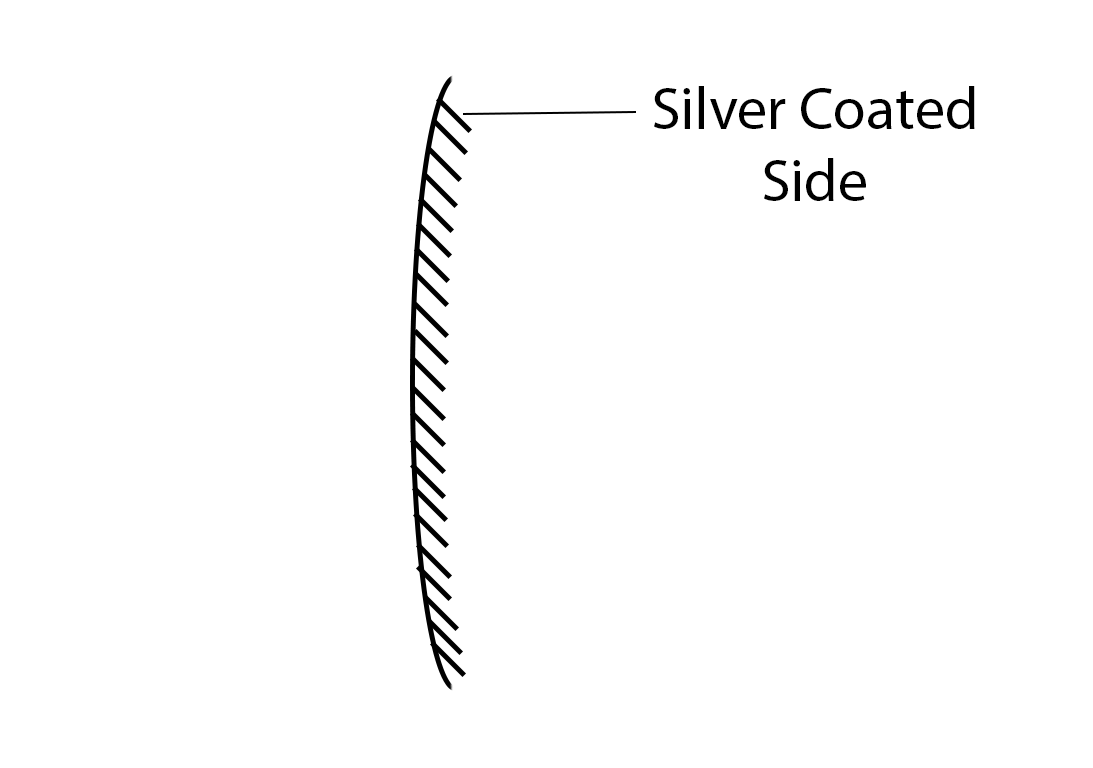
This convex mirror has a silver coating (the coating that gives a glass reflective properties) on the inner side which you can see as a coating on the right side in the diagram above.
A very peculiar and interesting property of a convex mirror is that no matter the position of the object in the front of a convex mirror the image formed will always be upright.
Let’s talk about the image of a real object
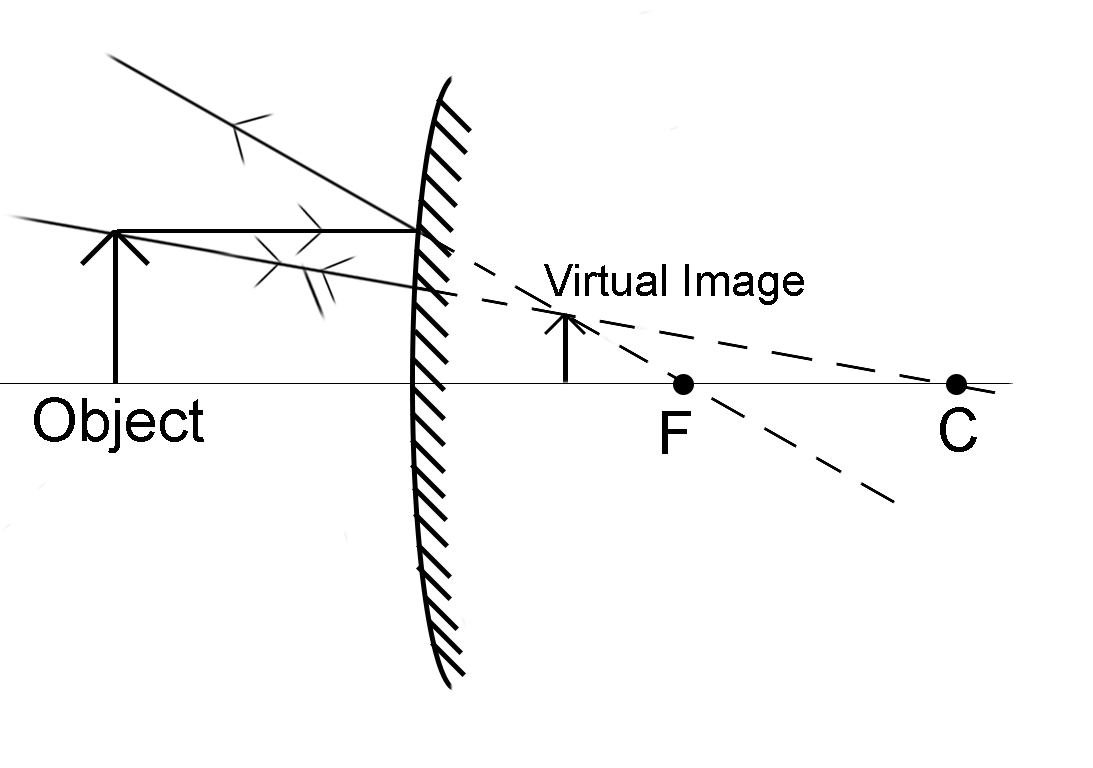
As you saw in this case the image is virtual, smaller, but most importantly inverted. This will be the case of image formation for any real object placed at any place in front of the convex mirror.
Now, let’s talk about the image of a virtual object.
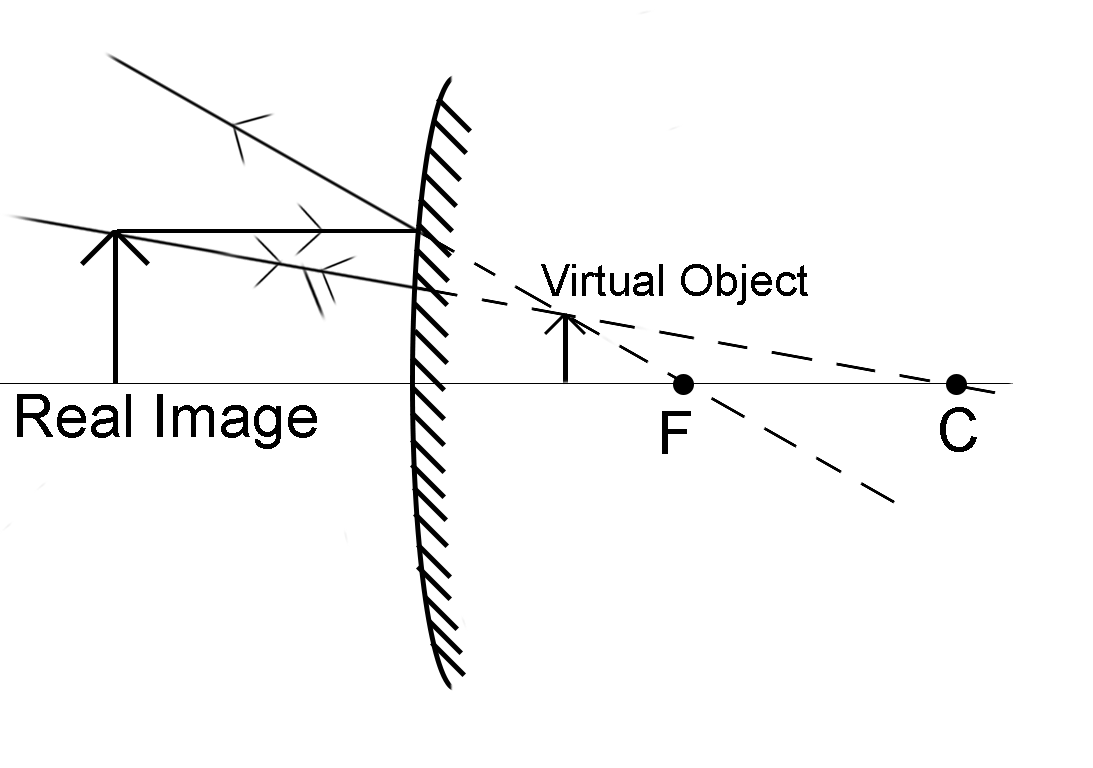
As we saw in the diagram, in this case, the image is real, enlarged, but still upright. This will be the case of image formation for any virtual object at any distance from the convex mirror.
So, as we saw in the two cases above, the convex mirror will always produce an upright image.
So, the correct answer is “Option A”.
Note:
As you saw in the first case, the convex mirror produces an upright, small image of a real object, which is why they are used as rear view mirrors in cars. They provide a larger field of view to the drivers, hence giving him more safety. Imagine, if convex mirrors produced an inverted image, the driver would become confused, which could potentially be dangerous.
Complete answer:
A convex mirror is shown in the diagram below –
This convex mirror has a silver coating (the coating that gives a glass reflective properties) on the inner side which you can see as a coating on the right side in the diagram above.
A very peculiar and interesting property of a convex mirror is that no matter the position of the object in the front of a convex mirror the image formed will always be upright.
Let’s talk about the image of a real object
As you saw in this case the image is virtual, smaller, but most importantly inverted. This will be the case of image formation for any real object placed at any place in front of the convex mirror.
Now, let’s talk about the image of a virtual object.
As we saw in the diagram, in this case, the image is real, enlarged, but still upright. This will be the case of image formation for any virtual object at any distance from the convex mirror.
So, as we saw in the two cases above, the convex mirror will always produce an upright image.
So, the correct answer is “Option A”.
Note:
As you saw in the first case, the convex mirror produces an upright, small image of a real object, which is why they are used as rear view mirrors in cars. They provide a larger field of view to the drivers, hence giving him more safety. Imagine, if convex mirrors produced an inverted image, the driver would become confused, which could potentially be dangerous.
Recently Updated Pages
Write any three differences between metals and nonmetals class 10 social science CBSE

Amit standing on a horizontal plane finds a bird flying class 10 maths CBSE
Two circles of radii 5 cm and 3 cm intersect at two class 10 maths CBSE
Solve the following i John and Jivanti together have class 10 maths CBSE
What is the relation between orthocenter circumcentre class 10 maths CBSE
Two plane mirrors are inclined at 70circ A ray incident class 10 physics CBSE
Trending doubts
Explain the Treaty of Vienna of 1815 class 10 social science CBSE
1 GB equals how many MB?
10 examples of evaporation in daily life with explanations
What is the full form of POSCO class 10 social science CBSE
Which is the hottest planet in the Solar system A Earth class 10 social science CBSE
Name any four life processes in living things class 10 biology CBSE