




An electric current through a metallic conductor produces………… around it
A. Magnetic field
B. Mechanical force
C. Induced current
D. None
Answer
 Verified
630k+ views
Hint: The charge flowing through a conductor is basically the reason for electric current. The current carrying conductor will be having a magnetic field around it. Stationery charges cannot produce a magnetic field. The charges should be in motion.
Complete step by step answer:
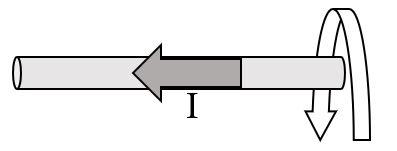
It is already known that the stationary charges can develop an electric field around it proportional to the magnitude of the charge. The similar way of approach has been taken here. The moving charges can create magnetic fields around the conductor proportional to the current and hence a current carrying conductor is able to produce a magnetic effect around it. This magnetic field is due to the subatomic particles in a conductor. A magnetic field is a vector quantity having both magnitude and direction. Magnetic field due to a conductor carrying current actually depends on the current travelling through the conductor and distance of the position from the conductor. The direction of the magnetic field is normal to the conductor. If we wrap our fingers of the right hand around the conductor with our thumb pointing in the direction of the current, then the direction in which the fingers curl around will give the direction of the magnetic field. Therefore an electric through a metallic conductor produces a magnetic field around it. Hence the correct answer is option A.
Note:
The magnetic field developed due to a current carrying conductor is having a lot of peculiarities. The magnetic field is encircling the conductor. The field lines will be in a plane perpendicular to the conductor. And the reversal of current direction reverses the direction of the field.
Complete step by step answer:
It is already known that the stationary charges can develop an electric field around it proportional to the magnitude of the charge. The similar way of approach has been taken here. The moving charges can create magnetic fields around the conductor proportional to the current and hence a current carrying conductor is able to produce a magnetic effect around it. This magnetic field is due to the subatomic particles in a conductor. A magnetic field is a vector quantity having both magnitude and direction. Magnetic field due to a conductor carrying current actually depends on the current travelling through the conductor and distance of the position from the conductor. The direction of the magnetic field is normal to the conductor. If we wrap our fingers of the right hand around the conductor with our thumb pointing in the direction of the current, then the direction in which the fingers curl around will give the direction of the magnetic field. Therefore an electric through a metallic conductor produces a magnetic field around it. Hence the correct answer is option A.
Note:
The magnetic field developed due to a current carrying conductor is having a lot of peculiarities. The magnetic field is encircling the conductor. The field lines will be in a plane perpendicular to the conductor. And the reversal of current direction reverses the direction of the field.
Recently Updated Pages
Master Class 12 Business Studies: Engaging Questions & Answers for Success

Master Class 12 Chemistry: Engaging Questions & Answers for Success
Master Class 12 Biology: Engaging Questions & Answers for Success
Class 12 Question and Answer - Your Ultimate Solutions Guide
Master Class 11 English: Engaging Questions & Answers for Success
Master Class 11 Social Science: Engaging Questions & Answers for Success
Trending doubts
Which are the Top 10 Largest Countries of the World?
Draw a labelled sketch of the human eye class 12 physics CBSE
Differentiate between homogeneous and heterogeneous class 12 chemistry CBSE
Differentiate between Pyramid of energy and pyramid class 12 biology CBSE
Why is the cell called the structural and functional class 12 biology CBSE
Draw the diagram of the pyramid of energy Explain In class 12 biology CBSE