




An antigen is a -
A. A foreign molecule
B. An enzyme
C. A polysaccharide
D. Microorganisms
Answer
 Verified
606.6k+ views
Hint: An antigen that makes an immune response—i.e., induces the lymphocytes to create antibodies or to attack the antigen directly is called an immunogen. Examples of antigens consist of substances produced by viruses or microorganisms (such as bacteria and protozoa), along with substances in snake venom, specific proteins in foods, and components of serum and red blood cells from other people.
Complete answer:
An antigen is a foreign molecule that is specifically bound by antibodies. Antigens are embattled by antibodies. Each antibody is particularly produced by the immune system to match an antigen after cells in the immune system come into contact with it; this allows an accurate identification or matching of the antigen. Antigens are typically proteins, peptides, and polysaccharides.
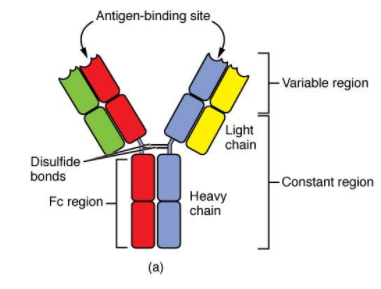
Hence, the correct answer is option (A).
Additional information:
- Autoantigens, instigate within the body. Normally, the body can differentiate self from non-self, but in persons with autoimmune disorders, usual bodily substances incite an immune response, leading to the making of autoantibodies.
- An antigen that increases immune response and influences the lymphocytes to produce antibodies or to attack the antigen directly is known as the immunogen.
Note: On the exterior of antigens are regions, called antigenic determinants, which fit and attach to receptor molecules of complementary structure on the surface of the lymphocytes.
The binding of the lymphocytes’ receptors to the antigens’ surface molecules stimulates the lymphocytes to proliferate and to initiate an immune response—including the creation of antibodies, the activation of cytotoxic cells, or both against the antigen.
Complete answer:
An antigen is a foreign molecule that is specifically bound by antibodies. Antigens are embattled by antibodies. Each antibody is particularly produced by the immune system to match an antigen after cells in the immune system come into contact with it; this allows an accurate identification or matching of the antigen. Antigens are typically proteins, peptides, and polysaccharides.
Hence, the correct answer is option (A).
Additional information:
- Autoantigens, instigate within the body. Normally, the body can differentiate self from non-self, but in persons with autoimmune disorders, usual bodily substances incite an immune response, leading to the making of autoantibodies.
- An antigen that increases immune response and influences the lymphocytes to produce antibodies or to attack the antigen directly is known as the immunogen.
Note: On the exterior of antigens are regions, called antigenic determinants, which fit and attach to receptor molecules of complementary structure on the surface of the lymphocytes.
The binding of the lymphocytes’ receptors to the antigens’ surface molecules stimulates the lymphocytes to proliferate and to initiate an immune response—including the creation of antibodies, the activation of cytotoxic cells, or both against the antigen.
Recently Updated Pages
Master Class 12 Social Science: Engaging Questions & Answers for Success

Master Class 12 Physics: Engaging Questions & Answers for Success
Master Class 12 Maths: Engaging Questions & Answers for Success
Master Class 12 Economics: Engaging Questions & Answers for Success
Master Class 12 Chemistry: Engaging Questions & Answers for Success
Master Class 12 Business Studies: Engaging Questions & Answers for Success
Trending doubts
Which are the Top 10 Largest Countries of the World?
Draw a labelled sketch of the human eye class 12 physics CBSE
Explain the structure of megasporangium class 12 biology CBSE
What are the major means of transport Explain each class 12 social science CBSE
How many chromosomes are found in human ovum a 46 b class 12 biology CBSE
The diagram of the section of a maize grain is given class 12 biology CBSE