




Amount of water soil can hold against the pull of gravity is called as
(A) Field capacity
(B) Gravitational water
(C) Capillary water
(D) Hygroscopic water
Answer
 Verified
608.1k+ views
Hint: The water from the rainfall is not fully utilized by the plants. Some of the water moves as the surface runoff and some of the water infiltrates into the soil. In the infiltrated water, some water moves deep and joins groundwater and the other water holds in the spaces between the soil’s particles.
Complete step by step answer:
(A) Field capacity:
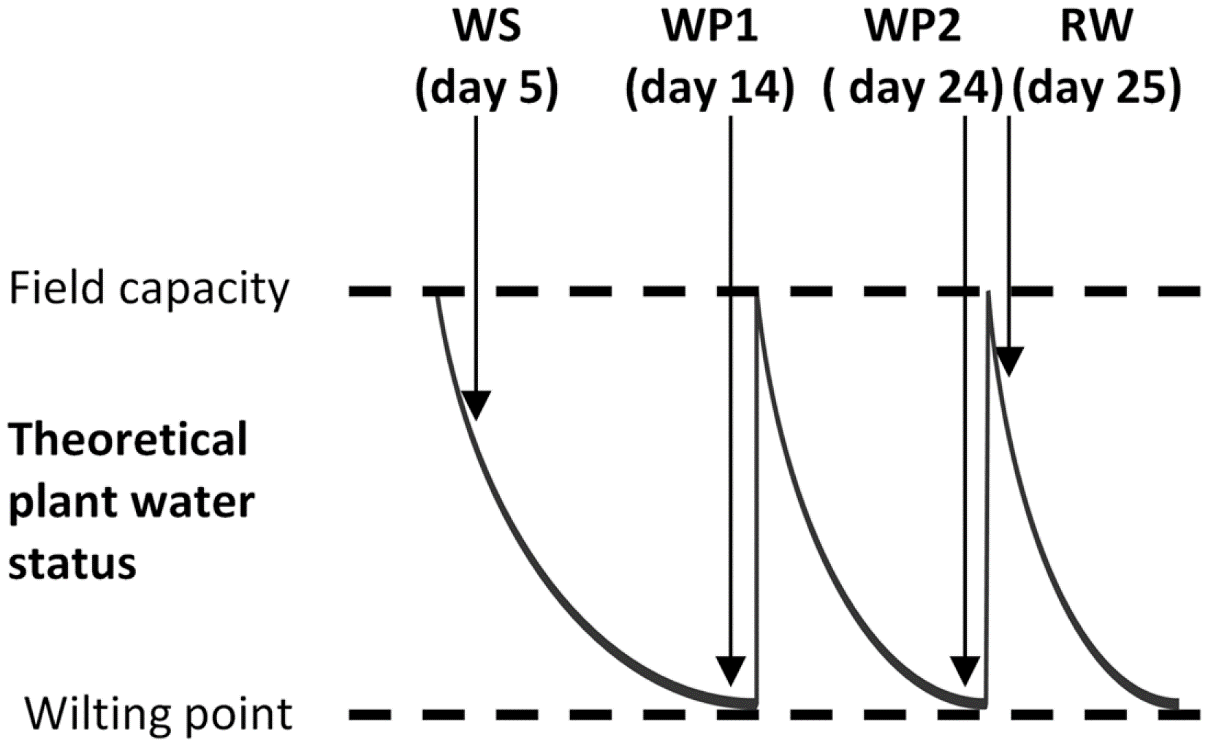
Field capacity is defined as the amount of moisture or the water held by the soil when all the excess water is drained by the soil downward by the gravitational force.
(B) Gravitational water:
Gravitational water is defined as the amount of water that freely flows due to the gravitational pull. It is unavailable to the plants and stored in the soil microscope.
(C) Capillary water:
The water that is stored in the soil after the gravitational water is drained out is called capillary water. They are stored in the capillary space around the soil granules against the force of gravity by the capillary force in them. They are available to the plant root absorption.
(D) Hygroscopic water:
The water molecules that are absorbed from the external atmosphere and hold up in the soil is called hygroscopic water. It is available as the thin film above the surface of the soil. This water is also not available to the plants.
From the above explanation, it is clear that the amount of water soil can hold against the gravity is called capillary water.
Hence the correct answer is option(C)
Note: The water that is held by the soil as the capillary water is useful for the plant growth. This cannot be pulled by the gravitational force because these capillary waters are held strong and retained by the surface tension. Hence these capillary waters either present as the thin film or the water droplets.
Complete step by step answer:
(A) Field capacity:
Field capacity is defined as the amount of moisture or the water held by the soil when all the excess water is drained by the soil downward by the gravitational force.
(B) Gravitational water:
Gravitational water is defined as the amount of water that freely flows due to the gravitational pull. It is unavailable to the plants and stored in the soil microscope.
(C) Capillary water:
The water that is stored in the soil after the gravitational water is drained out is called capillary water. They are stored in the capillary space around the soil granules against the force of gravity by the capillary force in them. They are available to the plant root absorption.
(D) Hygroscopic water:
The water molecules that are absorbed from the external atmosphere and hold up in the soil is called hygroscopic water. It is available as the thin film above the surface of the soil. This water is also not available to the plants.
From the above explanation, it is clear that the amount of water soil can hold against the gravity is called capillary water.
Hence the correct answer is option(C)
Note: The water that is held by the soil as the capillary water is useful for the plant growth. This cannot be pulled by the gravitational force because these capillary waters are held strong and retained by the surface tension. Hence these capillary waters either present as the thin film or the water droplets.
Recently Updated Pages
Master Class 12 Economics: Engaging Questions & Answers for Success

Master Class 12 English: Engaging Questions & Answers for Success
Master Class 12 Social Science: Engaging Questions & Answers for Success
Master Class 12 Maths: Engaging Questions & Answers for Success
Master Class 12 Physics: Engaging Questions & Answers for Success
Master Class 11 Social Science: Engaging Questions & Answers for Success
Trending doubts
One Metric ton is equal to kg A 10000 B 1000 C 100 class 11 physics CBSE
Difference Between Prokaryotic Cells and Eukaryotic Cells
Two of the body parts which do not appear in MRI are class 11 biology CBSE
1 ton equals to A 100 kg B 1000 kg C 10 kg D 10000 class 11 physics CBSE
Draw a diagram of nephron and explain its structur class 11 biology CBSE
10 examples of friction in our daily life