




A string of mass m is fixed at both ends. The fundamental tone oscillations are excited in the strong with angular frequency $\omega $ and maximum displacement amplitude A. Find the total energy contained in the string.
\[\begin{align}
& \text{A}\text{. }\dfrac{1}{2}m{{\omega }^{2}}{{A}^{2}} \\
& \text{B}\text{. }\dfrac{1}{4}m{{\omega }^{2}}{{A}^{2}} \\
& \text{C}\text{. }\dfrac{1}{6}m{{\omega }^{2}}{{A}^{2}} \\
& \text{D}\text{. }\dfrac{1}{8}m{{\omega }^{2}}{{A}^{2}} \\
\end{align}\]
Answer
 Verified
571.8k+ views
Hint: We are given the mass, angular frequency, and maximum displacement of a string whose both ends are fixed. The total energy on the string is kinetic energy. We know the equation for the displacement of the string. By derivating it we will get the velocity. By considering a small element we can find its kinetic energy later by integrating it we will get the total energy.
Formula used:
$y=A\sin kx\cos \omega t$
$KE=\dfrac{1}{2}m{{v}^{2}}$
Complete step-by-step solution
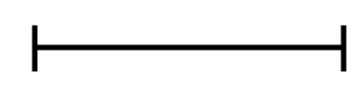
In the question we are given a string of mass ‘m’ fixed at both ends as in the figure below.
The angular frequency of oscillation is given as ‘$\omega $’ and the maximum displacement amplitude is given as ‘A’.
We know that the equation of the oscillation of the given string can be written as,
$y=A\sin kx\cos \omega t$, where $k=\dfrac{2\pi }{\lambda }$
We know that the velocity at any time ‘t’ is the derivative of the above equation, i.e.
$\begin{align}
& \Rightarrow \dfrac{\partial y}{\partial t}=A\left( -\omega \right)\sin kx\sin \omega t \\
& \Rightarrow \dfrac{\partial y}{\partial t}=-A\omega \sin kx\sin \omega t \\
\end{align}$
From this we will get the small kinetic energy of the small element ‘$dx$’ in the position of ‘x’ as,
$dk=\dfrac{1}{2}\left( \dfrac{m}{l} \right)dx\times {{\left( \dfrac{\partial y}{\partial t} \right)}^{2}}$, were ‘m’ is total mass and ‘l’ is the total length of the string.
By substituting for $\left( \dfrac{\partial y}{\partial t} \right)$ in the above equation, we get
$\Rightarrow dk=\dfrac{m}{2l}{{\left( -A\omega \sin kx\sin \omega t \right)}^{2}}dx$
$\Rightarrow dk=\dfrac{m}{2l}\times {{A}^{2}}{{\omega }^{2}}{{\sin }^{2}}\left( kx \right){{\sin }^{2}}\left( \omega t \right)dx$
$\Rightarrow dk=\dfrac{m{{A}^{2}}{{\omega }^{2}}}{2l}\times {{\sin }^{2}}\left( kx \right){{\sin }^{2}}\left( \omega t \right)dx$
To find the total energy in the string, we need to integrate the above equation.
Thus we will get,
$k=\int\limits_{0}^{l}{dk}$
We know that $\lambda =2l$, therefore,
$l=\dfrac{\lambda }{2}$
Hence the total energy will become,
$\Rightarrow k=\int\limits_{0}^{{}^{\lambda }/{}_{2}}{dk}$
By substituting for ‘$dk$’ in the above equation, we get
$\Rightarrow k=\int\limits_{0}^{{}^{\lambda }/{}_{2}}{\dfrac{m{{A}^{2}}{{\omega }^{2}}}{2l}\times {{\sin }^{2}}\left( kx \right){{\sin }^{2}}\left( \omega t \right)dx}$
By taking the constant values outside the integral, we get
$\Rightarrow k=\dfrac{m{{A}^{2}}{{\omega }^{2}}{{\sin }^{2}}\left( \omega t \right)}{2l}\times \int\limits_{0}^{{}^{\lambda }/{}_{2}}{{{\sin }^{2}}\left( kx \right)dx}$
We can write, ${{\sin }^{2}}\left( kx \right)$ as, $\left( \dfrac{1-\cos 2kx}{2} \right)$
Therefore,
$\Rightarrow k=\dfrac{m{{A}^{2}}{{\omega }^{2}}{{\sin }^{2}}\left( \omega t \right)}{2l}\times \int\limits_{0}^{{}^{\lambda }/{}_{2}}{\left( \dfrac{1-\cos 2kx}{2} \right)dx}$
By taking ‘2’ outside the integral and integrating,
$\Rightarrow k=\dfrac{m{{A}^{2}}{{\omega }^{2}}{{\sin }^{2}}\left( \omega t \right)}{4l}\times \left[ x-\dfrac{\sin \left( 2kx \right)}{2k} \right]_{0}^{{}^{\lambda }/{}_{2}}$
We know that $k=\dfrac{2\pi }{\lambda }$. Now by applying this and giving the limits, we get
$\Rightarrow k=\dfrac{m{{A}^{2}}{{\omega }^{2}}{{\sin }^{2}}\left( \omega t \right)}{4l}\times \left[ \dfrac{\lambda }{2}-0 \right]$
Since $\dfrac{\lambda }{2}=l$, we get
$\Rightarrow k=\dfrac{m{{A}^{2}}{{\omega }^{2}}{{\sin }^{2}}\left( \omega t \right)l}{4l}$
$\Rightarrow k=\dfrac{m{{A}^{2}}{{\omega }^{2}}{{\sin }^{2}}\left( \omega t \right)}{4}$
Maximum kinetic energy will be attained, when ${{\sin }^{2}}\left( \omega t \right)=1$
Therefore we get the total energy as,
$\Rightarrow k=\dfrac{m{{A}^{2}}{{\omega }^{2}}}{4}$
$\Rightarrow k=\dfrac{1}{4}m{{A}^{2}}{{\omega }^{2}}$
Hence the correct answer is option B.
Note: A periodic motion occurs when a particle repeats its motion at a fixed interval of time. Oscillation is a kind of periodic motion when the particle repeats its motion about a mean position.
Simple harmonic motion or SHM is a type of oscillatory periodic motion in which the restoring force of the object is directly proportional to the magnitude of displacement of the object and is acting towards the equilibrium position of the object.
Formula used:
$y=A\sin kx\cos \omega t$
$KE=\dfrac{1}{2}m{{v}^{2}}$
Complete step-by-step solution
In the question we are given a string of mass ‘m’ fixed at both ends as in the figure below.
The angular frequency of oscillation is given as ‘$\omega $’ and the maximum displacement amplitude is given as ‘A’.
We know that the equation of the oscillation of the given string can be written as,
$y=A\sin kx\cos \omega t$, where $k=\dfrac{2\pi }{\lambda }$
We know that the velocity at any time ‘t’ is the derivative of the above equation, i.e.
$\begin{align}
& \Rightarrow \dfrac{\partial y}{\partial t}=A\left( -\omega \right)\sin kx\sin \omega t \\
& \Rightarrow \dfrac{\partial y}{\partial t}=-A\omega \sin kx\sin \omega t \\
\end{align}$
From this we will get the small kinetic energy of the small element ‘$dx$’ in the position of ‘x’ as,
$dk=\dfrac{1}{2}\left( \dfrac{m}{l} \right)dx\times {{\left( \dfrac{\partial y}{\partial t} \right)}^{2}}$, were ‘m’ is total mass and ‘l’ is the total length of the string.
By substituting for $\left( \dfrac{\partial y}{\partial t} \right)$ in the above equation, we get
$\Rightarrow dk=\dfrac{m}{2l}{{\left( -A\omega \sin kx\sin \omega t \right)}^{2}}dx$
$\Rightarrow dk=\dfrac{m}{2l}\times {{A}^{2}}{{\omega }^{2}}{{\sin }^{2}}\left( kx \right){{\sin }^{2}}\left( \omega t \right)dx$
$\Rightarrow dk=\dfrac{m{{A}^{2}}{{\omega }^{2}}}{2l}\times {{\sin }^{2}}\left( kx \right){{\sin }^{2}}\left( \omega t \right)dx$
To find the total energy in the string, we need to integrate the above equation.
Thus we will get,
$k=\int\limits_{0}^{l}{dk}$
We know that $\lambda =2l$, therefore,
$l=\dfrac{\lambda }{2}$
Hence the total energy will become,
$\Rightarrow k=\int\limits_{0}^{{}^{\lambda }/{}_{2}}{dk}$
By substituting for ‘$dk$’ in the above equation, we get
$\Rightarrow k=\int\limits_{0}^{{}^{\lambda }/{}_{2}}{\dfrac{m{{A}^{2}}{{\omega }^{2}}}{2l}\times {{\sin }^{2}}\left( kx \right){{\sin }^{2}}\left( \omega t \right)dx}$
By taking the constant values outside the integral, we get
$\Rightarrow k=\dfrac{m{{A}^{2}}{{\omega }^{2}}{{\sin }^{2}}\left( \omega t \right)}{2l}\times \int\limits_{0}^{{}^{\lambda }/{}_{2}}{{{\sin }^{2}}\left( kx \right)dx}$
We can write, ${{\sin }^{2}}\left( kx \right)$ as, $\left( \dfrac{1-\cos 2kx}{2} \right)$
Therefore,
$\Rightarrow k=\dfrac{m{{A}^{2}}{{\omega }^{2}}{{\sin }^{2}}\left( \omega t \right)}{2l}\times \int\limits_{0}^{{}^{\lambda }/{}_{2}}{\left( \dfrac{1-\cos 2kx}{2} \right)dx}$
By taking ‘2’ outside the integral and integrating,
$\Rightarrow k=\dfrac{m{{A}^{2}}{{\omega }^{2}}{{\sin }^{2}}\left( \omega t \right)}{4l}\times \left[ x-\dfrac{\sin \left( 2kx \right)}{2k} \right]_{0}^{{}^{\lambda }/{}_{2}}$
We know that $k=\dfrac{2\pi }{\lambda }$. Now by applying this and giving the limits, we get
$\Rightarrow k=\dfrac{m{{A}^{2}}{{\omega }^{2}}{{\sin }^{2}}\left( \omega t \right)}{4l}\times \left[ \dfrac{\lambda }{2}-0 \right]$
Since $\dfrac{\lambda }{2}=l$, we get
$\Rightarrow k=\dfrac{m{{A}^{2}}{{\omega }^{2}}{{\sin }^{2}}\left( \omega t \right)l}{4l}$
$\Rightarrow k=\dfrac{m{{A}^{2}}{{\omega }^{2}}{{\sin }^{2}}\left( \omega t \right)}{4}$
Maximum kinetic energy will be attained, when ${{\sin }^{2}}\left( \omega t \right)=1$
Therefore we get the total energy as,
$\Rightarrow k=\dfrac{m{{A}^{2}}{{\omega }^{2}}}{4}$
$\Rightarrow k=\dfrac{1}{4}m{{A}^{2}}{{\omega }^{2}}$
Hence the correct answer is option B.
Note: A periodic motion occurs when a particle repeats its motion at a fixed interval of time. Oscillation is a kind of periodic motion when the particle repeats its motion about a mean position.
Simple harmonic motion or SHM is a type of oscillatory periodic motion in which the restoring force of the object is directly proportional to the magnitude of displacement of the object and is acting towards the equilibrium position of the object.
Recently Updated Pages
Master Class 11 Computer Science: Engaging Questions & Answers for Success

Master Class 11 Business Studies: Engaging Questions & Answers for Success
Master Class 11 Economics: Engaging Questions & Answers for Success
Master Class 11 English: Engaging Questions & Answers for Success
Master Class 11 Maths: Engaging Questions & Answers for Success
Master Class 11 Biology: Engaging Questions & Answers for Success
Trending doubts
One Metric ton is equal to kg A 10000 B 1000 C 100 class 11 physics CBSE
There are 720 permutations of the digits 1 2 3 4 5 class 11 maths CBSE
Discuss the various forms of bacteria class 11 biology CBSE
Draw a diagram of a plant cell and label at least eight class 11 biology CBSE
State the laws of reflection of light
Explain zero factorial class 11 maths CBSE