




A nucleoside differs from a nucleotide in not having a
A. Phosphate
B. Sugar
C. Phosphate and sugar
D. Nitrogen base
Answer
 Verified
588.6k+ views
Hint: Nucleic acid is polymers of nucleotides and are macromolecules. There are two types of nucleic acids namely – deoxyribonucleic acid (DNA) or ribonucleic acid (RNA). Nucleotide serves as the building block of nucleic acid.
Complete answer:
A nucleotide is composed of:
A phosphate group:
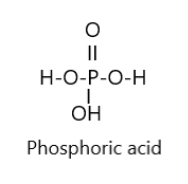
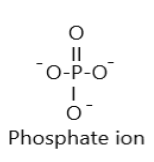
A five-carbon sugar or pentose sugar (monosaccharide): In RNA the sugar is ribose (thus the name ribonucleic acid) and in DNA the sugar is deoxyribose (thus deoxyribose acid).
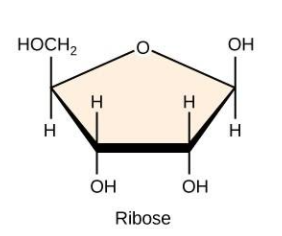
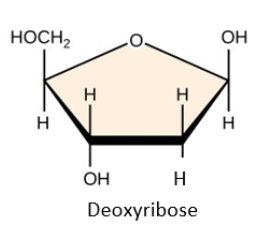
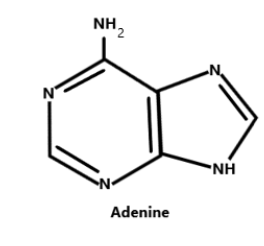
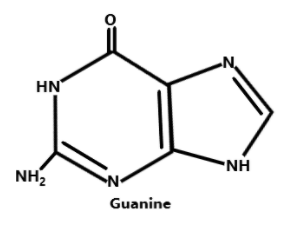
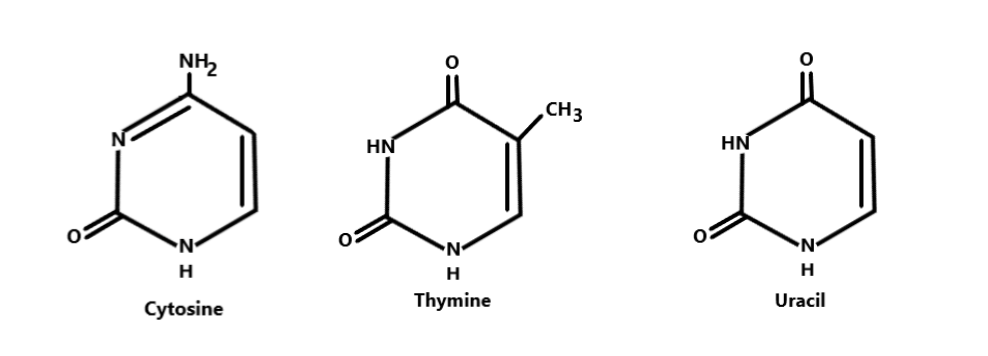
A heterocyclic nitrogen-containing compound called base: There are four different bases commonly found in DNA: adenine (A), guanine (G), thymine (T), and cytosine (C). RNA also contains adenine, guanine, and cytosine but instead of thymine, it has uracil (U). Adenine and guanine are double ring bases called purines. Cytosine, thymine, and uracil are single-ring bases called pyrimidines.
- A nucleoside comprises the sugar bound to the nitrogenous base. A nucleotide, however, is a nucleoside bound to a phosphate group.
Therefore, the correct answer is (A) Phosphate.
Note:
- Phosphate plays an important role in the nucleic acid by linking the 3’ carbon of one sugar of one nucleotide to the 5’ carbon of the sugar of the succeeding nucleotide. The bond formed between the phosphate and the hydroxyl group of sugar is an ester bond. As there is one such ester bond on either side, it is called a phosphodiester bond.
- In the DNA molecule, base pairing is specific. Adenine is always paired with Thymine and Guanine is always paired with Cytosine.
Complete answer:
A nucleotide is composed of:
A phosphate group:
A five-carbon sugar or pentose sugar (monosaccharide): In RNA the sugar is ribose (thus the name ribonucleic acid) and in DNA the sugar is deoxyribose (thus deoxyribose acid).
A heterocyclic nitrogen-containing compound called base: There are four different bases commonly found in DNA: adenine (A), guanine (G), thymine (T), and cytosine (C). RNA also contains adenine, guanine, and cytosine but instead of thymine, it has uracil (U). Adenine and guanine are double ring bases called purines. Cytosine, thymine, and uracil are single-ring bases called pyrimidines.
- A nucleoside comprises the sugar bound to the nitrogenous base. A nucleotide, however, is a nucleoside bound to a phosphate group.
Therefore, the correct answer is (A) Phosphate.
Note:
- Phosphate plays an important role in the nucleic acid by linking the 3’ carbon of one sugar of one nucleotide to the 5’ carbon of the sugar of the succeeding nucleotide. The bond formed between the phosphate and the hydroxyl group of sugar is an ester bond. As there is one such ester bond on either side, it is called a phosphodiester bond.
- In the DNA molecule, base pairing is specific. Adenine is always paired with Thymine and Guanine is always paired with Cytosine.
Recently Updated Pages
Master Class 12 Social Science: Engaging Questions & Answers for Success

Master Class 12 Physics: Engaging Questions & Answers for Success
Master Class 12 Maths: Engaging Questions & Answers for Success
Master Class 12 Economics: Engaging Questions & Answers for Success
Master Class 12 Chemistry: Engaging Questions & Answers for Success
Master Class 12 Business Studies: Engaging Questions & Answers for Success
Trending doubts
Which are the Top 10 Largest Countries of the World?
Draw a labelled sketch of the human eye class 12 physics CBSE
Explain the structure of megasporangium class 12 biology CBSE
What are the major means of transport Explain each class 12 social science CBSE
How many chromosomes are found in human ovum a 46 b class 12 biology CBSE
The diagram of the section of a maize grain is given class 12 biology CBSE