




What is a menstrual cycle? Which hormones regulate menstrual cycle? What is parturition? Which hormones are involved in the induction of parturition?
Answer
 Verified
626.4k+ views
Hint: In the female reproductive system, the menstrual cycle is the frequent natural transition that makes conception possible. Parturition means childbirth.
Complete Answer:
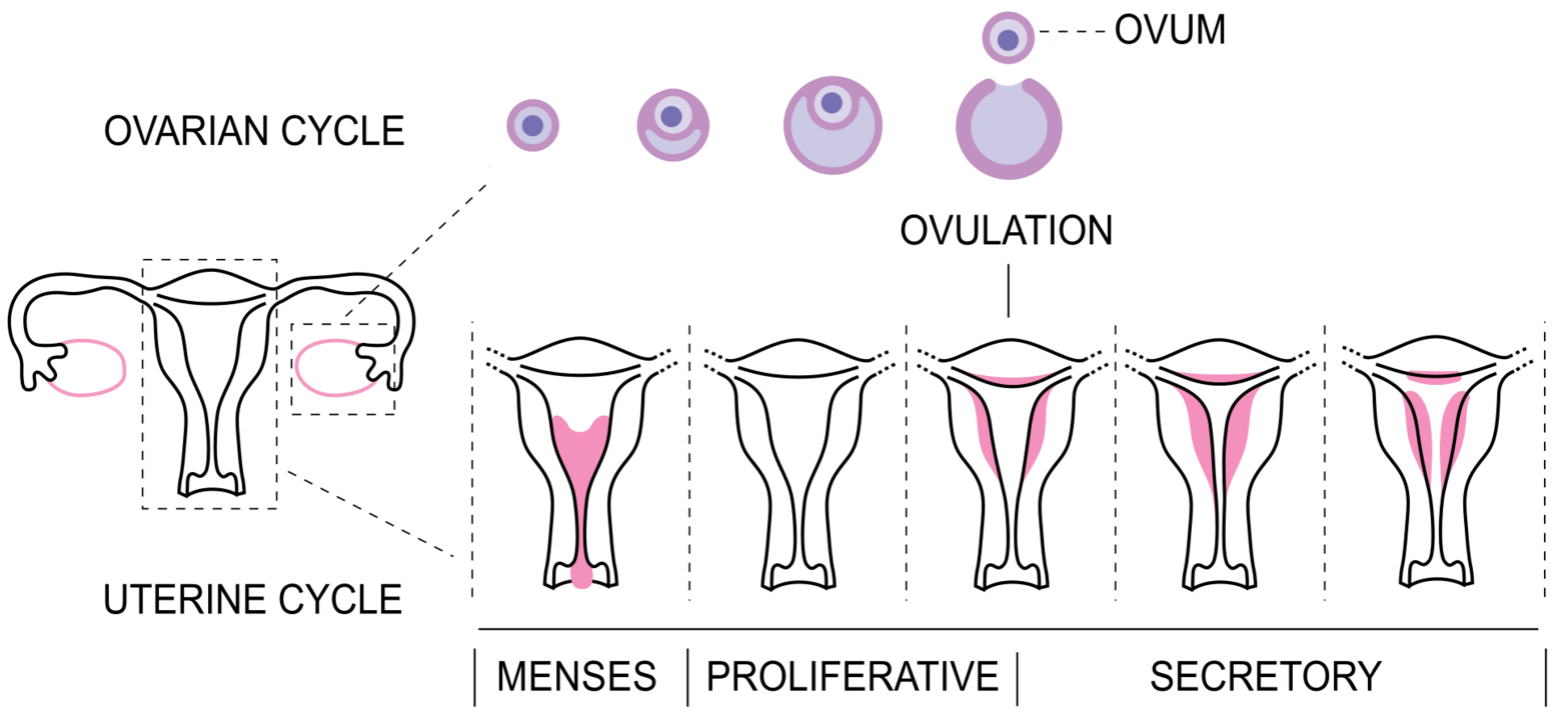
- The menstrual cycle is a monthly sequence of changes the body of a woman undergoes in preparation for the likelihood of pregnancy. Every month, an egg is released by one of the ovaries — a process called ovulation.
- At the same time, hormonal shifts are preparing the uterus for pregnancy. If ovulation occurs and the egg is not fertilised, the lining of the uterus passes through the vagina. It's a menstrual phase.
- The menstrual cycle is regulated by the complex interaction of hormones: luteinizing hormones, follicle-stimulating hormones and female sex hormones, oestrogen and progesterone.
- The amount of FSH and LH secreted from the anterior pituitary gland rises during the follicular process. FSH secreted from the hypothalamus under the influence of RH (releasing hormone) induces the conversion of the primary follicle to the graafian follicle. The level of LH increases gradually leading to follicle growth and oestrogen secretion.
- Estrogen prevents the secretion of FSH and promotes the secretion of luteinizing hormones.It also causes the uterine endometrium to thicken. The increased level of LH causes the graafian follicle to break down and release the ova into the fallopian tube.
- The ruptured graafian follicle changes to the corpus luteum and continues to secrete the progesterone hormone during the luteal process. Progesterone hormone helps to preserve and prepare the endometrium for embryo implantation.
Hormonal menstrual cycle regulation:
1. FSH activates ovarian follicles to manufacture estrogens.
2. LH activates the luteum to secrete progesterone
3. The menstrual phase is caused by an increase in oestrogen intake.
4. LH triggers ovulation;
5. The proliferative phase is triggered by a rise in oestrogen development.
6. The secretory phase is triggered by a rise in the development of progesterone.
Partituration is the act of giving birth to the young; childbirth. Fully formed foetus and placenta send signals for parturition which, in turn , cause mild uterine contractions by stretching the cervix referred to as the foetal ejection reflex. Stretching of the cervix exerts positive feedback on the posterior pituitary to the secretion of oxytocin.
Oxytocin has both direct and indirect (through prostaglandins) effects on the uterus in order to facilitate uterine contractions in order to force the foetus down, which in turn further stretches the cervix and contributes to childbirth. At the end of pregnancy, relaxin is secreted by the corpus luteum. It is used to relax the pelvic ligament and the cervix in order to promote the birth of a young person.
Note: The menstrual cycle of a woman is divided into four phases:
- Menstrual phase
- Follicular phase
- Ovulation phase
- Luteal phase
The length of each step can vary from woman to woman, and may change over time.
Complete Answer:
- The menstrual cycle is a monthly sequence of changes the body of a woman undergoes in preparation for the likelihood of pregnancy. Every month, an egg is released by one of the ovaries — a process called ovulation.
- At the same time, hormonal shifts are preparing the uterus for pregnancy. If ovulation occurs and the egg is not fertilised, the lining of the uterus passes through the vagina. It's a menstrual phase.
- The menstrual cycle is regulated by the complex interaction of hormones: luteinizing hormones, follicle-stimulating hormones and female sex hormones, oestrogen and progesterone.
- The amount of FSH and LH secreted from the anterior pituitary gland rises during the follicular process. FSH secreted from the hypothalamus under the influence of RH (releasing hormone) induces the conversion of the primary follicle to the graafian follicle. The level of LH increases gradually leading to follicle growth and oestrogen secretion.
- Estrogen prevents the secretion of FSH and promotes the secretion of luteinizing hormones.It also causes the uterine endometrium to thicken. The increased level of LH causes the graafian follicle to break down and release the ova into the fallopian tube.
- The ruptured graafian follicle changes to the corpus luteum and continues to secrete the progesterone hormone during the luteal process. Progesterone hormone helps to preserve and prepare the endometrium for embryo implantation.
Hormonal menstrual cycle regulation:
1. FSH activates ovarian follicles to manufacture estrogens.
2. LH activates the luteum to secrete progesterone
3. The menstrual phase is caused by an increase in oestrogen intake.
4. LH triggers ovulation;
5. The proliferative phase is triggered by a rise in oestrogen development.
6. The secretory phase is triggered by a rise in the development of progesterone.
Partituration is the act of giving birth to the young; childbirth. Fully formed foetus and placenta send signals for parturition which, in turn , cause mild uterine contractions by stretching the cervix referred to as the foetal ejection reflex. Stretching of the cervix exerts positive feedback on the posterior pituitary to the secretion of oxytocin.
Oxytocin has both direct and indirect (through prostaglandins) effects on the uterus in order to facilitate uterine contractions in order to force the foetus down, which in turn further stretches the cervix and contributes to childbirth. At the end of pregnancy, relaxin is secreted by the corpus luteum. It is used to relax the pelvic ligament and the cervix in order to promote the birth of a young person.
Note: The menstrual cycle of a woman is divided into four phases:
- Menstrual phase
- Follicular phase
- Ovulation phase
- Luteal phase
The length of each step can vary from woman to woman, and may change over time.
Recently Updated Pages
Master Class 12 Economics: Engaging Questions & Answers for Success

Master Class 12 Social Science: Engaging Questions & Answers for Success
Master Class 12 English: Engaging Questions & Answers for Success
Master Class 12 Maths: Engaging Questions & Answers for Success
Master Class 12 Physics: Engaging Questions & Answers for Success
Master Class 12 Biology: Engaging Questions & Answers for Success
Trending doubts
Draw a labelled sketch of the human eye class 12 physics CBSE
Which are the Top 10 Largest Countries of the World?
Draw ray diagrams each showing i myopic eye and ii class 12 physics CBSE
Which is the correct genotypic ratio of mendel dihybrid class 12 biology CBSE
Differentiate between homogeneous and heterogeneous class 12 chemistry CBSE
Which animal never drinks water in its entire life class 12 biology CBSE