






Step-by-Step Solutions For Class 7 Maths Chapter 15 In Hindi - Free PDF Download
अभ्यास 15.1
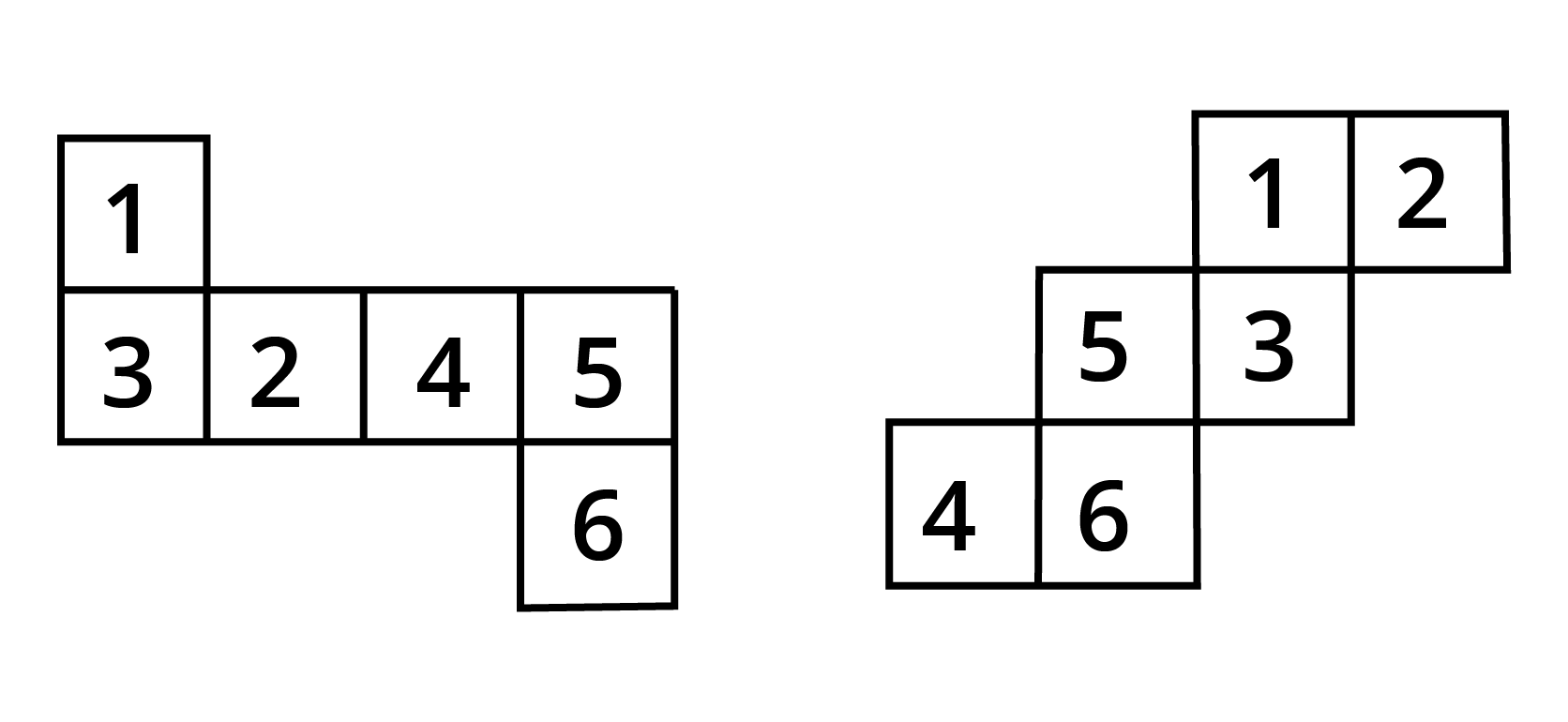
प्रश्न 1: उन जालों को पहचानिए, जिनका प्रयोग करके आप घनों को बना सकते हैं (इन जालों के प्रतिरूप काट कर ऐसा करने का प्रयास कीजिए):
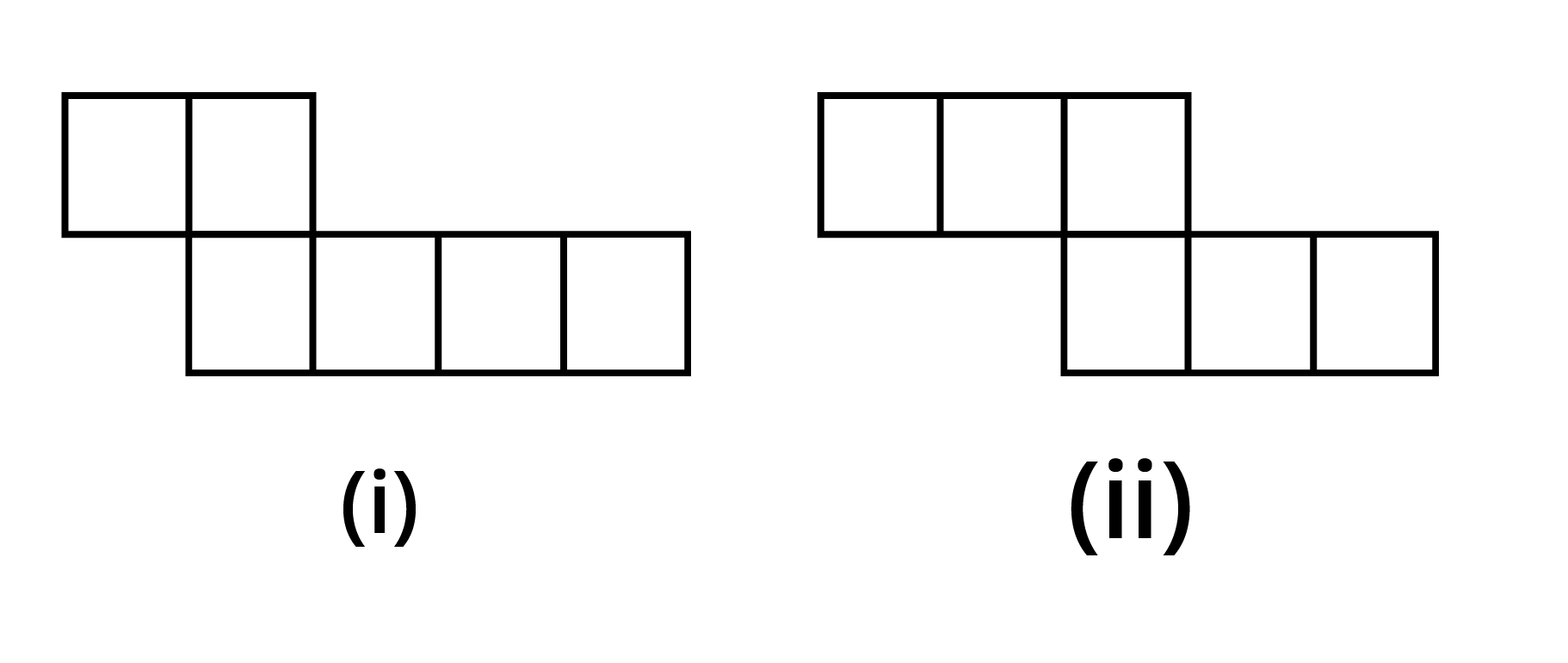
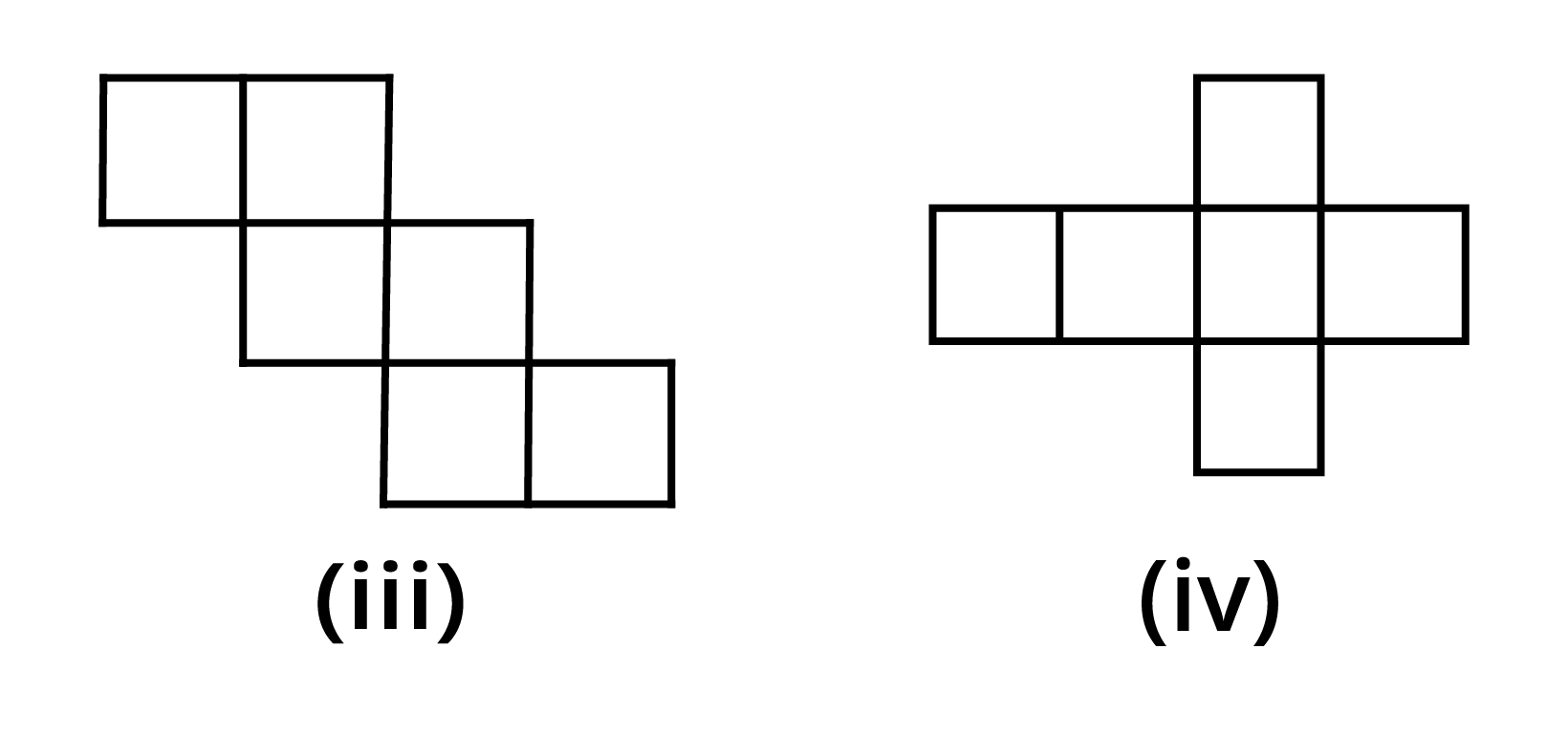
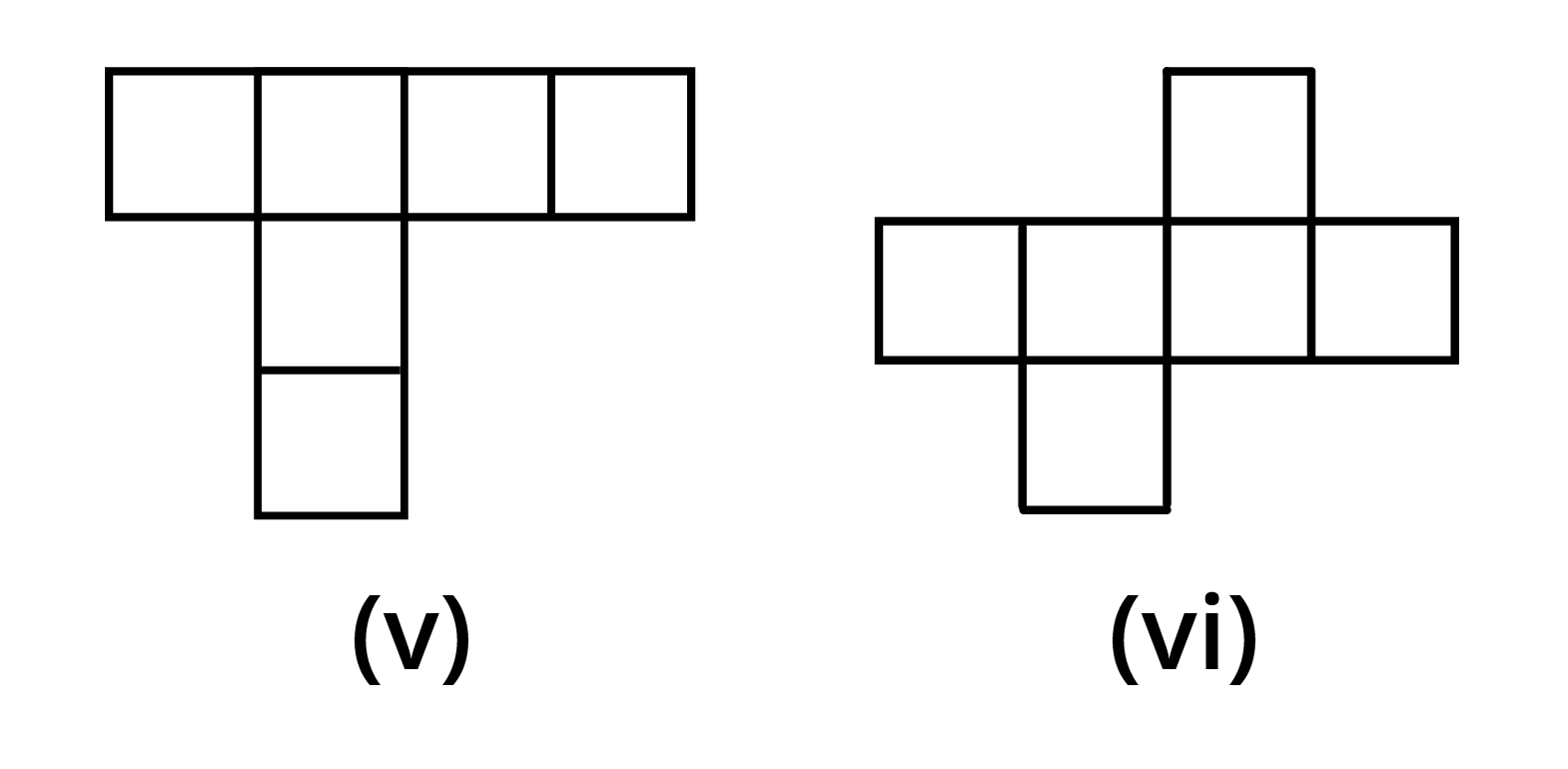
उत्तर: $ \left( ii \right),\text{ }\left( iii \right),\left( iv \right),\text{ }\left( vi \right) $ का प्रयोग करके घनो को बना सकते है।
प्रश्न 2: पासे (dice) ऐसे घन होते हैं, जिनके प्रत्येक फलक पर बिंदु (dots) अंकित होते हैं। एक पासे के सम्मुख फलकों पर अंकित बिंदुओं की संख्याओं का योग सदैव 7 होता है।यहाँ पासे(घनों) को बनाने के लिए, दो जाल दिए जा रहे हैं। प्रत्येक वर्ग में लिखी संख्या उस बक्से के बिंदुओं को दर्शाती है।
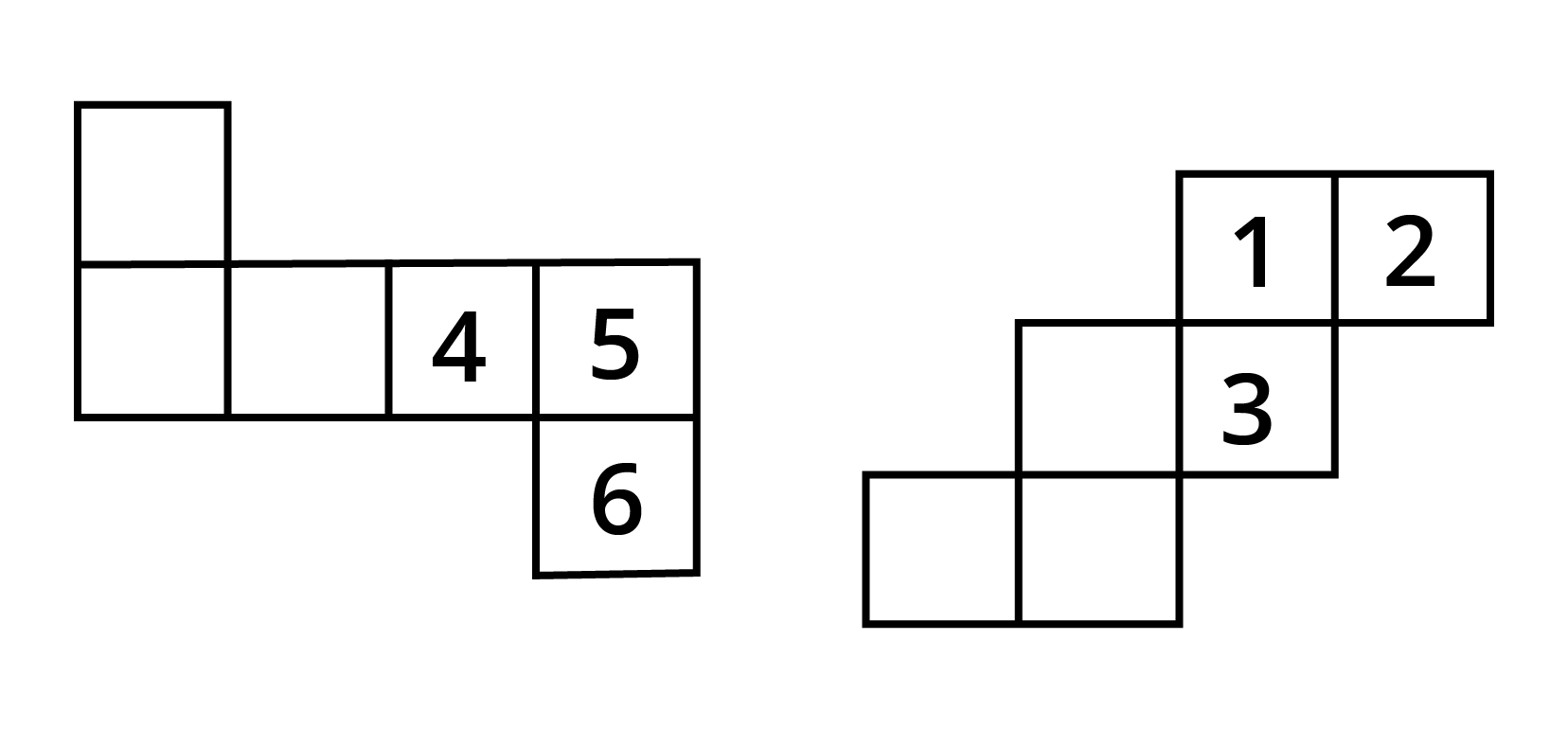
यह याद रखते हुए कि पासे के सम्मुख फलकों की संख्याओं का योग सदैव 7 होता है, रिक्त स्थानों पर उपयुक्त संख्याएँ लिखिए।
उत्तर:
प्रश्न 3: क्या यह पासे के लिए एक जाल हो सकता है?अपने उत्तर को स्पष्ट कीजिए।
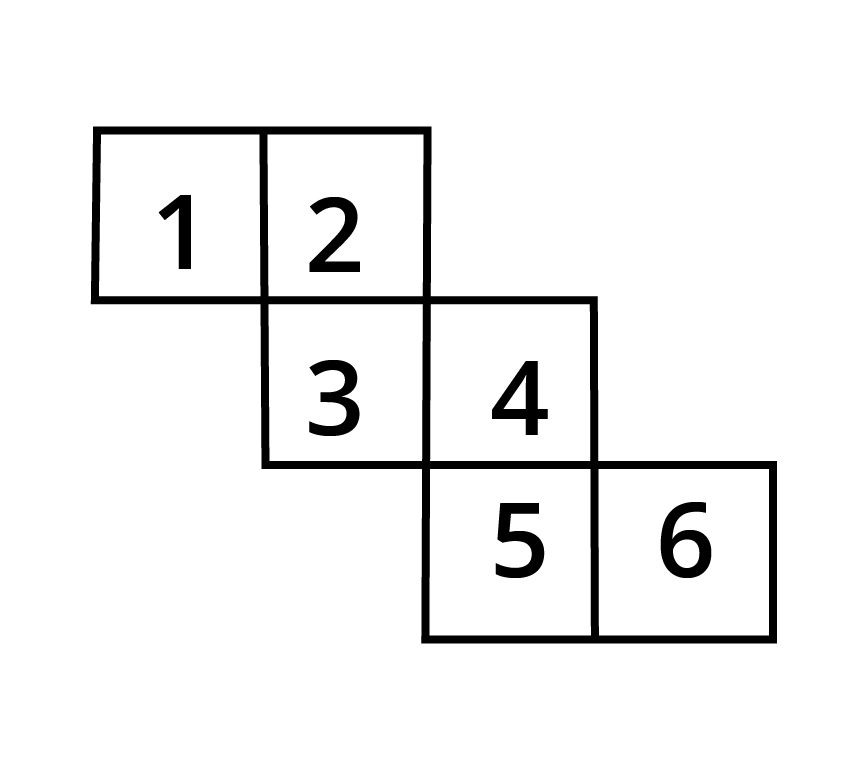
उत्तर: नहीं, क्योंकि 4 की उल्टी तरफ 1 है और 3 की उल्टी तरफ 6 है और दोनों स्थिति में योग 7 नहीं होता है।
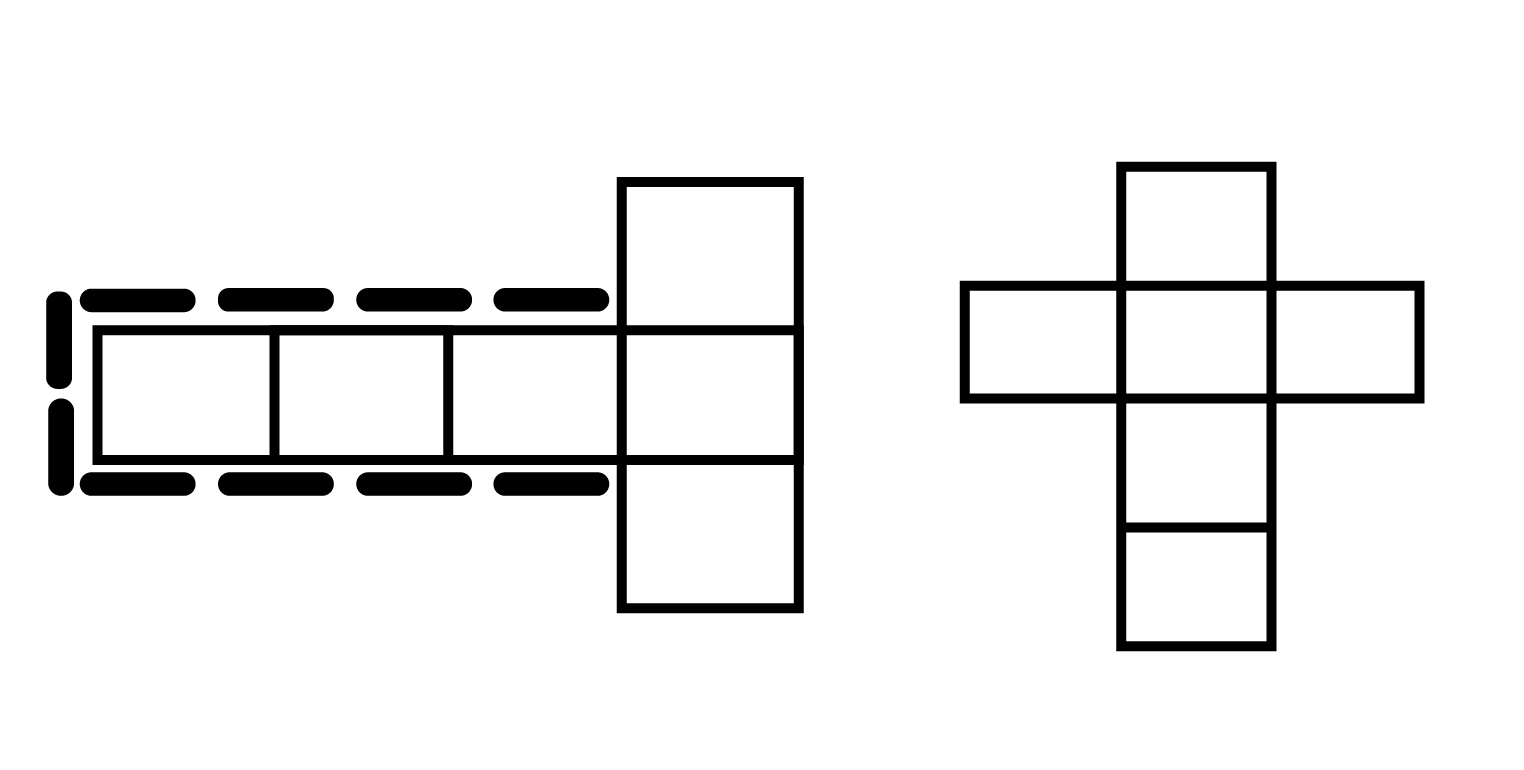
प्रश्न 4: यहाँ एक घन बनाने के लिए, एक अधूरा जाल दिया गया है। इसको कम-से-कम दो विभिन्न विधियों से पूरा कीजिए। याद रखिए कि घन के 6 फलक होते हैं। यहाँ इस जाल में कितने फलक दिए हुए हैं? (दो पृथक्-पृथक् चित्र दीजिए। कार्य को सरल बनाने के लिए, आप वर्गांकित कागज़ का प्रयोग कर सकते हैं।)
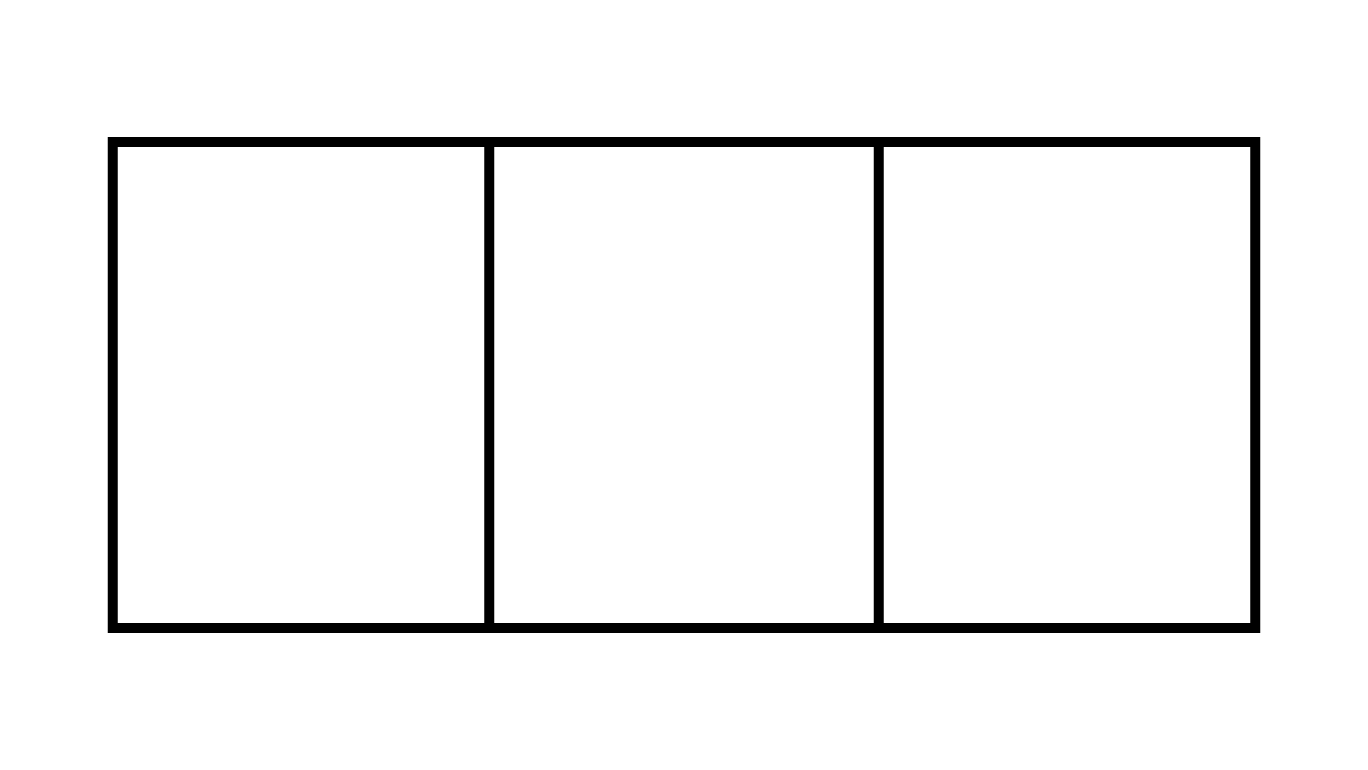
उत्तर:दो विभिन्न विधियाँ
प्रश्न 5: जालों को उपयुक्त ठोसों से मिलान कीजिए:
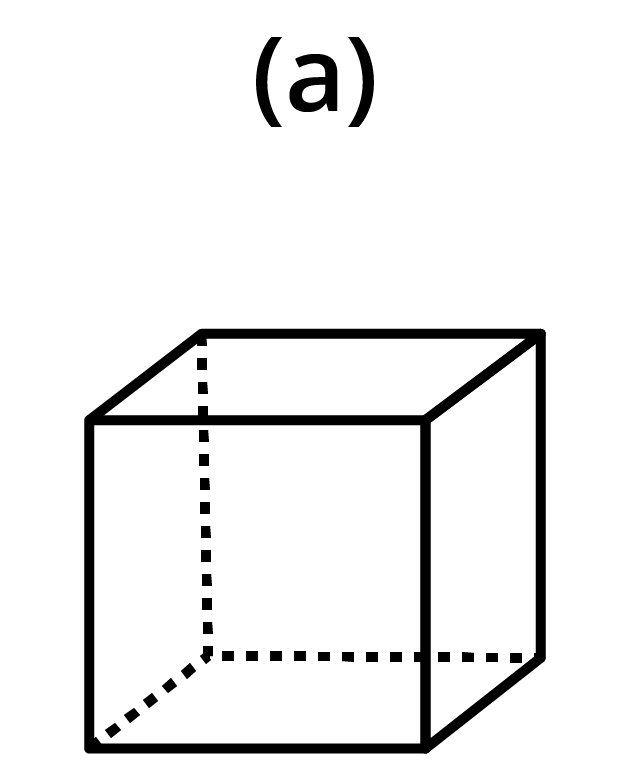
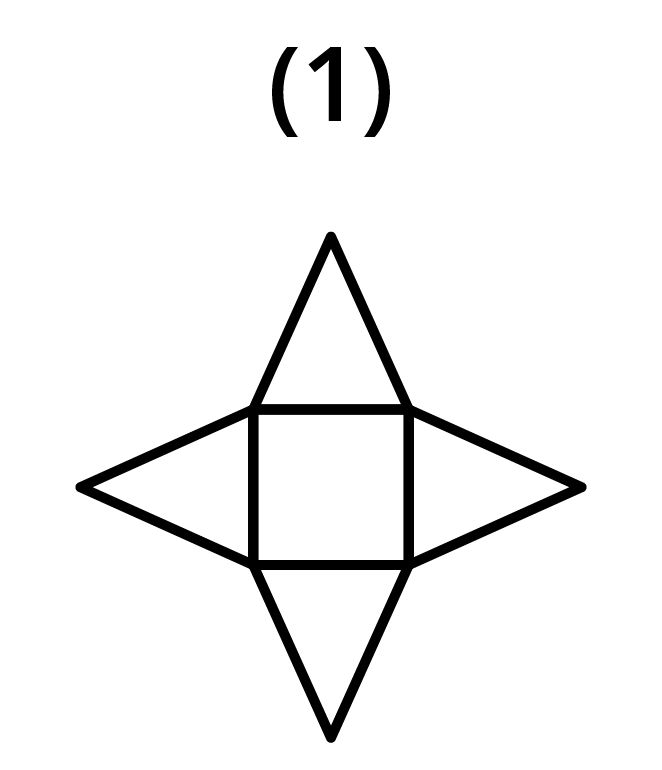

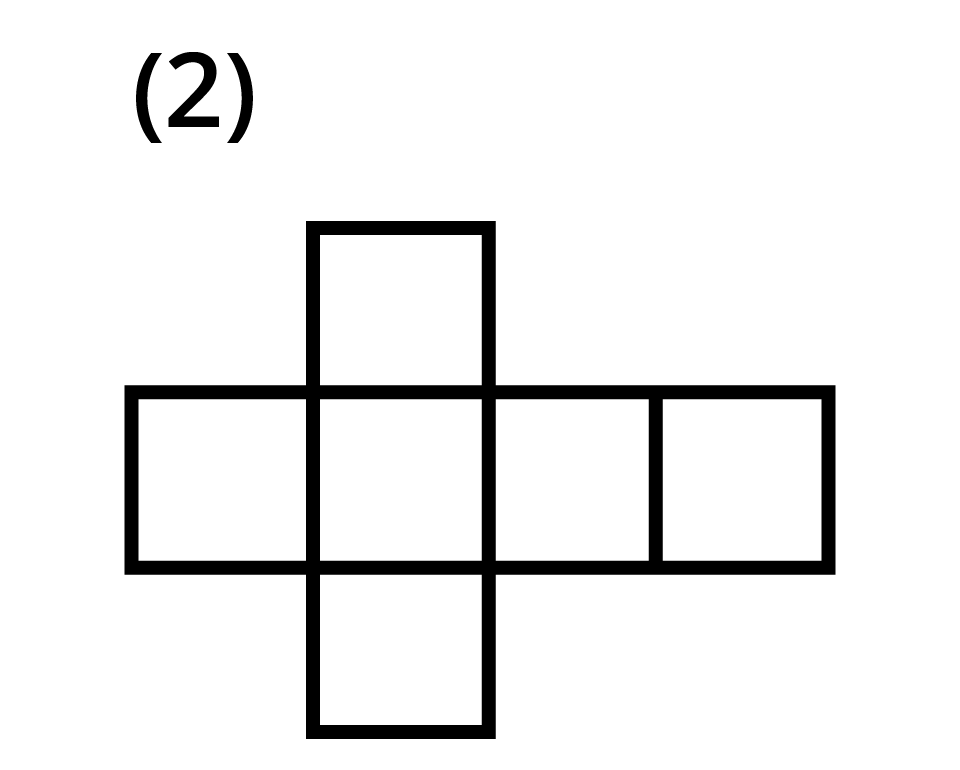
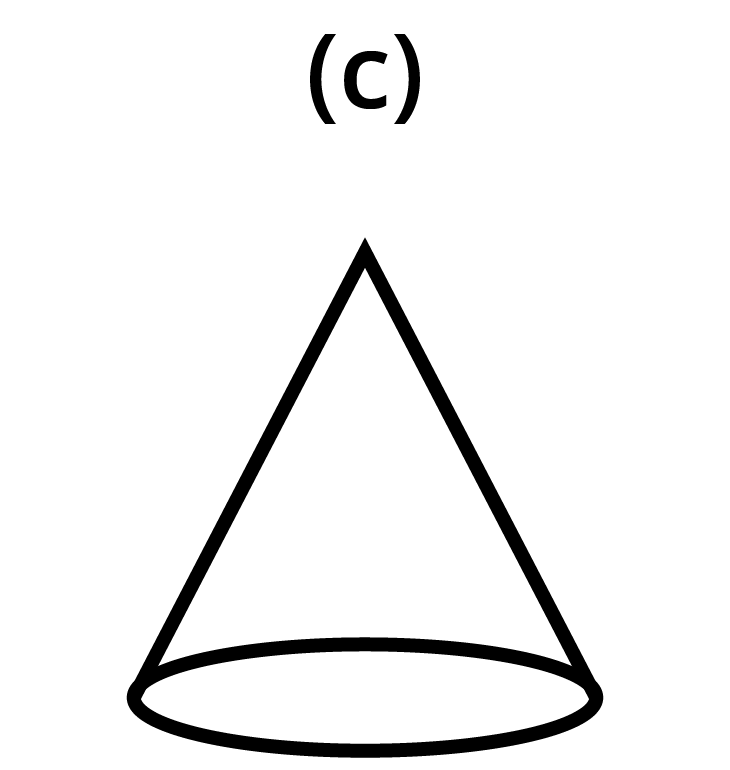
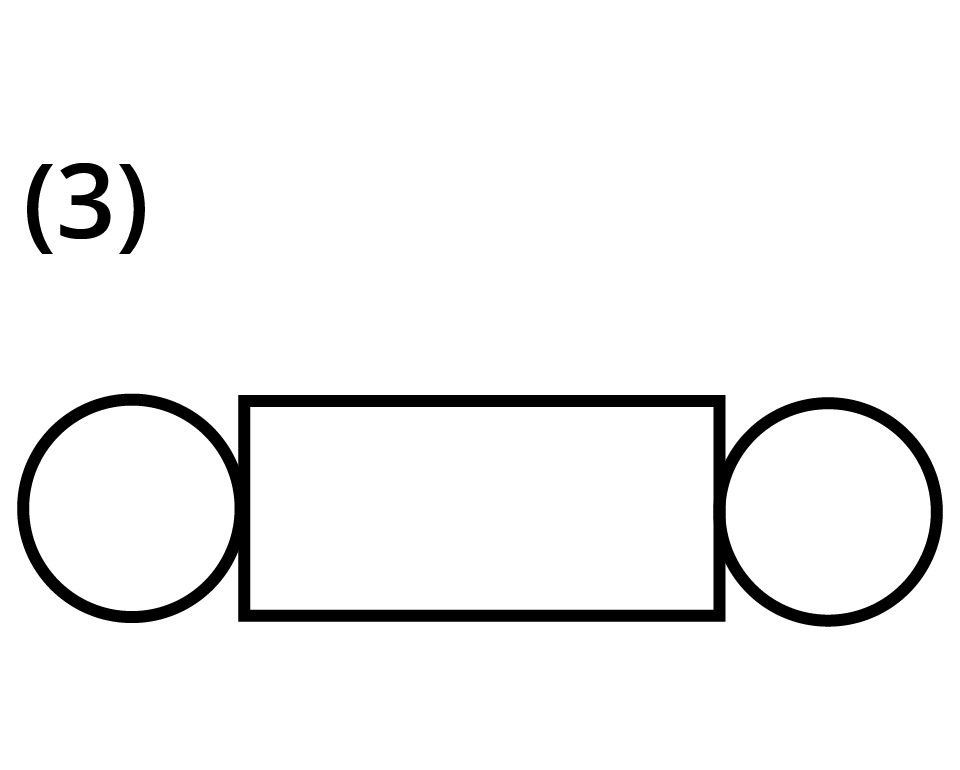

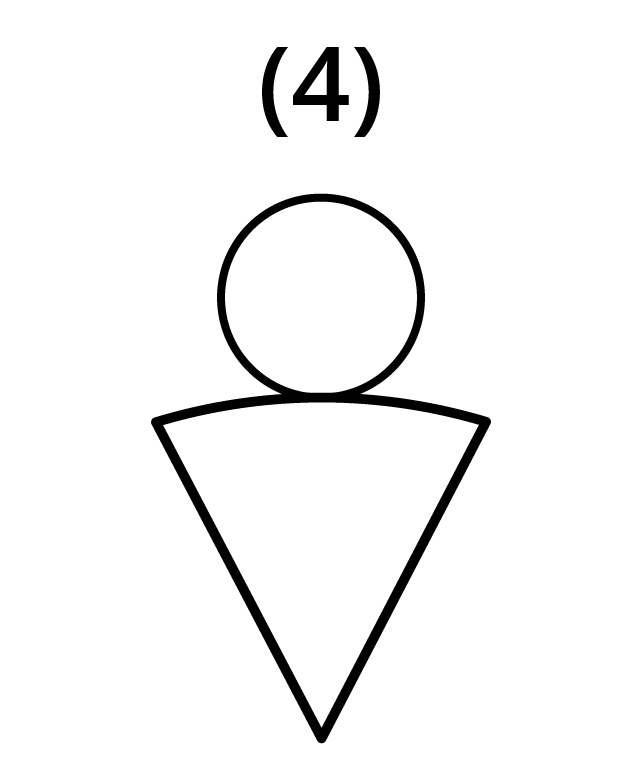
उत्तर:
$ \begin{align} & \left( a \right)\text{ }2 \\ & \left( b \right)\text{ }3 \\ & \left( c \right)\text{ }4 \\ & \left( d \right)\text{ }1 \\ \end{align} $
NCERT Solutions for Class 7 Maths Chapter 15 Visualising Solid Shapes In Hindi
Chapter-wise NCERT Solutions are provided everywhere on the internet with an aim to help the students to gain a comprehensive understanding. Class 7 Maths Chapter 15 solution Hindi mediums are created by our in-house experts keeping the understanding ability of all types of candidates in mind. NCERT textbooks and solutions are built to give a strong foundation to every concept. These NCERT Solutions for Class 7 Maths Chapter 15 in Hindi ensure a smooth understanding of all the concepts including the advanced concepts covered in the textbook.
NCERT Solutions for Class 7 Maths Chapter 15 in Hindi medium PDF download are easily available on our official website (vedantu.com). Upon visiting the website, you have to register on the website with your phone number and email address. Then you will be able to download all the study materials of your preference in a click. You can also download the Class 7 Maths Visualising Solid Shapes solution Hindi medium from Vedantu app as well by following the similar procedures, but you have to download the app from Google play store before doing that.
NCERT Solutions in Hindi medium have been created keeping those students in mind who are studying in a Hindi medium school. These NCERT Solutions for Class 7 Maths Visualising Solid Shapes in Hindi medium pdf download have innumerable benefits as these are created in simple and easy-to-understand language. The best feature of these solutions is a free download option. Students of Class 7 can download these solutions at any time as per their convenience for self-study purpose.
These solutions are nothing but a compilation of all the answers to the questions of the textbook exercises. The answers/ solutions are given in a stepwise format and very well researched by the subject matter experts who have relevant experience in this field. Relevant diagrams, graphs, illustrations are provided along with the answers wherever required. In nutshell, NCERT Solutions for Class 7 Maths in Hindi come really handy in exam preparation and quick revision as well prior to the final examinations.

FAQs on NCERT Solutions For Class 7 Maths In Hindi Chapter 15 Visualising Solid Shapes - 2025-26
1. Where can I find reliable, step-by-step NCERT Solutions for Class 7 Maths Chapter 15, Visualising Solid Shapes?
You can find detailed, step-by-step NCERT Solutions for Class 7 Maths Chapter 15, which are prepared by subject matter experts. These solutions strictly follow the CBSE 2025-26 syllabus and provide the correct methodology for solving all the problems in the textbook exercises, covering topics like nets, isometric sketches, and different views of solid shapes.
2. What is the correct method to solve questions on identifying nets for different solids in Exercise 15.1?
To solve questions in Exercise 15.1, you should visualise folding the net along its edges. The correct method involves checking if the faces of the shape overlap or if there is a gap when the net is folded. For example, a valid net for a cube will have six square faces that can be folded to form a closed box without any overlaps.
3. How do you draw an isometric sketch of a cuboid as required in the NCERT solutions for Chapter 15?
To draw an isometric sketch, you use isometric dot paper. The correct method involves these steps:
Draw the front face of the cuboid according to its given dimensions.
From the corners of the front face, draw parallel lines backwards that align with the dots. These lines represent the depth of the cuboid.
Connect the ends of these lines to form the back face of the cuboid.
This method ensures that the measurements are kept proportional, giving a realistic 3D representation.
4. What is the main difference in the method of drawing an oblique sketch versus an isometric sketch?
The main difference in the method lies in the paper used and the representation of measurements. For an oblique sketch, you use squared paper, draw the front face true to size, and then draw the receding edges at a 45-degree angle, often with a shortened depth. For an isometric sketch, you use dotted paper and draw all edges (length, width, and height) to their actual proportional lengths, providing a more accurate 3D view.
5. How do the NCERT Solutions explain how to identify the top, front, and side views of a solid shape?
The solutions explain this by asking you to imagine looking at the object from three specific positions:
Front View: What you see when you look directly at the front of the object.
Top View: What you see when you look down on the object from directly above.
Side View: What you see when you look at the object from the side (usually the left or right).
The solution for each problem shows the resulting 2D shape for each of these views.
6. Why is learning to visualise solid shapes from different perspectives an important skill in mathematics?
Visualising solid shapes is a crucial skill because it develops spatial reasoning, which is fundamental in higher mathematics, science, and engineering. This ability helps in understanding complex geometric concepts, interpreting 3D data, and solving real-world problems related to design, architecture, and navigation. It forms the foundation for topics like geometry, trigonometry, and calculus.
7. How can you verify if a given 2D net will correctly form a polyhedron like a pyramid?
The correct verification method is to check two conditions: 1) The number and shape of faces in the net must match the required faces of the polyhedron. For example, a square pyramid needs one square base and four triangular faces. 2) When you mentally fold the net, all edges must meet perfectly to form vertices, and no faces should overlap. Tracing the net on paper, cutting it out, and folding it is a practical way to confirm this.
8. What is a common mistake students make when solving problems on different views of a solid, and how do NCERT Solutions help avoid it?
A common mistake is drawing a 3D-like view instead of a flat 2D shape for the front, top, or side view. For instance, for the top view of a cylinder, students might draw a cylinder instead of a simple circle. NCERT Solutions help avoid this by consistently demonstrating that each view is a flat (2D) projection of what is seen from that specific angle, helping to reinforce the correct concept.
