




The Food We Eat Questions and Answers - Free PDF Download
CBSE Class 1 chapter The Food We Eat, children learn about different types of food and their importance in our daily lives. The chapter introduces various food groups, including fruits, vegetables, grains, and proteins, explaining how each contributes to a healthy body. This foundational chapter aims to teach young students about balanced nutrition and the role of food in maintaining good health.
 Table of Content
The complete NCERT Class 1 English Chapter 7 Question Answer is updated for the latest CBSE Class 1 English syllabus. Our FREE PDF download includes detailed question answers, making it easy for students to understand and learn. This resource is designed to enhance comprehension and increase the confidence in English.
Glance on Class 1 English Chapter 7 - The Food We Eat
Understanding Food Choices: Helps students learn about different food items and their roles.
Different Types of Food: Introduction to various food items such as fruits, vegetables, and grains.
Promoting Healthy Habits: Encourages children to make healthy food choices.
Nutritional Value: Understanding the benefits of each food group.
Building Awareness: Instills early awareness of nutrition and healthy eating.
Healthy Eating Habits: Basic principles of a balanced diet.
Answer the Questions
Question 1. Where do you sit when you have lunch at school?
Answer: I sit in the school playground with my friends to have lunch at school.
Question 2. How do you share your food with your friends?
Answer: We keep our lunch boxes in the center and everyone shares food.
Question 3. When you were hungry, did anyone share food with you?
Answer: Yes, when I was hungry my friends shared their food with me.
A. Think of words for the pictures and read aloud.
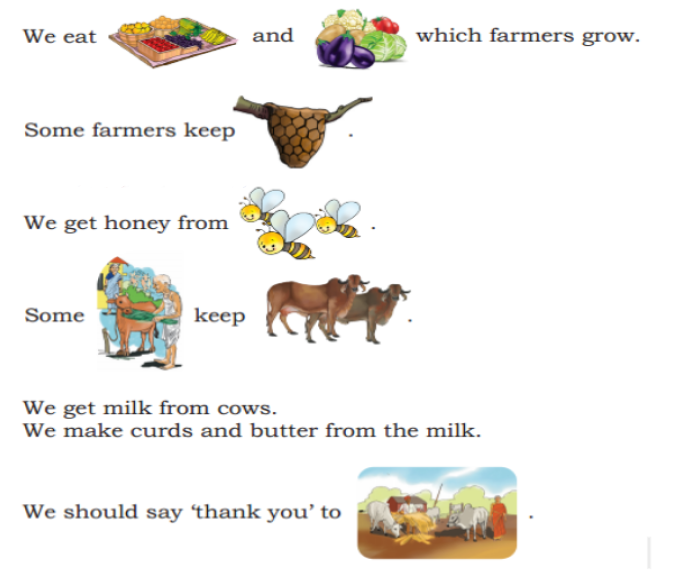
Answer:
We eat fruits and vegetables which farmers grow.
Some farmers keep beehives.
We get honey from honeybees.
Some farmers keep COWS.
We get milk from cows.
We make curds and butter from the milk.
We should say ‘thank you’ to cows and farmers.

(a) Name the food items you see in the picture.
Answer: Food items in the picture are idli with chutney, tomato soup, samosa with ketchup, puri with aloo sabzi, dosa sambhar, paratha, gujiya and laddoos, chole bhature, mutter pulao with dal, cupcakes, jalebis, uthapam, momos and chilla with chutney.
(b) Which is your favourite sweet?
Answer: My favourite sweet is rasgulla.
(c) Who cooks food at home?
Answer: My mother cooks food at home.
(d) Do you pick up your plate after a meal?
Answer: Yes, I pick up my plate after a meal.
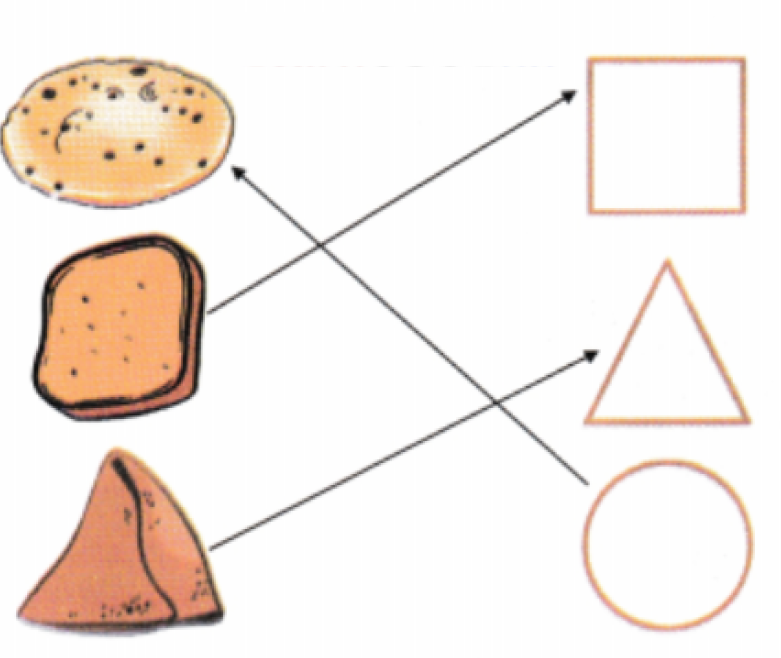
B. Match the food item to its shape.
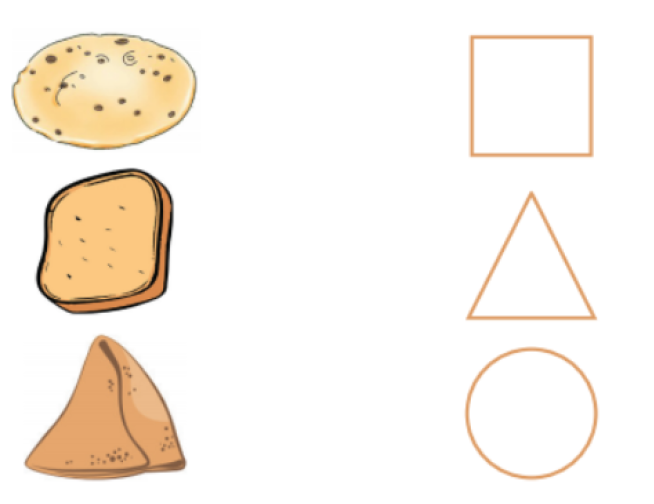
Answer:
Let us draw
1. Say the names of the special dishes you eat at home.
Draw and colour them. See what others have drawn.
Answer:
Draw pictures of different dishes and colour them yourself.
Let us speak
Fun with Word
A. Listen to the following words that your teacher will read out. Notice that they have only one syllable.
Say the word and clap once.
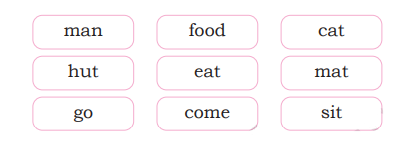
Answer: This is a student activity.
B. Now ay these words.
These words have two syllables. Say each word aloud and clap for every syllable of the word. (See the words in the textbook)
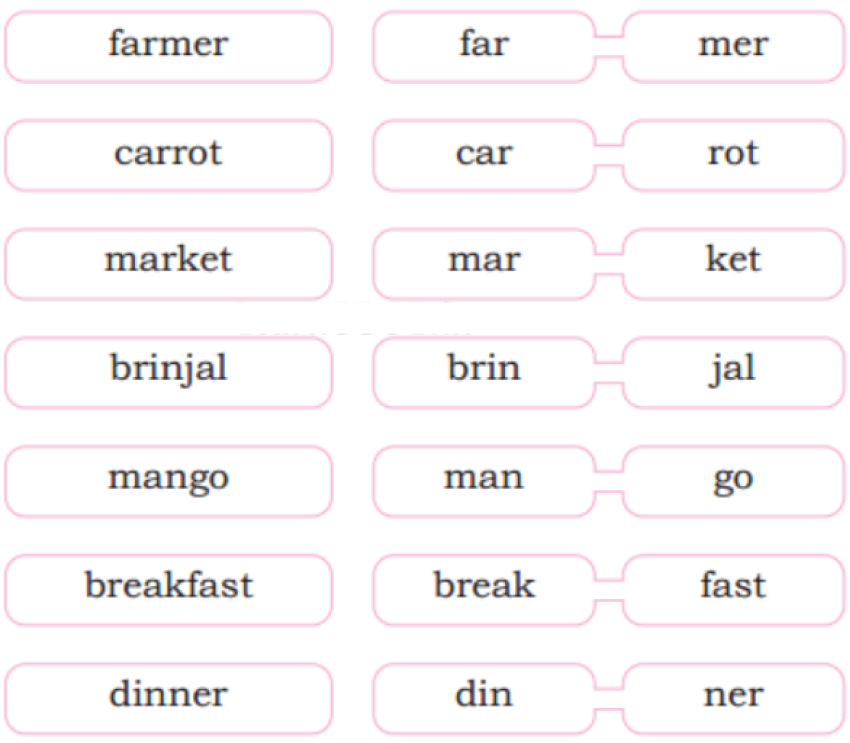
Answer: Do it yourself.
2. Match the following images to the sentences.
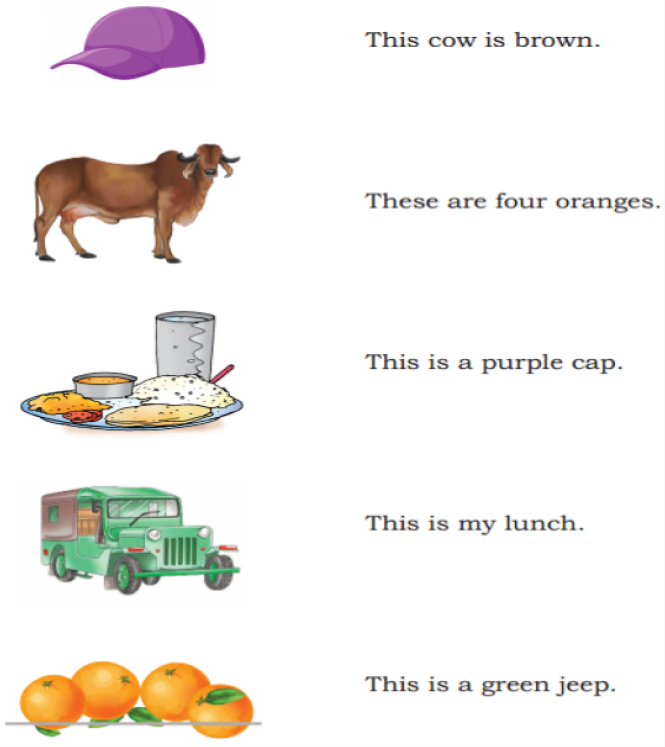
Answer:
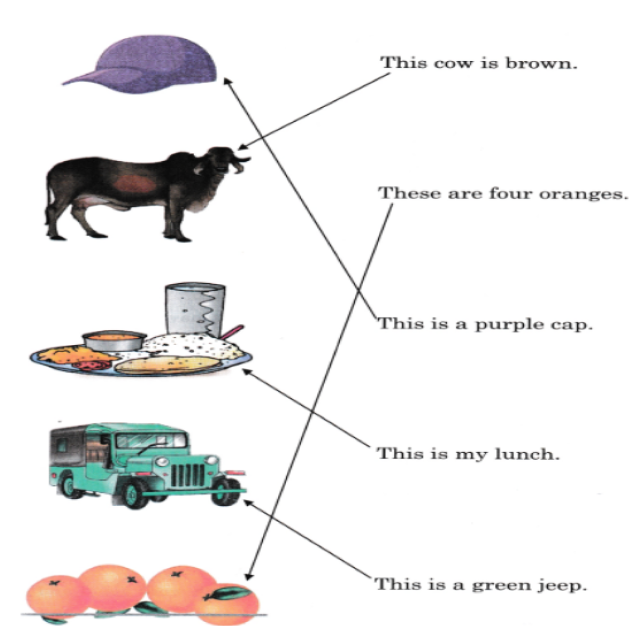
Let us do
Riddles
1. I am a fruit. My name is my colour.
Who am I?
Answer: Orange.
2. I am hard and brown on the outside.
Soft and white inside.
Who am I?
Answer: I am a coconut.
3. I am a vegetable. I am pink in colour.
I may also be white in colour.
If you cut me. I make you cry.
Who am I?
Answer: I am an Onion.
4. I am a fruit. I come in green or purple colour.
I come in a bunch.
Who am I?
Answer: I am Grapes.
Benefits of Class 1 English Chapter 7 The Food We Eat NCERT Solutions
Class 1 English Chapter 7 Question Answers provide detailed explanations of the story, helping students grasp the moral lessons about sharing and cooperation.
The solutions Break down the text and vocabulary, making it easier for students to understand the context and characters' actions.
Offers clear answers to textbook questions, allowing students in completing their assignments accurately and efficiently.
NCERT Solutions Question Answers encourage critical thinking and discussion about empathy, cooperation, and problem-solving in real-life situations.
NCERT Solutions include engaging exercises and activities related to the story, making learning fun and interactive for students.
It helps students feel more prepared and confident in understanding the chapter's themes and content.
Important Study Material Links for English Chapter 7 Class 1 - The Food We Eat
Explore essential study materials for Class 1 English Chapter 7, "The Food We Eat," with comprehensive resources tailored to enhance understanding. Access the Class 1 English Mridang NCERT Solutions to support your learning and exam preparation effectively.
Conclusion
Chapter 7 The Food We Eat provides young students with essential knowledge about various food types and their benefits. Understanding these concepts helps make informed food choices and adopt healthy eating habits. This foundational learning supports overall well-being and sets the stage for more advanced nutrition education. For further reinforcement, Vedantu offers excellent resources and interactive learning tools to help children grasp these important concepts effectively.
Chapter-wise NCERT Solutions Class 1 English
Related Important Links for English Class 1
Along with this, students can also download additional study materials provided by Vedantu for English Class 1–

