



Why Is Quit India Movement Day Observed on 8 August?
Quit India Movement Day is observed on 8 August to remember the launch of the Quit India Movement on 8 August 1942. It marks the moment when Mahatma Gandhi and the Indian National Congress called for an end to British rule in India, making it one of the most important milestones in the Indian freedom struggle.
For students and general readers, the day matters because it connects a specific historic date with a larger national movement of mass resistance. People also know it as Bharat Chhodo Andolan or भारत छोड़ो आंदोलन, and it is remembered for the powerful call “Do or Die”.
What is Quit India Movement Day?
Quit India Movement Day commemorates the launch of the Quit India Movement on 8 August 1942, when Mahatma Gandhi and the Indian National Congress called for an end to British rule in India. It is remembered as a major milestone in India’s freedom struggle.
Quit India Movement Day 2026 Date
In 2026, Quit India Movement Day will be observed on 8 August. The observance recalls the historic resolution passed in Bombay in 1942 and the nationwide upsurge that followed.
| Fact | Detail |
|---|---|
| Observance | Quit India Movement Day |
| Observed on | 8 August |
| Historic date | 8 August 1942 |
| Popular Hindi name | भारत छोड़ो आंदोलन / Bharat Chhodo Andolan |
History of the Quit India Movement
The history of the Quit India Movement is linked to the growing demand for complete independence during World War II. By 1942, frustration with British rule had deepened, and many Indians wanted a decisive political call rather than gradual reform.
The movement was launched by the All India Congress Committee at its session in Bombay. This session is closely associated with Gowalia Tank Maidan, which is now known as August Kranti Maidan. The resolution demanded that the British leave India and made the demand for freedom more direct and urgent.
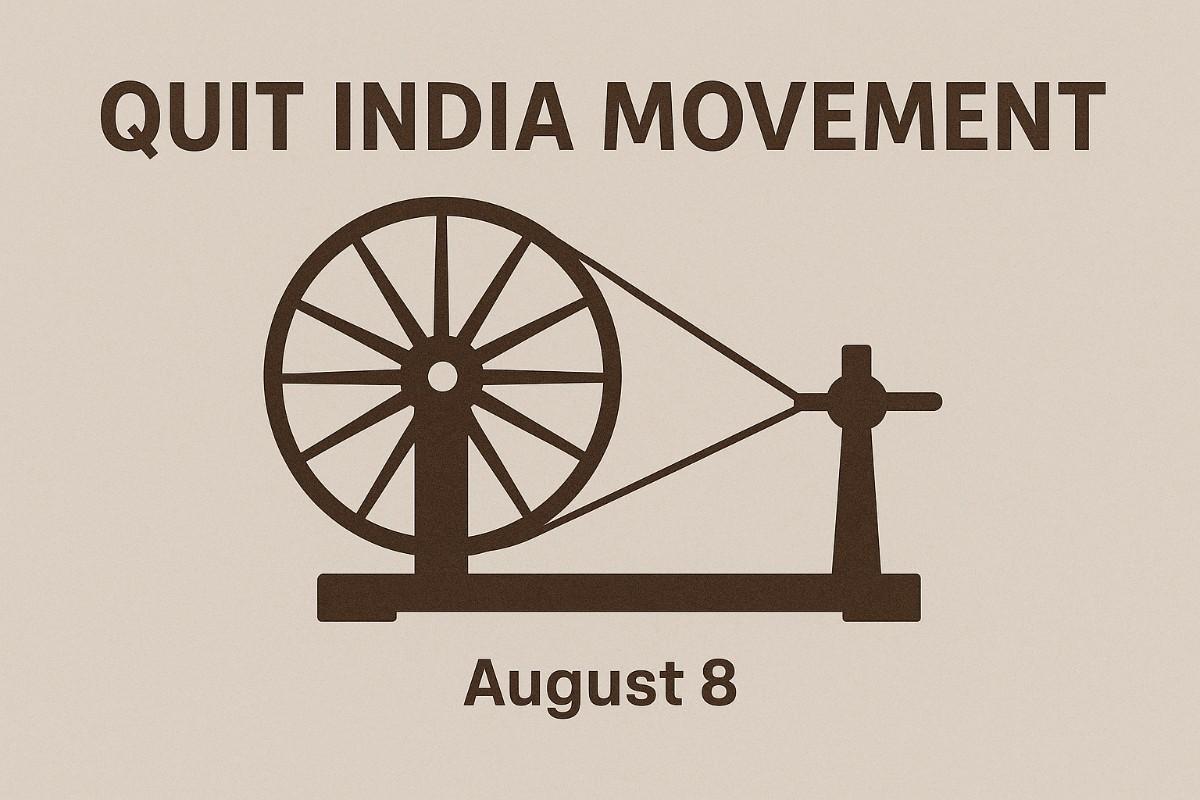
Simple timeline of 1942
A clear sequence helps explain the origin of Bharat Chhodo Andolan.
- Growing national demand for independence during World War II.
- All India Congress Committee met in Bombay in August 1942.
- Quit India resolution was adopted on 8 August 1942.
- Mahatma Gandhi gave the call associated with “Do or Die”.
- Mass resistance and public participation spread after the launch.
What Happened on 8 August 1942?
On 8 August 1942, the Quit India resolution was passed at the Bombay session of the All India Congress Committee. This was the formal political launch of the movement. The event is remembered as the moment when the demand for British withdrawal was declared in a clear and public way.
The message most strongly associated with that moment is “Do or Die”. In Hindi, it is widely remembered as “करो या मरो”. In documented history, this slogan stands for determination, sacrifice, and the urgency of the struggle for freedom.
Why is the Quit India Movement Important?
The importance of the Quit India Movement lies in its scale, clarity, and impact on political consciousness in India. It was not just a formal resolution; it became a mass movement involving wide public participation. For this reason, it remains a central chapter in the freedom struggle of India.
Its significance can be understood through these points.
- It made the demand for the end of British rule direct and unmistakable.
- It encouraged mass civil resistance across sections of society.
- It strengthened nationalist feeling and political awareness.
- It became a major milestone in the long road to independence.
- It remains an educational symbol of courage, unity, and civic commitment.
Quit India Movement Slogan and Key Leaders
The central leader associated with the movement is Mahatma Gandhi. The movement was launched under the banner of the Indian National Congress, and the role of Congress leadership was important in shaping the political call of August 1942.
| Aspect | Details |
|---|---|
| Key leader | Mahatma Gandhi |
| Political body | Indian National Congress / All India Congress Committee |
| Famous slogan | Do or Die / करो या मरो |
| Launch place | Bombay, at Gowalia Tank Maidan, now August Kranti Maidan |
The slogan “Do or Die” is one of the best-known phrases from modern Indian history. It is remembered not as a casual saying, but as a historic call linked to discipline, resolve, and the seriousness of the anti-colonial struggle.
Bharat Chhodo Andolan in Hindi: Meaning and Background
भारत छोड़ो आंदोलन का अर्थ है भारत से ब्रिटिश शासन को समाप्त करने की स्पष्ट मांग. इसे Bharat Chhodo Andolan भी कहा जाता है. यह आंदोलन 8 अगस्त 1942 को शुरू हुआ और भारतीय स्वतंत्रता संग्राम का एक महत्वपूर्ण चरण माना जाता है.
अगर कोई पूछे “भारत छोड़ो आंदोलन कब हुआ”, तो सीधा उत्तर है: इसका औपचारिक शुभारंभ 8 अगस्त 1942 को बॉम्बे में हुआ. इस आंदोलन से जुड़ा सबसे प्रसिद्ध नारा “करो या मरो” है.
How Quit India Movement Day is Observed
As an educational and commemorative observance, Quit India Movement Day is commonly marked through historical reflection and patriotic learning activities. The focus is usually on remembering freedom fighters, understanding the events of 1942, and discussing the meaning of freedom in modern democratic life.
Schools, families, and learners can observe the day through simple and meaningful activities.
- Read a short note on the Indian independence movement.
- Prepare a timeline of key events of August 1942.
- Take part in essay writing, speech practice, or debate on freedom and civic responsibility.
- Create a poster with the slogan “Do or Die” and its historical meaning.
- Watch a documentary or classroom presentation on India’s freedom struggle.
- Visit a museum, library, or local history exhibition if available.
- Discuss why democratic rights and responsibilities matter in present-day India.
Short Historical Lines and Slogan Highlights
This observance is often remembered through short historical lines rather than decorative slogans alone. The most relevant and historically aligned expressions are directly tied to the 1942 movement and its message.
Commonly remembered lines include:
- Do or Die
- करो या मरो
- Remember 8 August 1942 as a decisive moment in the freedom struggle.
- Honor the courage of those who joined mass resistance.
- Learn the meaning of freedom through India’s national movement.
Modern Relevance for Students
Remembering the Quit India Movement Day is not only about the past. It also encourages students to think about democracy, public responsibility, peaceful civic action, and the value of freedom. National observances become more meaningful when they are studied with context rather than memorized as isolated dates.
To build that wider understanding, students may also explore related Vedantu reads such as Independence Day celebration, what Republic Day is and when it is celebrated in India, Martyrs Day, and the wider Vedantu blog for awareness-based learning.
Conclusion: Quit India Movement Day, observed on 8 August, remembers a defining moment in India’s freedom struggle and the launch of the movement in 1942. The day stands for courage, public participation, and the demand for self-rule. For students, it is an opportunity to understand history through dates, places, leaders, and ideas that shaped modern India. Learning about Bharat Chhodo Andolan helps keep the meaning of freedom, responsibility, and national memory alive.
FAQs on Quit India Movement Day: History, Slogan and Importance
1. What is Quit India Movement Day?
Quit India Movement Day is observed to commemorate the launch of the Quit India Movement on 8 August 1942. On this historic occasion, Mahatma Gandhi and the Indian National Congress demanded an end to British rule and called upon Indians to work for complete independence.
2. When is Quit India Movement Day observed?
Quit India Movement Day is observed every year on 8 August. The date marks the adoption of the Quit India Resolution by the All India Congress Committee in Bombay on 8 August 1942.
3. When will Quit India Movement Day be observed in 2026?
Quit India Movement Day 2026 will be observed on Saturday, 8 August 2026. The observance will commemorate the 1942 launch of the Bharat Chhodo Andolan, a major phase of India’s freedom struggle.
4. Who launched the Quit India Movement?
Mahatma Gandhi and the Indian National Congress launched the Quit India Movement at the Bombay session of the All India Congress Committee in August 1942. Gandhi provided the movement’s central message, while Congress leaders and people across India helped turn it into a mass struggle against British rule.
5. What happened on 8 August 1942?
On 8 August 1942, the All India Congress Committee adopted the Quit India Resolution in Bombay. The resolution demanded the withdrawal of British rule from India, and Mahatma Gandhi delivered his historic “Do or Die” call at Gowalia Tank Maidan, now known as August Kranti Maidan.
6. What was the slogan of the Quit India Movement?
“Do or Die” was the famous slogan associated with the Quit India Movement. Given by Mahatma Gandhi in his August 1942 address, it is commonly remembered in Hindi as “करो या मरो” and expressed determination to achieve freedom from British rule.
7. Where was the Quit India Movement launched?
The Quit India Movement was launched at Gowalia Tank Maidan in Bombay, now Mumbai. The historic ground is now called August Kranti Maidan, reflecting its association with the August 1942 movement.
8. Why was the Quit India Movement started?
The Quit India Movement was started to demand the immediate end of British rule in India. Its principal causes included:
- Growing demand for complete independence.
- Failure of the Cripps Mission to offer an acceptable plan for Indian self-government.
- Indian dissatisfaction with involvement in World War II without consultation.
- Economic hardship, wartime shortages and rising prices.
- The demand for a decisive nationwide struggle against colonial rule.
9. Why is the Quit India Movement important in Indian history?
The Quit India Movement is important because it transformed the demand for British withdrawal into a widespread mass struggle. Its major contributions were:
- It made the demand to end British rule direct and urgent.
- It encouraged participation by students, workers, peasants and local communities.
- It demonstrated that colonial rule faced extensive public opposition.
- It strengthened national determination in the years preceding Indian independence in 1947.
10. What is Bharat Chhodo Andolan?
Bharat Chhodo Andolan is the Hindi name for the Quit India Movement. The expression “भारत छोड़ो आंदोलन” means a movement demanding that the British leave India. It was formally launched on 8 August 1942 and became a defining phase of India’s independence movement.
11. What happened after the Quit India Movement was launched?
After the movement was launched, the British authorities arrested Mahatma Gandhi and other senior Congress leaders on 9 August 1942. The major developments that followed included:
- Public protests, strikes and demonstrations spread across India.
- Aruna Asaf Ali hoisted the national flag at Gowalia Tank Maidan.
- Students, workers, peasants and underground activists continued the resistance.
- The colonial government used arrests, censorship and force to suppress the movement.
12. How is Quit India Movement Day observed?
Quit India Movement Day is observed through educational and commemorative activities honouring the freedom struggle. Common activities include:
- Organising speeches, essays, quizzes and historical presentations.
- Creating timelines and posters about the events of August 1942.
- Remembering Mahatma Gandhi and other freedom fighters.
- Discussing the values of freedom, unity, courage and civic responsibility.



