






How to Identify Lines of Symmetry in Shapes?
Multiple Choice Questions (MCQs)
1. A line that divides a shape into two identical mirror halves is called a:
(a) Dividing line
(b) Line of symmetry
(c) Half line
(d) Parallel line
2. Which of the following letters has only a vertical line of symmetry?
(a) H
(b) E
(c) A
(d) B
3. How many lines of symmetry does a square have?
(a) 1
(b) 2
(c) 3
(d) 4
4. Which of these figures is asymmetrical (has no line of symmetry)?
(a) A heart shape
(b) A butterfly
(c) A scalene triangle
(d) A circle
True or False
1. A rectangle has two lines of symmetry.
(True / False)
2. The letter 'F' has one horizontal line of symmetry.
(True / False)
3. A circle has an infinite number of lines of symmetry.
(True / False)
4. An equilateral triangle has only one line of symmetry.
(True / False)
5. A symmetrical shape cannot be folded perfectly in half.
(True / False)
Draw the Lines of Symmetry
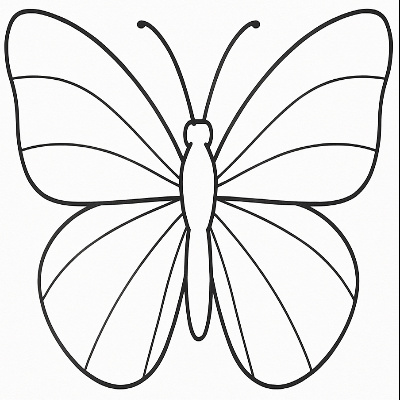
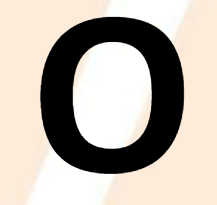
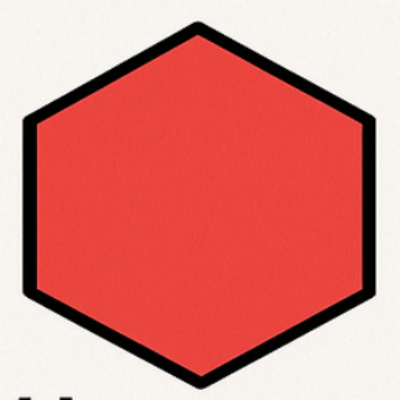
1. Draw all the possible lines of symmetry for the following shapes.

Complete the Symmetrical Shape
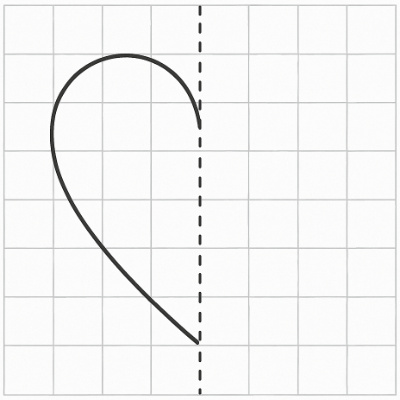
1. The dotted line is the line of symmetry. Complete the other half of the image.
Short Answer Questions
1. Look at the letters in the word 'MATH'. Which letters are symmetrical?
___________________________________________________
2. How many lines of symmetry does an isosceles triangle have?
___________________________________________________
3. Name two capital letters that have both a horizontal and a vertical line of symmetry.
___________________________________________________
Match the Columns
Match the shape in Column A with its correct number of lines of symmetry in Column B.
Answer Key
Multiple Choice Questions (MCQs)
(b) Line of symmetry
(c) A
(d) 4
(c) A scalene triangle
True or False
True
False
True
False
False
Draw the Lines of Symmetry
Butterfly: 1 vertical line. Letter 'O': Infinite lines (or 2, vertical and horizontal, is acceptable at this level). Hexagon: 6 lines. Star: 5 lines.
Complete the Symmetrical Shape
A complete heart shape should be drawn.
Short Answer Questions
M, A, T, H
One
H, I, O, X
Match the Columns
1 - D
2 - A
3 - B
4 - C
Class 4 Symmetry Practice – Strengthen Visual Maths Skills
Students in Class 4 explore the Maths Symmetry topic by identifying lines of symmetry and drawing mirror images. This worksheet builds observation skills and helps learners notice symmetry in everyday objects, like leaves and butterflies.
Parents see their children practice both basic and advanced symmetry questions in the Class 4 Mathematics curriculum. It uses simple examples to keep learning enjoyable and connects well with related concepts like patterns and reflection.
Building Confidence with Symmetry Drawing
Young learners in Class 4 get to improve their understanding of Maths Symmetry by drawing lines of symmetry and finding symmetrical shapes. This worksheet helps children recognize symmetry in math and real-life, preparing them for later topics.
The engaging practice supports practice for Olympiad and NCERT exercises while building strong problem-solving skills. Both parents and students gain a clear sense of progress in Mathematics through this hands-on practice.
FAQs on Symmetry Worksheets for Class 4 Maths
1. What is symmetry in maths for Class 4?
Symmetry in maths means a shape looks the same on both sides when divided by a line. For Class 4 students, symmetry helps in recognising lines of symmetry in shapes. Examples of symmetrical figures include circles, squares, rectangles, and equilateral triangles.
2. How do you find symmetry in shapes?
To find symmetry in shapes, draw a line (called the line of symmetry) dividing the shape into two matching parts. Both sides should look identical when folded along that line. This process is called identifying symmetry or checking if a shape is symmetrical.
3. What are examples of symmetry in daily life for kids?
Common examples of symmetry in daily life include:
- Butterflies and leaves (nature)
- Human faces
- Coins and clocks (circle shapes)
- Building windows and doors (rectangles/squares)
4. How many lines of symmetry do basic shapes have?
Basic shapes have different numbers of lines of symmetry:
- Circle: Infinite lines
- Square: 4 lines
- Rectangle: 2 lines
- Equilateral triangle: 3 lines
5. Why is symmetry important for students?
Symmetry helps students improve visual reasoning, pattern recognition, and spatial awareness. Learning symmetry in Class 4 maths also builds a strong base for higher-level geometry and everyday problem-solving skills.
6. Does this worksheet include an answer key?
Yes, the worksheet contains a detailed answer key. Parents and students can use it to check the correct lines of symmetry and solutions for all symmetry activities included in the worksheet.
7. Is this worksheet printable?
Yes, this symmetry worksheet is available as a printable PDF. It is designed for easy download and is ideal for both classroom and home practice for Class 4 maths symmetry and patterns topics.
8. How can I use this worksheet at home?
You can use this worksheet to reinforce symmetry concepts through practice. Print the pages, follow the instructions to draw or colour symmetrical shapes, and use cut-and-fold prompts for hands-on learning. These activities suit homework and holiday practice.
9. What skills are built by this activity?
This worksheet builds visual reasoning, pattern recognition, spatial awareness, and fine motor skills. It also strengthens students’ understanding of geometry, symmetry, and patterns as per the Class 4 maths syllabus.
10. What age group is this symmetry worksheet best for?
This worksheet is recommended for students in Grade 4 (ages 8–10). The layout and difficulty are designed for primary students learning symmetry, patterns, and basic geometry.
11. Can I use this worksheet digitally on a tablet?
Yes, the symmetry worksheet PDF can be used on a tablet. Students can complete drawing or colouring activities using stylus-enabled apps, making it suitable for both digital and print learning environments.
12. Can I combine this with other maths worksheets?
Yes, you can use this worksheet together with other Class 4 maths worksheets on topics like patterns, shapes, and geometry to deepen students’ understanding and practice of related concepts.
