




Write the lewis dot symbols for:
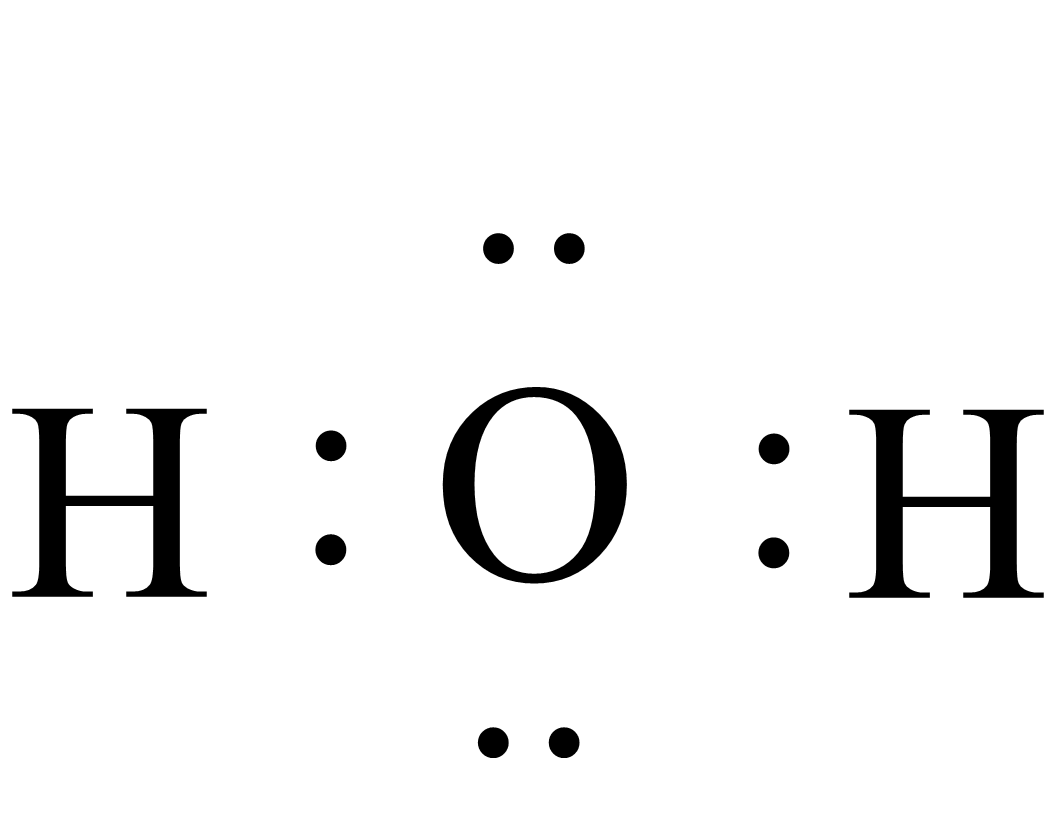
i.${H_2}O$
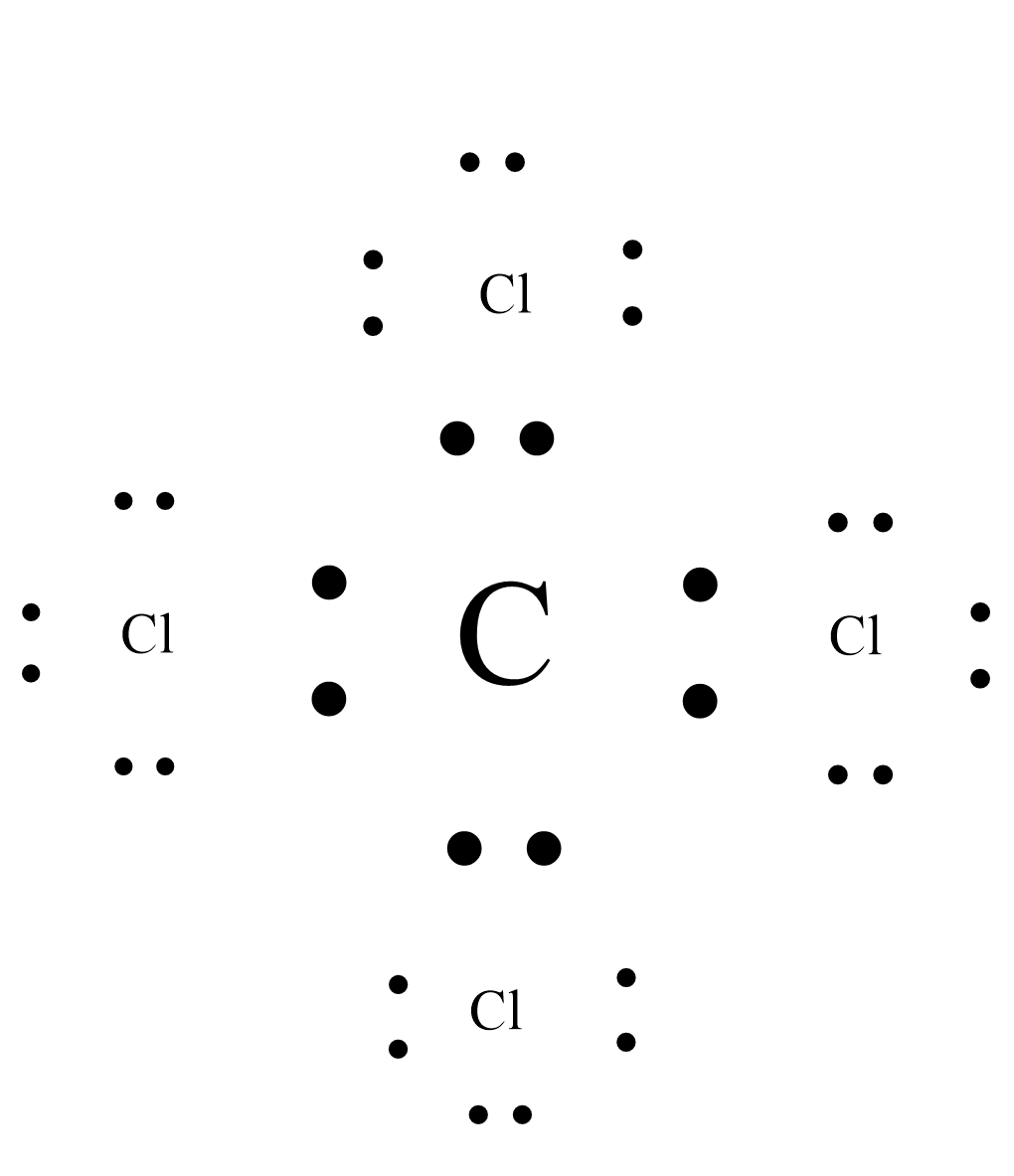
ii.$CC{l_4}$
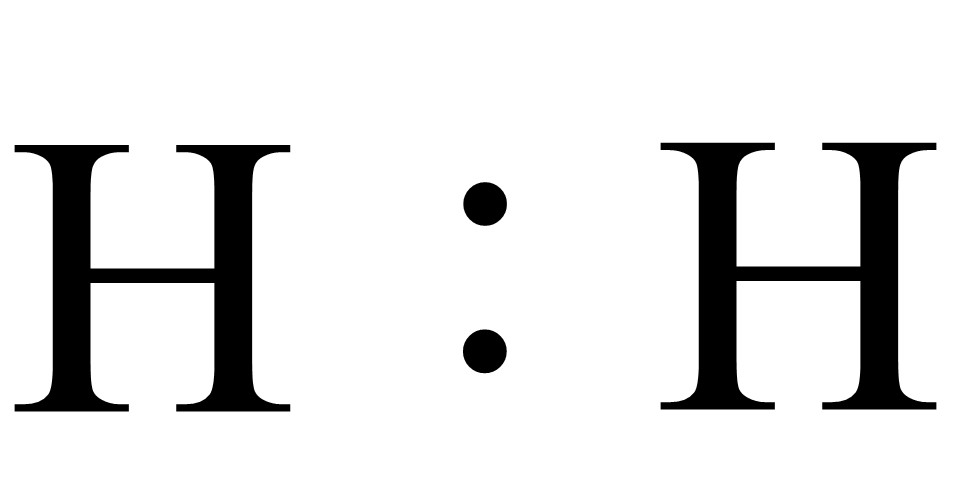
iii.${H_2}$
Answer
 Verified
608.4k+ views
Hint: The simplest notation to represent the valence electron in an atom is known as the lewis dot symbol. Lewis dot structure provides a picture of bonding in molecules and ions in terms of the shared pairs of the electrons and the octet rule.
Complete step by step answer:
The steps needed to be followed to write the lewis dot structure:
Calculate the number of valence electrons of an atom present.
If the given species is an anion then add the number of electrons equal to a unit of negative charge and if the given species is cation then subtract the number of electrons equal to a unit of a positive charge.
Select the central atom and draw the skeleton structure with intelligence guesses.
Remember that hydrogen and fluorine usually occupy the terminal position.
Put the shared pair of electrons between two atoms to represent the single bond and put the remaining electrons to represent multiple bonds or show them as a lone pair.
The lewis dot structure of the given compound is written as:
i.Lewis dot structure of water (${H_2}O$) is:
ii.Lewis dot structure of carbon tetrachloride($CC{l_4}$) is:
iii.Lewis dot structure of dihydrogen( ${H_2}$) is:
Note:
Some limitations of the lewis dot structure are discussed below:
It fails to explain the cause of covalent bond formation.
It is not able to explain the geometry of molecules containing a covalent bond.
It does not tell about the exchange of energy during the formation of a covalent bond.
It does not give any idea about the formation of the electron-deficient compound such as $B{F_3},{\text{ }}AlC{l_3}$, etc which violates the octet rule.
It also does not explain the formation of electron excess compounds such as $PC{l_5},{\text{ }}S{F_6}$, etc.
It does not give any idea about the attractive force between the constituent atoms of a molecule.
Complete step by step answer:
The steps needed to be followed to write the lewis dot structure:
Calculate the number of valence electrons of an atom present.
If the given species is an anion then add the number of electrons equal to a unit of negative charge and if the given species is cation then subtract the number of electrons equal to a unit of a positive charge.
Select the central atom and draw the skeleton structure with intelligence guesses.
Remember that hydrogen and fluorine usually occupy the terminal position.
Put the shared pair of electrons between two atoms to represent the single bond and put the remaining electrons to represent multiple bonds or show them as a lone pair.
The lewis dot structure of the given compound is written as:
i.Lewis dot structure of water (${H_2}O$) is:
ii.Lewis dot structure of carbon tetrachloride($CC{l_4}$) is:
iii.Lewis dot structure of dihydrogen( ${H_2}$) is:
Note:
Some limitations of the lewis dot structure are discussed below:
It fails to explain the cause of covalent bond formation.
It is not able to explain the geometry of molecules containing a covalent bond.
It does not tell about the exchange of energy during the formation of a covalent bond.
It does not give any idea about the formation of the electron-deficient compound such as $B{F_3},{\text{ }}AlC{l_3}$, etc which violates the octet rule.
It also does not explain the formation of electron excess compounds such as $PC{l_5},{\text{ }}S{F_6}$, etc.
It does not give any idea about the attractive force between the constituent atoms of a molecule.
Recently Updated Pages
Master Class 5 English: Engaging Questions & Answers for Success

Master Class 5 Maths: Engaging Questions & Answers for Success
Master Class 5 Social Science: Engaging Questions & Answers for Success
Master Class 5 Science: Engaging Questions & Answers for Success
Class 5 Question and Answer - Your Ultimate Solutions Guide
Master Class 9 General Knowledge: Engaging Questions & Answers for Success
Trending doubts
One Metric ton is equal to kg A 10000 B 1000 C 100 class 11 physics CBSE
What is cell theory Who formulated it class 11 biology CBSE
Phyllotaxy is the arrangement of ALeaflets BLeaves class 11 biology CBSE
Difference Between Prokaryotic Cells and Eukaryotic Cells
The symbiotic association of fungi and algae is called class 11 biology CBSE
Cell theory was formulated by A Schleiden and Schwann class 11 biology CBSE