




Which three dimensional figure has 5 faces, 8 edges and 5 vertices?
A.
B.
C.
D.
Answer
 Verified
636.6k+ views
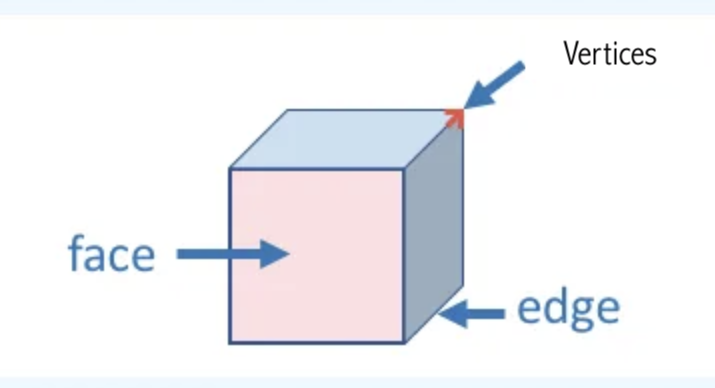
Hint Here, we will use that in a three dimensional figure, faces are the surfaces that are made up of the outside of a shape, edges are the lines in between the faces and vertices are where two or more edges meet. And then consider each option to find the correct one which is the same as given in the question.
Complete step-by-step answer:
We know that the three dimensional figure has 5 faces, 8 edges and 5 vertices.
We know that in a three dimensional figure, faces are the surfaces that are made up of the outside of a shape, edges are the lines in between the faces and vertices are where two or more edges meet.
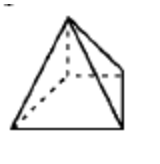
Considering option A, we get that a rectangular pyramid has 5 faces, 8 edges and 5 vertices.
Thus, option A is correct.
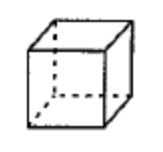
Considering option B, we get that cube has 6 faces, 12 edges and 8 vertices.
Thus, option B is incorrect.
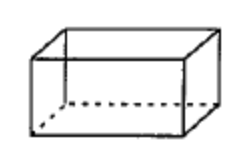
Considering option C, we get that cuboid has 6 faces, 12 edges and 8 vertices.
Thus, option C is also incorrect.
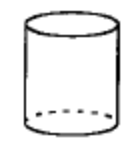
Considering option D, we get that the cylinder has 3 faces, 2 edges and no vertices.
Thus, option D is also incorrect.
Hence, option A is correct.
Note Whenever you face such type of problems draw the diagram and count the number of edges, faces and vertices with the help of diagram. Since we are given the diagrams in option, so we didn’t have to draw them separately, find the required values using the same diagrams from the problem. The key concept is to know the meaning of edges, faces and vertices.
Complete step-by-step answer:
We know that the three dimensional figure has 5 faces, 8 edges and 5 vertices.
We know that in a three dimensional figure, faces are the surfaces that are made up of the outside of a shape, edges are the lines in between the faces and vertices are where two or more edges meet.
Considering option A, we get that a rectangular pyramid has 5 faces, 8 edges and 5 vertices.
Thus, option A is correct.
Considering option B, we get that cube has 6 faces, 12 edges and 8 vertices.
Thus, option B is incorrect.
Considering option C, we get that cuboid has 6 faces, 12 edges and 8 vertices.
Thus, option C is also incorrect.
Considering option D, we get that the cylinder has 3 faces, 2 edges and no vertices.
Thus, option D is also incorrect.
Hence, option A is correct.
Note Whenever you face such type of problems draw the diagram and count the number of edges, faces and vertices with the help of diagram. Since we are given the diagrams in option, so we didn’t have to draw them separately, find the required values using the same diagrams from the problem. The key concept is to know the meaning of edges, faces and vertices.
Recently Updated Pages
Master Class 11 English: Engaging Questions & Answers for Success

Master Class 11 Social Science: Engaging Questions & Answers for Success
Master Class 11 Maths: Engaging Questions & Answers for Success
Master Class 11 Biology: Engaging Questions & Answers for Success
Master Class 11 Physics: Engaging Questions & Answers for Success
Master Class 11 Chemistry: Engaging Questions & Answers for Success
Trending doubts
Explain the Treaty of Vienna of 1815 class 10 social science CBSE
First Cotton Mill of India
In which year voting age was reduced from 21 to 18?
What planets have no moons Which one has only one moon class 10 physics CBSE
What is the full form of POSCO class 10 social science CBSE
Define Potential, Developed, Stock and Reserved resources