




Which one of the following structures is an organelle within an organelle?
A. Ribosome
B. Peroxisome
C. ER
D. Mesosome
Answer
 Verified
623.1k+ views
Hint: They are the macromolecular machinery of the living cell involved in the formation of proteins that are the building blocks of the body which gives strength and forms the body organization in an individual.
Complete answer:
The ribosomes are the cell organelle that is present inside the other cell organelles like endoplasmic reticulum, mitochondria, and chloroplast. They are known as an organelle within an organelle.
Additional Information: -Ribosomes are the small particles that constitute a chain of amino acids resulting in the formation of the mRNA.
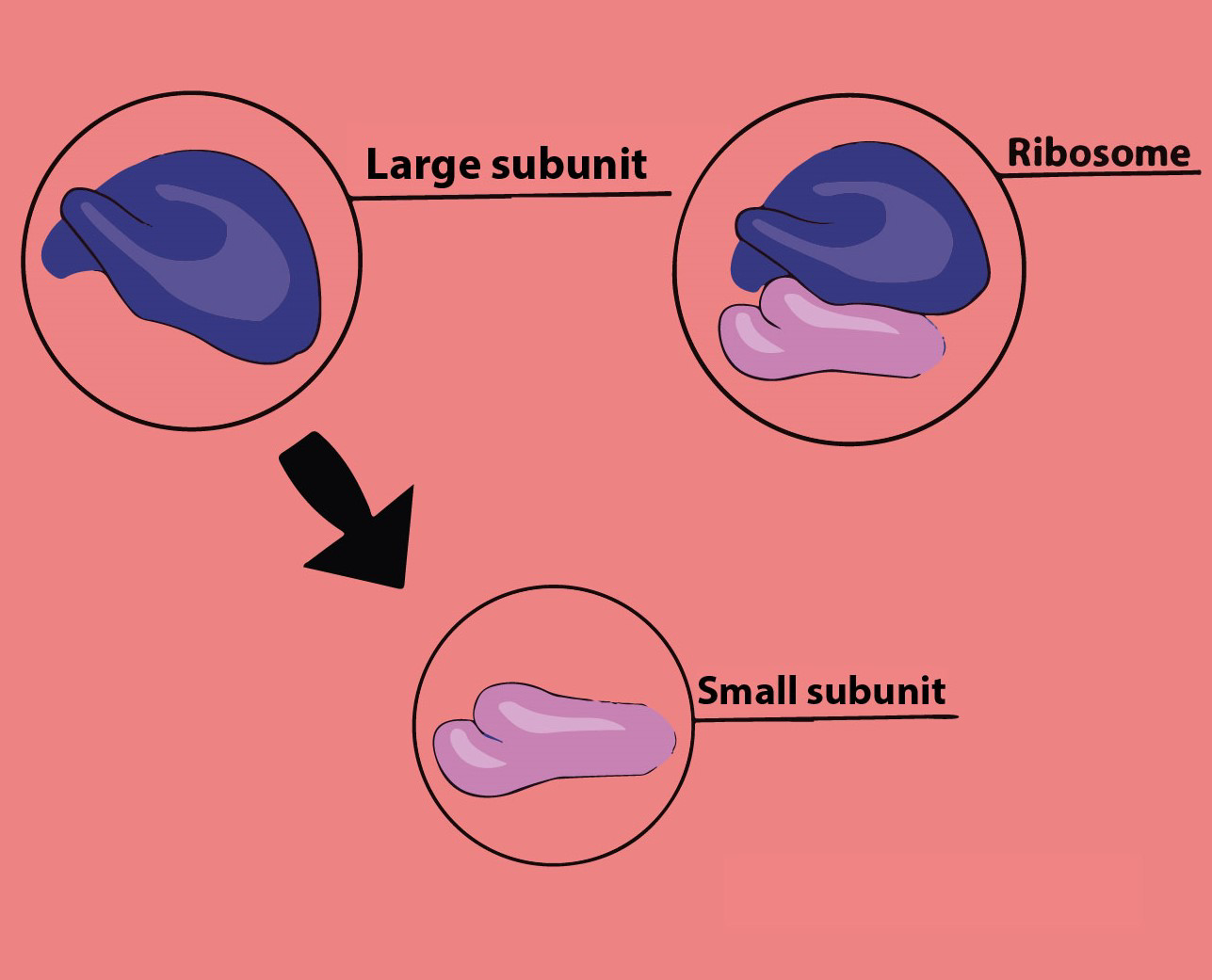
-The ribosomes have two subunits: a small component and a large component or subunits.
-Each of the subunits contains ribosomal RNA along with the ribosomal proteins.
-The larger subunit has the 80S subunit which is present in the rough endoplasmic reticulum of the eukaryotic cell.
-The endoplasmic reticulum is a cell organelle in which the ribosome, another cell organelle, is found on its intracellular membranes.
-The mitochondria and the chloroplast are the cell organelles that have their own DNA and ribosomes and make their own proteins.
-The mitochondrial ribosomes are similar to the ribosomes of bacteria and tell the evolutionary relationship between them.
-The ribosomal subunits are measured in their standard units called Svedberg’s unit.
-Ribosomes are called as subcellular structure -Ribosomes are called as subcellular structure and the phospholipid membrane is absent, thus they are called non-membranous structures.
So, the correct answer is ‘Ribosome’.
Note: In the 1950s with the help of the electron microscope the Romanian-American George Amil Palade first discovered the ribosomes. Later in the 1950s, the scientist Richard. B. Roberts joined the term ribosome. In 1974, the Nobel Prize for Physiology and Medicine was awarded to Christian de Duve, Albert Claude, and Emil palade.
Complete answer:
The ribosomes are the cell organelle that is present inside the other cell organelles like endoplasmic reticulum, mitochondria, and chloroplast. They are known as an organelle within an organelle.
Additional Information: -Ribosomes are the small particles that constitute a chain of amino acids resulting in the formation of the mRNA.
-The ribosomes have two subunits: a small component and a large component or subunits.
-Each of the subunits contains ribosomal RNA along with the ribosomal proteins.
-The larger subunit has the 80S subunit which is present in the rough endoplasmic reticulum of the eukaryotic cell.
-The endoplasmic reticulum is a cell organelle in which the ribosome, another cell organelle, is found on its intracellular membranes.
-The mitochondria and the chloroplast are the cell organelles that have their own DNA and ribosomes and make their own proteins.
-The mitochondrial ribosomes are similar to the ribosomes of bacteria and tell the evolutionary relationship between them.
-The ribosomal subunits are measured in their standard units called Svedberg’s unit.
-Ribosomes are called as subcellular structure -Ribosomes are called as subcellular structure and the phospholipid membrane is absent, thus they are called non-membranous structures.
So, the correct answer is ‘Ribosome’.
Note: In the 1950s with the help of the electron microscope the Romanian-American George Amil Palade first discovered the ribosomes. Later in the 1950s, the scientist Richard. B. Roberts joined the term ribosome. In 1974, the Nobel Prize for Physiology and Medicine was awarded to Christian de Duve, Albert Claude, and Emil palade.
Recently Updated Pages
Master Class 12 Economics: Engaging Questions & Answers for Success

Master Class 12 English: Engaging Questions & Answers for Success
Master Class 12 Social Science: Engaging Questions & Answers for Success
Master Class 12 Maths: Engaging Questions & Answers for Success
Master Class 12 Physics: Engaging Questions & Answers for Success
Master Class 9 General Knowledge: Engaging Questions & Answers for Success
Trending doubts
One Metric ton is equal to kg A 10000 B 1000 C 100 class 11 physics CBSE
Difference Between Prokaryotic Cells and Eukaryotic Cells
Two of the body parts which do not appear in MRI are class 11 biology CBSE
1 ton equals to A 100 kg B 1000 kg C 10 kg D 10000 class 11 physics CBSE
Draw a diagram of nephron and explain its structur class 11 biology CBSE
10 examples of friction in our daily life