




Which of these is a mixed gland?
(a).Thyroid
(b).Pituitary
(c).Adrenal
(d).Pancreas
Answer
 Verified
602.1k+ views
Hint: The mixed gland is a part of the digestive system. It is a leaf-like structure that sits below the stomach between the C shaped curve of the duodenum. A duct originating from this organ drains into the duodenum. The ducts of Santorini and Wirsung duct originate from this gland.
Complete answer:
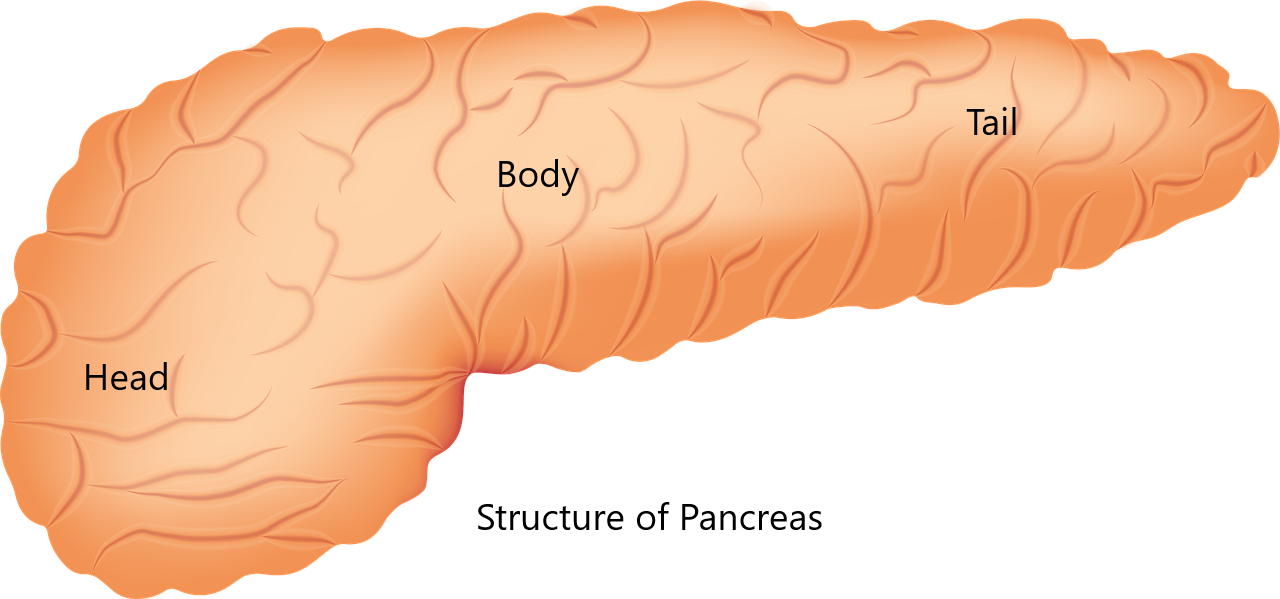
The pancreas consists of both exocrine and endocrine parts and hence is known as a mixed gland. The exocrine part mainly secretes bicarbonate and enzymes. The endocrine part secretes hormones.
Additional Information:
The endocrine secretion of pancreas include the following:
-The endocrine hormones are synthesized, modified, and stored from a cluster of cells known as pancreatic islets or islets of Langerhans. They are named after Paul Langerhans who discovered the endocrine portion.
-Glucagon is produced from a group of cells known as alpha cells. Glucagon helps in raising blood glucose levels.
-Insulin is secreted by the beta cells it helps in lowering blood glucose levels. The beta cells are most numerous and are present at the center of islets of Langerhans.
-Delta cells: These cells secrete the hormone somatostatin that is responsible for the inhibition of both insulin and glucagon secretion.
-F cells: These cells are responsible for the secretion of pancreatic polypeptide. It is found in the blood after the consumption of meals and helps in controlling the secretion of pancreatic enzymes.
So, the correct answer is “The mixed gland is the pancreas.”
Note:
Many digestive enzymes are secreted by the pancreas which includes pancreatic amylase which helps in breaking down of starch into disaccharide maltose, pancreatic lipase helps in degradation of triglyceride, proteases are a group of proenzymes including trypsin, chymotrypsin, carboxypeptidase, and elastase. Nucleases and peptidases are also secreted by the pancreas.
Complete answer:
The pancreas consists of both exocrine and endocrine parts and hence is known as a mixed gland. The exocrine part mainly secretes bicarbonate and enzymes. The endocrine part secretes hormones.
Additional Information:
The endocrine secretion of pancreas include the following:
-The endocrine hormones are synthesized, modified, and stored from a cluster of cells known as pancreatic islets or islets of Langerhans. They are named after Paul Langerhans who discovered the endocrine portion.
-Glucagon is produced from a group of cells known as alpha cells. Glucagon helps in raising blood glucose levels.
-Insulin is secreted by the beta cells it helps in lowering blood glucose levels. The beta cells are most numerous and are present at the center of islets of Langerhans.
-Delta cells: These cells secrete the hormone somatostatin that is responsible for the inhibition of both insulin and glucagon secretion.
-F cells: These cells are responsible for the secretion of pancreatic polypeptide. It is found in the blood after the consumption of meals and helps in controlling the secretion of pancreatic enzymes.
So, the correct answer is “The mixed gland is the pancreas.”
Note:
Many digestive enzymes are secreted by the pancreas which includes pancreatic amylase which helps in breaking down of starch into disaccharide maltose, pancreatic lipase helps in degradation of triglyceride, proteases are a group of proenzymes including trypsin, chymotrypsin, carboxypeptidase, and elastase. Nucleases and peptidases are also secreted by the pancreas.
Recently Updated Pages
Master Class 12 Economics: Engaging Questions & Answers for Success

Master Class 12 English: Engaging Questions & Answers for Success
Master Class 12 Social Science: Engaging Questions & Answers for Success
Master Class 12 Maths: Engaging Questions & Answers for Success
Master Class 12 Physics: Engaging Questions & Answers for Success
Master Class 9 General Knowledge: Engaging Questions & Answers for Success
Trending doubts
One Metric ton is equal to kg A 10000 B 1000 C 100 class 11 physics CBSE
Difference Between Prokaryotic Cells and Eukaryotic Cells
Find the value of the expression given below sin 30circ class 11 maths CBSE
Two of the body parts which do not appear in MRI are class 11 biology CBSE
Draw a diagram of nephron and explain its structur class 11 biology CBSE
10 examples of friction in our daily life